• Cost effective, fast and quantified ground improvement
  • Uses 3=, 4= and 5-sided impact rollers and polygonal rollers
  • Compacts in situ mixed fill, landfills and low strength natural soil to depths up to 4m
  • Compacts freshly placed deep lifts of material up to 2m thickness

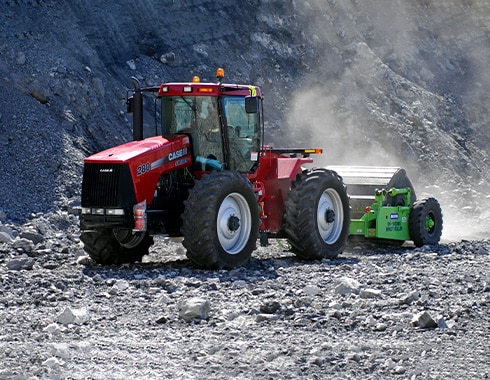
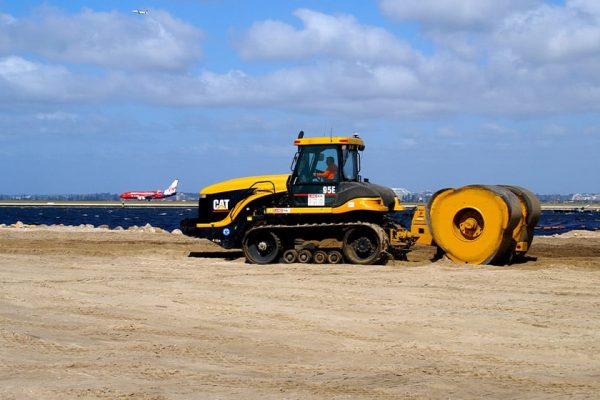
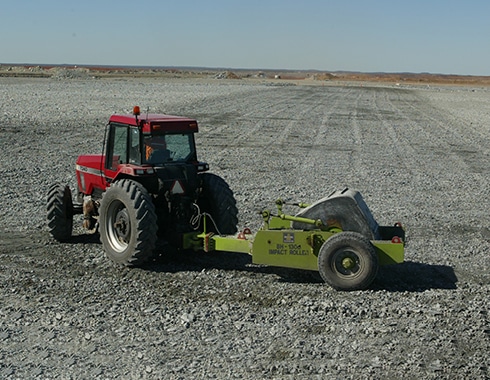
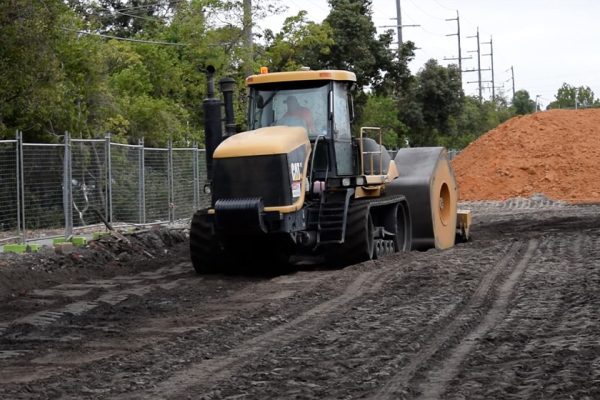
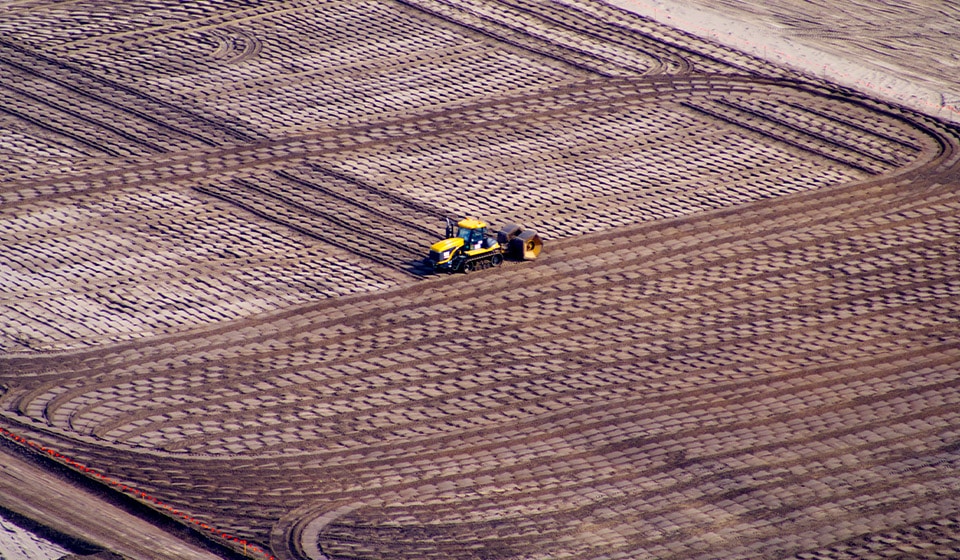
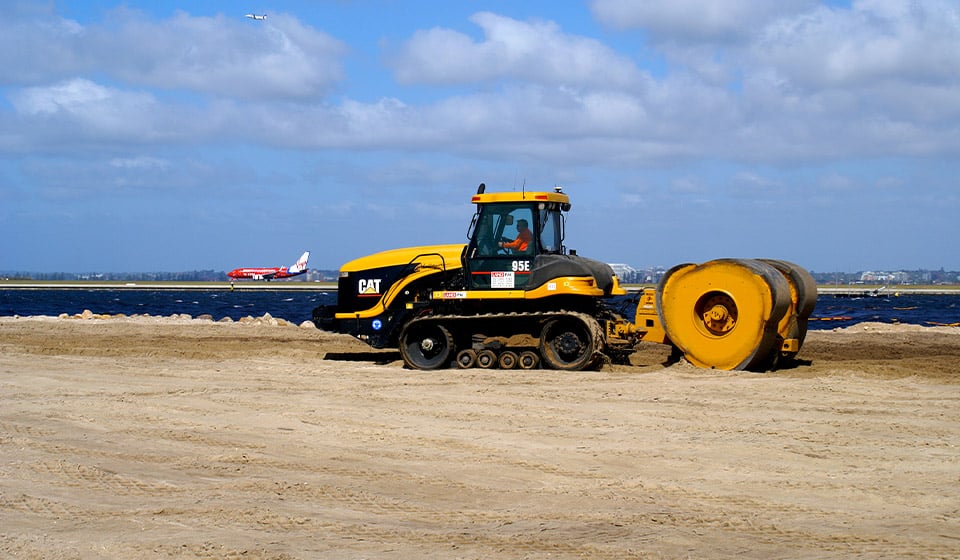
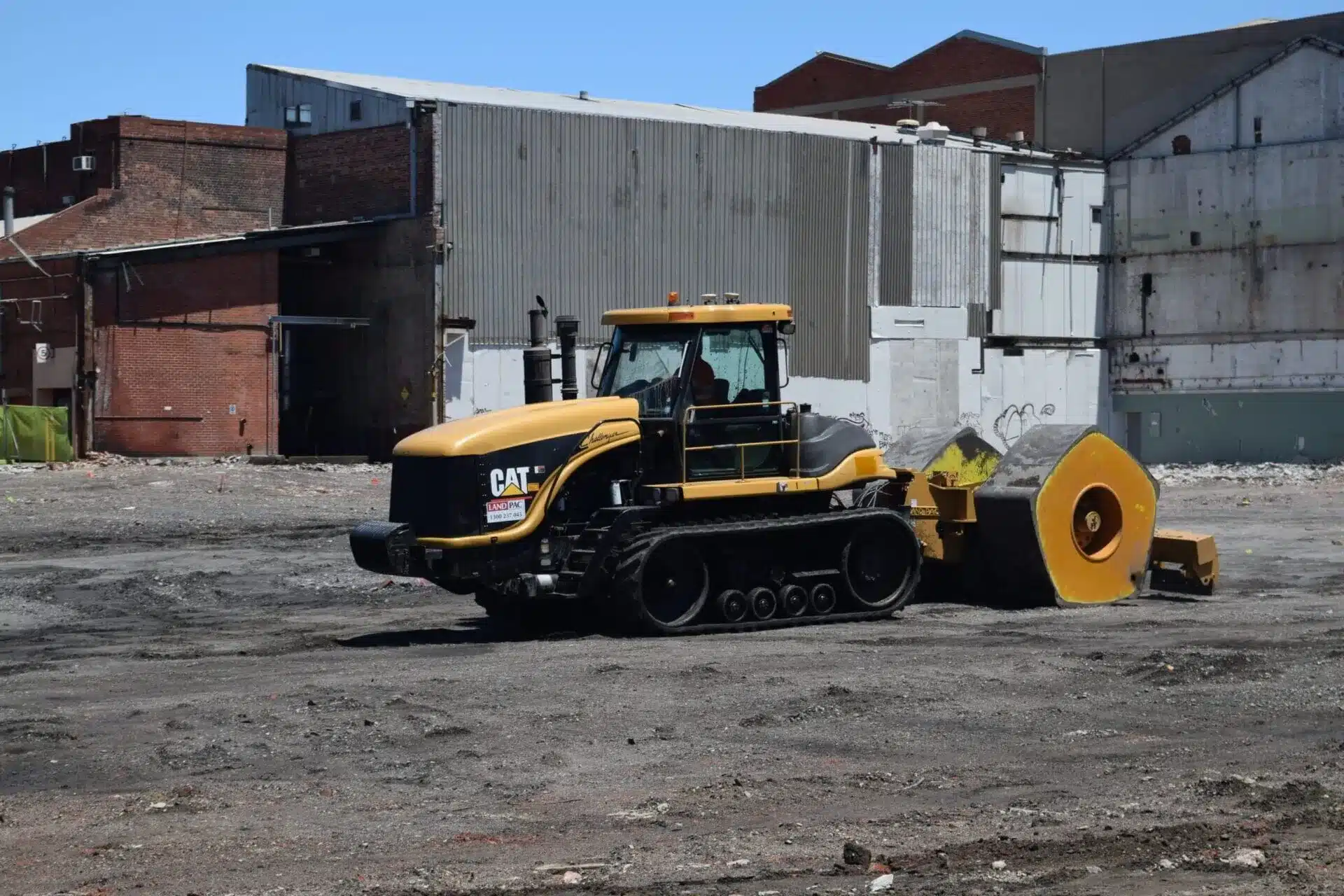
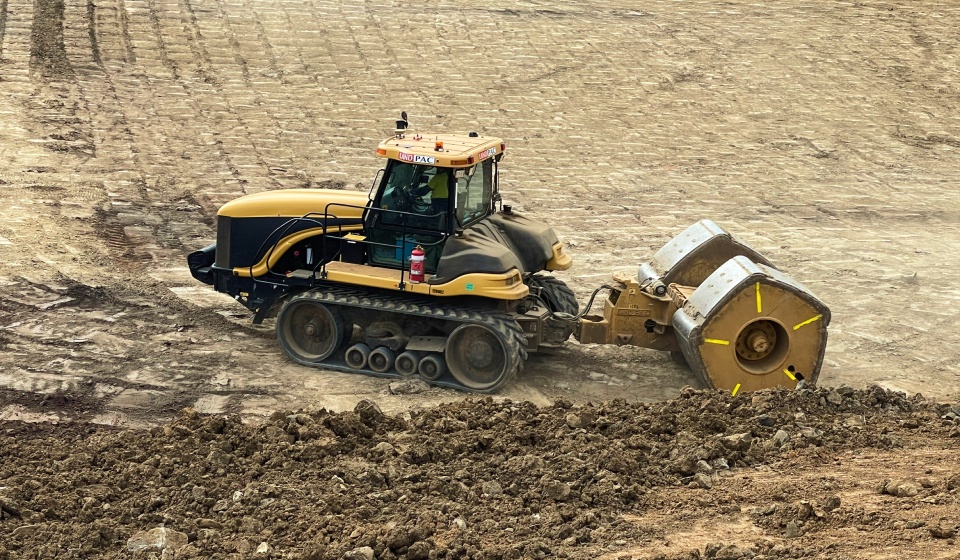
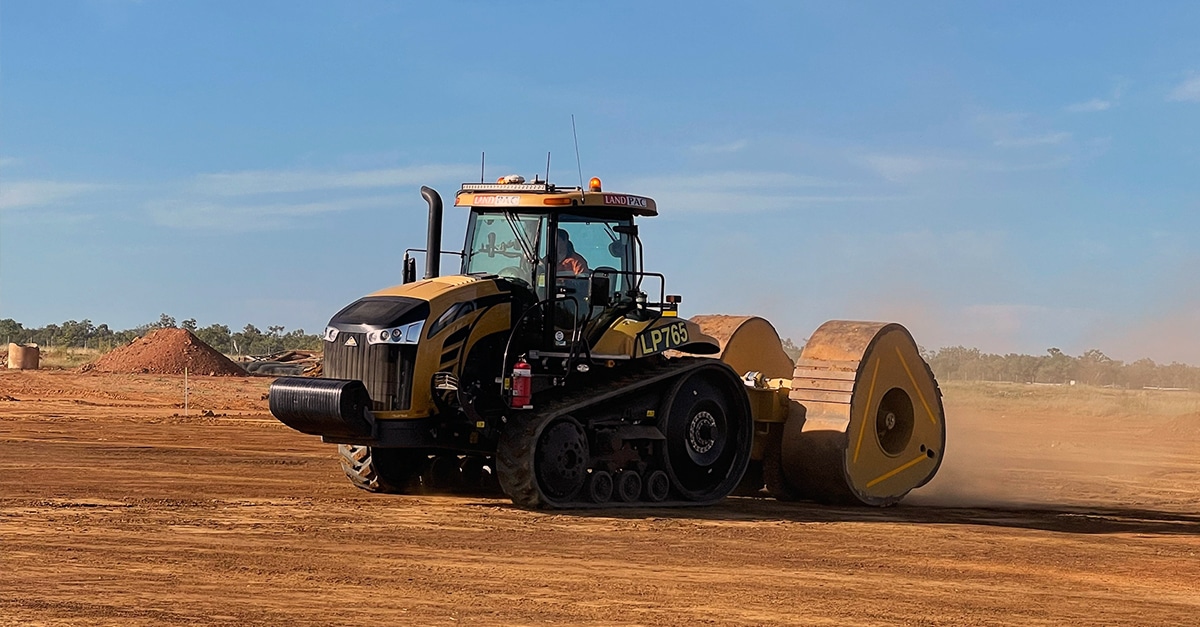
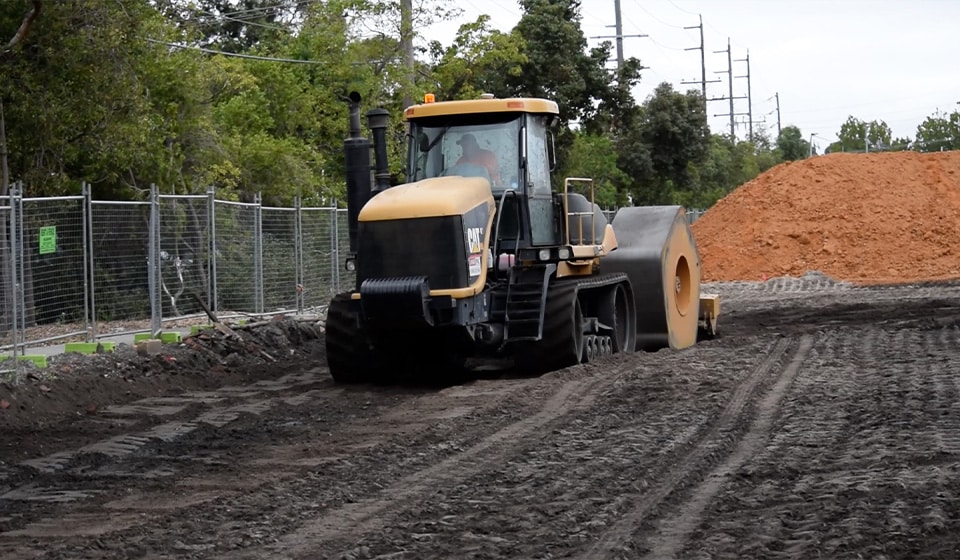
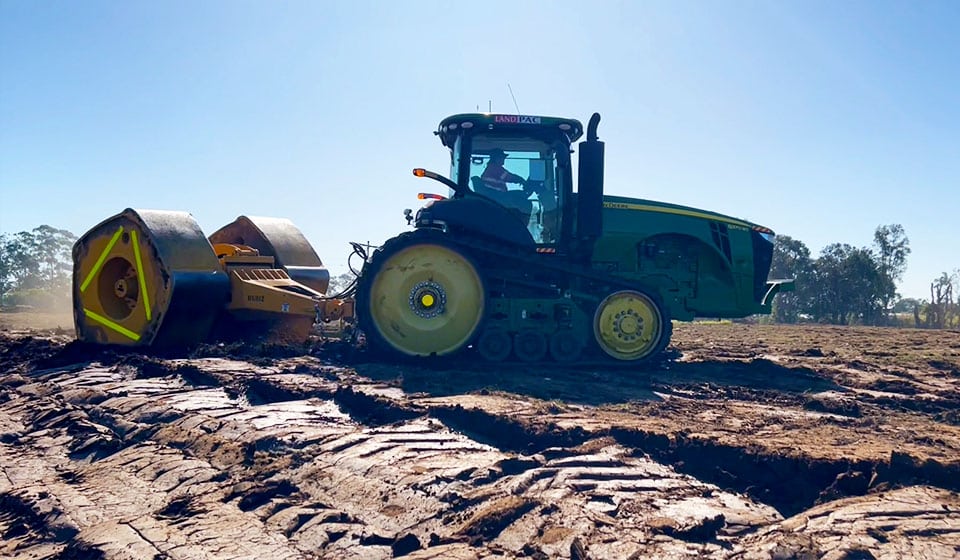
Impact Rolling – often referred to as High-Energy Impact Compaction (HEIC) and Rolling Dynamic Compaction (RDC) – uses 3=, 4= and 5-sided steel impact rollers and polygonal rollers to compact soil by repeatedly impacting the ground at high speed. Impact rollers are typically towed behind a powerful towing unit at speeds of 10 –15 km/h. As the non-circular module rotates, it imparts energy to the soil as it falls to compact the ground.

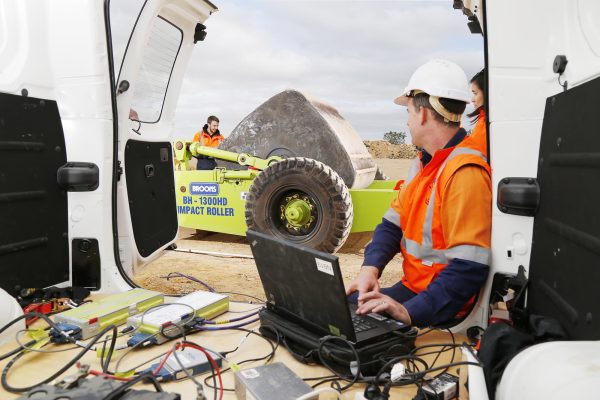
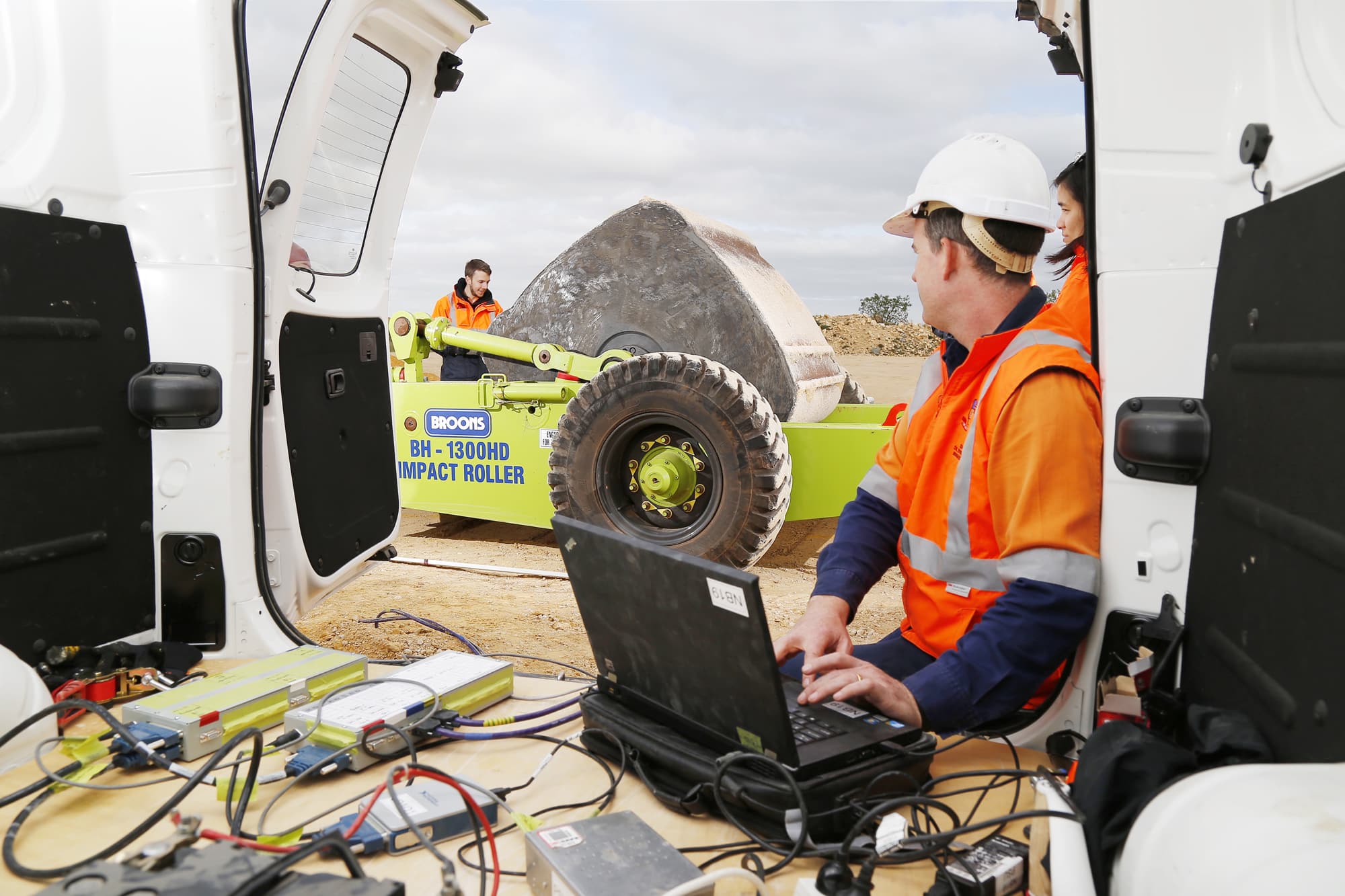
Using Intelligent Compaction Measurement, we measure pass counts, ground response and settlement with 100% site coverage, giving full visibility and traceability of the in situ conditions. When combined with verification tools such as Plate Load Testing (PLT), Geophysics (MASW), Cone Penetration Testing (CPT) or Variable Energy Dynamic Probing (VEDP) and Dynamic Probing Super Heavy (DPSH), impact rolling supports a performance-based ground improvement strategy, delivering cost effective, fast and quantified results.

Accelerated Compaction of In Situ Material

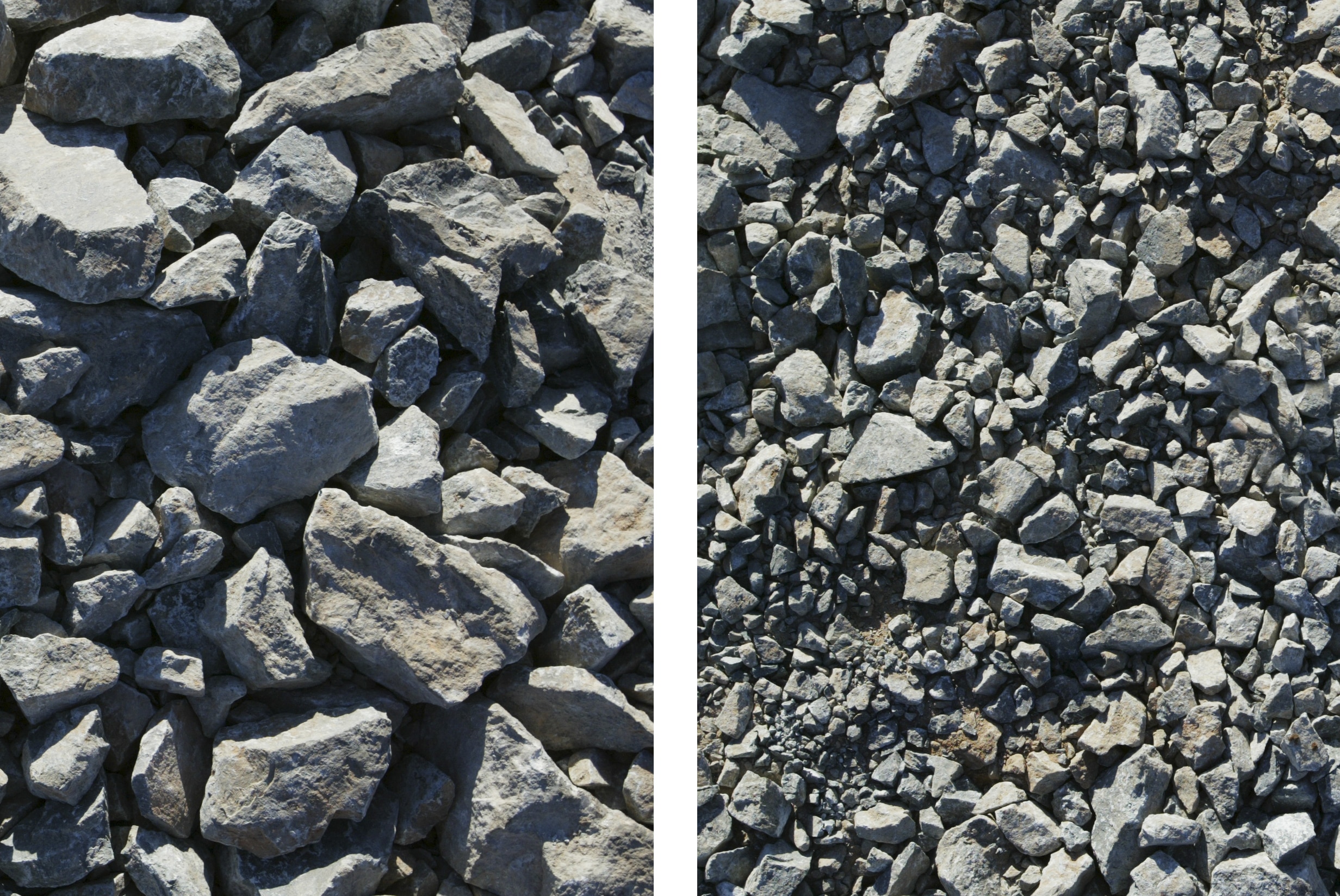
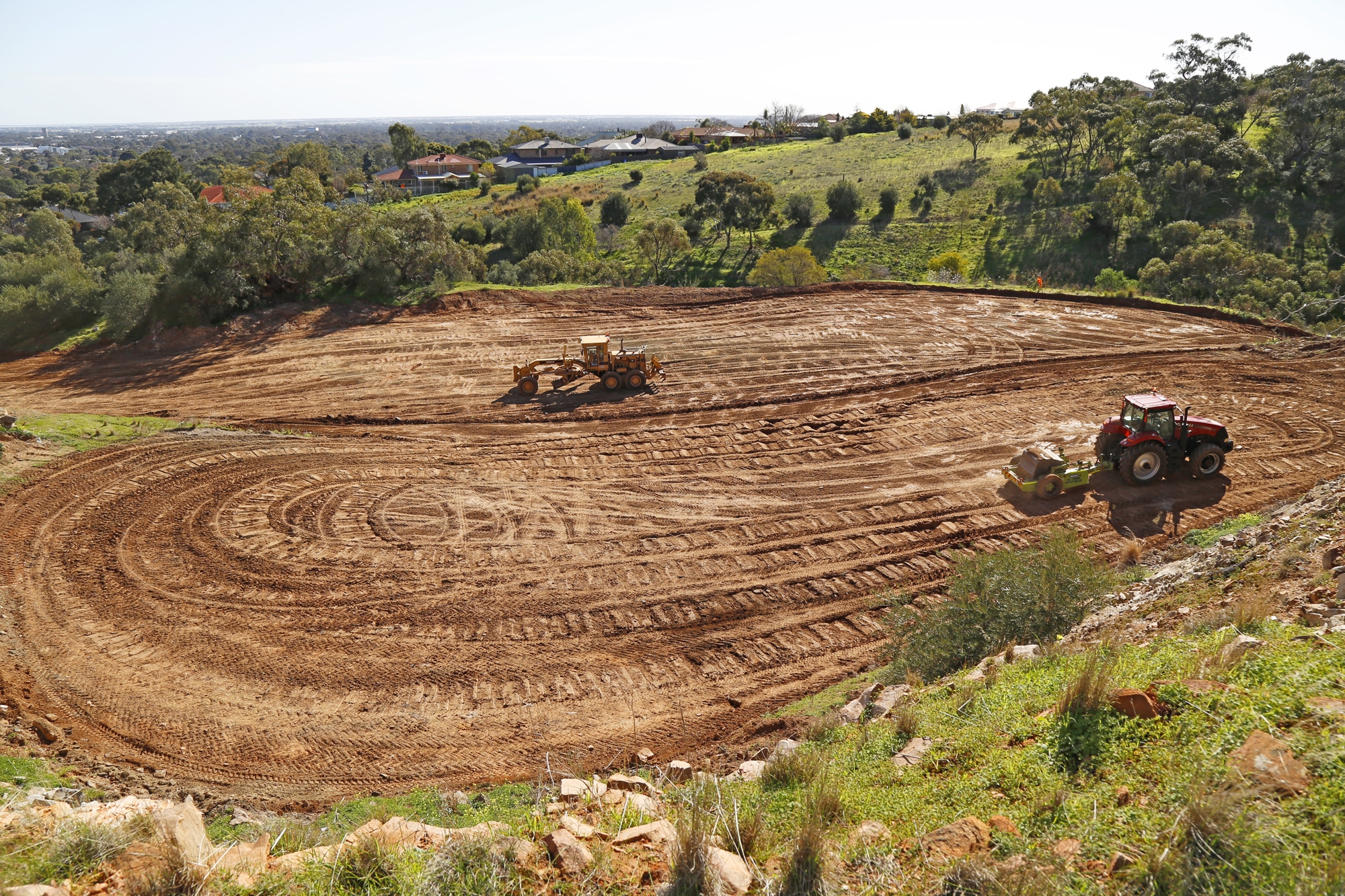
Impact rolling enables accelerated consolidation and densification of in situ mixed fill, landfills and low strength natural soil to depths of compaction of 2-3m (clays) and 3-4m (sands). Impact rolling is a cost-effective alternative to material removal (excavation) and replacement. It provides consistent, uniform compaction across heterogenous sites, for improved load bearing capacity allowing development to proceed on shallow footings, rather than on more expensive deep footings. Impact rolling offers a sustainable option where, earthworks, truck movements, noise and dust are minimised, with resulting programme benefits.
Compaction of Deeper Lifts of Placed Material

Compaction of deeper lifts of placed layers up to 2m thick makes impact rolling a very attractive alternative to traditional vibratory roller compaction of thin layers, where a maximum of say, 600mm, can be compacted. By increasing the layer thickness, the number of layers of material that are placed is reduced, increasing rate of construction and reducing construction costs. Larger grain sizes to at least 50% of the layer thickness can generally be compacted. Again, this is a sustainable option in terms of environmental factors and programme.
Applications for Impact Rolling

Impact rolling applications include:

  • civil infrastructure (roads, rail, airports, ports etc).
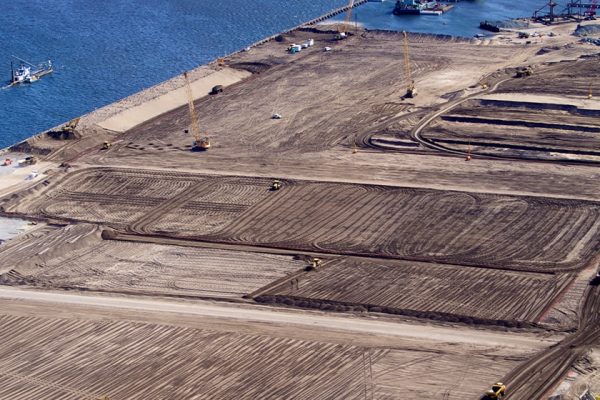
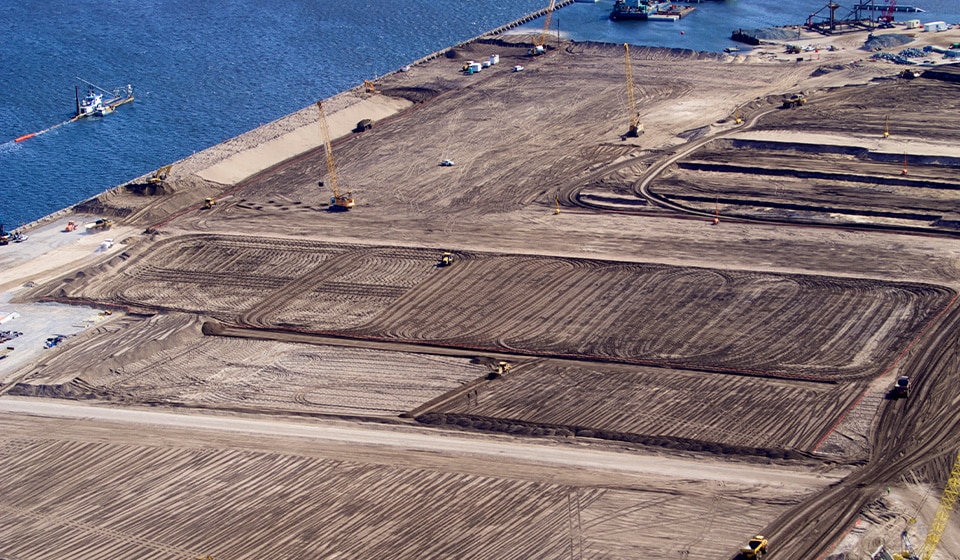
  • land development (residential, commercial and industrial) and land reclamation (dredged sands).
  • landfills
    • active landfills, creating extra volume and sealing in noxious gases.
    • closed old landfill sites to reduce creep settlement or increase the uniformity and stiffness of the capping layer without disturbing what’s underneath.
  • contaminated sites containing toxic or hazardous material such as Acid Sulphate Soils, PFAS (containment cells), heavy metals, asbestos etc. with applications including containment dams, liquefaction mitigation, and Acid Mine Drainage reduction.
  • renewable energy infrastructure (roads, lay-down areas, substation and BESS foundations).
  • mining (mine haul roads, tailings dams and mine closure / rehabilitation)
    • rubbilise sharp oversize rock on tip heads, pit floors and mine haul roads, resulting in significant savings on tyre wear and damage to mine haul trucks.
    • haul road construction – compacting thicker lifts with larger grain size materials.
    • preparation of subgrade for tailing disposal areas, reducing permeability.
    • drainage bund or embankment construction – tailings dam wall raise – compacting thicker lifts of larger grain size material.
    • increase stability, due to increased stiffness and reduce settlement risk for waste rock dumps, tailings storage facilities (TSFs) and backfilled pits.

    • lower permeability and reduce seepage, protecting groundwater from acid and metalliferous drainage and reducing the risk of spontaneous combustion.
  • liquefaction mitigation by rearranging soil particles into tighter configuration, increasing soil density. This increases the shear strength and liquefaction resistance of the soil.
  • concrete or asphalt breakage for ground slabs or pavement layers.

  • agriculture water storage (floors and dam walls) and irrigation channel banks to reduce permeability (and seepage) and the likelihood of dam wall failure.

To find out more, Contact Us.

As the non-circular roller rotates, it imparts energy to the soil as it falls to impact the ground.

Impact Rolling High Energy Impact Compaction Concept

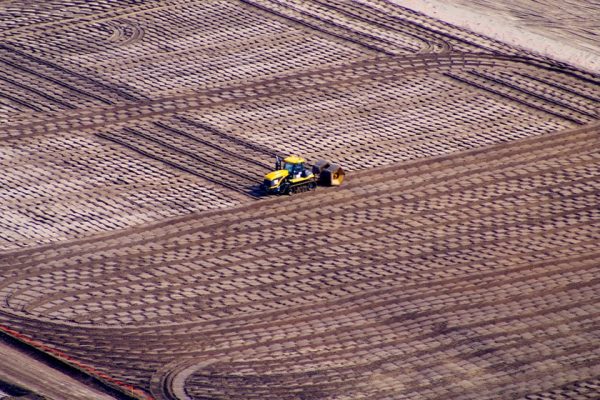
Intelligent Compaction Measurement (ICM) measuring pass counts, ground response (an indication of stiffness) and settlements with 100% site coverage, giving full visibility and traceability of the insitu conditions.

Intelligent Compaction Measurement records the location of the data using GPS technology, providing a colour coded visual map and enabling operators the ability to easily review detailed data in real time and make adjustments as required. The maps show when a location has been compacted with no further settlement while outlining certain areas of the site that require more passes.

ICM will greatly improve the performance across fill sites as it:

✅ Identifies weak sub-surface areas or deleterious material
✅ Records and maps out compaction areas
✅ Characterises spatial sub-grade variation over 100% of the area

Traditional Testing vs Intelligent Compaction Measurement (ICM) Impact Rolling

We can do further testing to validate the performance. Three examples are Cone Penetration Testing, GRIZZLY Dynamic Probing and Plate Load Testing.

Cone Penetration Testing CPT and Plate Load Test results for Impact Rolling

Ten years of collaboration with the Adelaide University School of Civil, Environmental & Mining Engineering has formed the backbone of further developments in Roller Dynamic Compaction, and the continued development of the Impact Roller design and application. More than 40 PhD students have contributed to this process with many published papers being presented at Australian and International Geomechanics Society conferences. A combination of field testing matched with finite element analysis in the laboratory have brought great advancements in the impact rolling product and knowledge of deep compaction.

Adelaide University field testing Impact Roller compaction

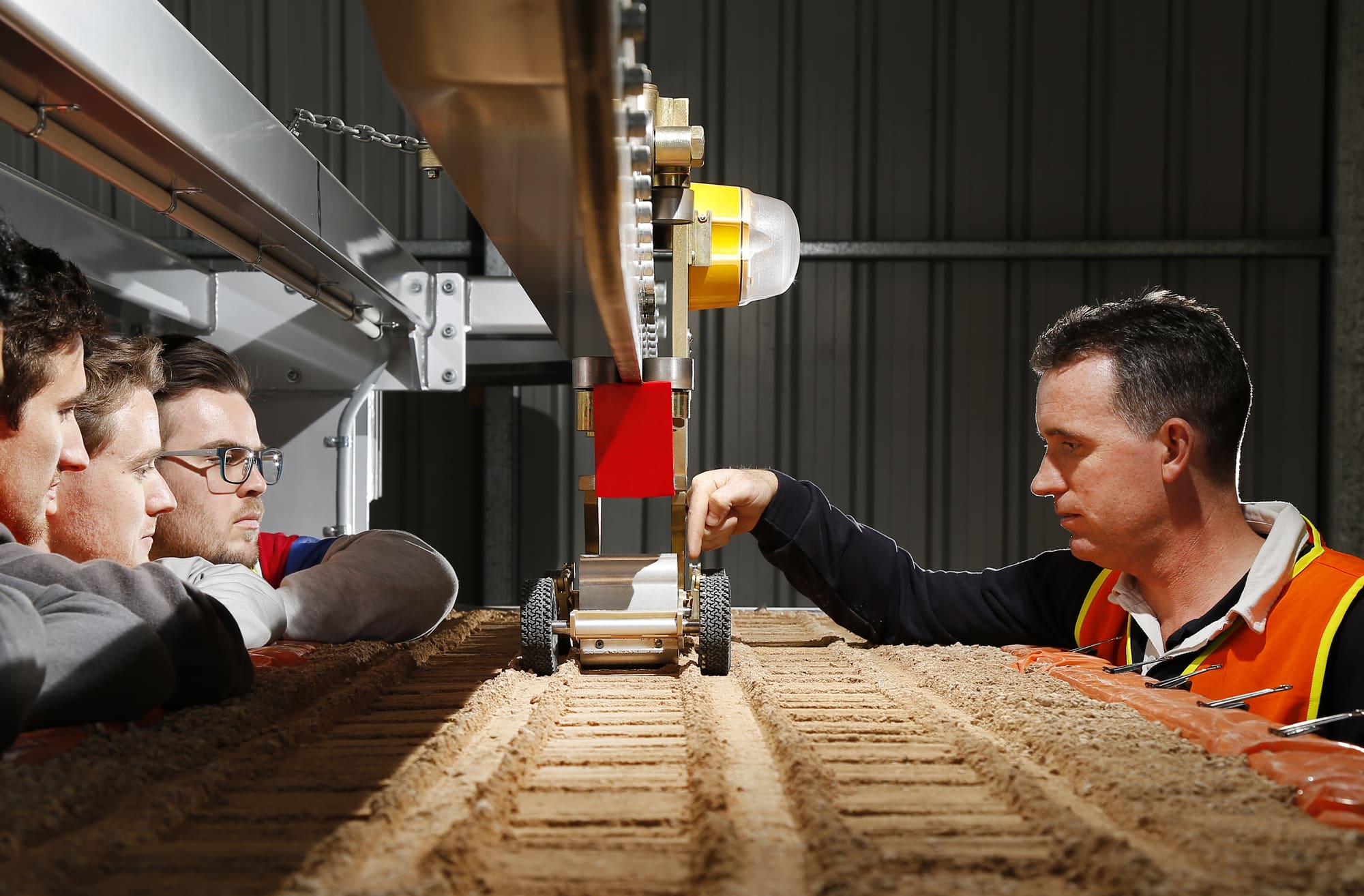
Extensive field testing with buried pressure cells are calibrated with scale models in the research facility.

Adelaide University Impact Roller compaction Broons Test rig

Impact Rolling High Energy Impact Compaction
Intelligent Compaction Measurement on Impact Rollers
-
Applications of Impact Rolling in Mine Closure - Robin Power, Derek Avalle & Simon Dix - Mine Closure 2026

Applications of Impact Rolling in Mine Closure - Robin Power, Derek Avalle & Simon Dix - Mine Closure 2026

Categories: Research Papers

Topics: Effectiveness of Impact Rolling, Mine Tailings, Mining

Published: 11/09/2026

Mine closure presents complex geotechnical challenges associated with rehabilitating large, disturbed landforms, including waste rock dumps, tailings storage facilities (TSFs) and backfilled pits. These landforms often comprise heterogeneous, loosely placed or variably compacted materials with uncertain density, stiffness and long-term settlement behaviour. Closure objectives extend beyond stability to include prevention of spontaneous combustion and protection of groundwater from acid and metalliferous drainage. Achieving stable, low-permeability, trafficable surfaces is therefore essential to meet regulatory criteria, ensure public safety and enable sustainable post-mining land use.

Impact rolling has emerged as an efficient, cost-effective and quantifiable ground improvement technique well suited to these conditions. Impact rolling or rolling dynamic compaction applies high energy impact compaction (HEIC) using a tractor-drawn, non-circular drum that delivers concentrated impact loads to the ground surface. Unlike conventional cylindrical drum rollers, it induces deep-seated densification, increasing stiffness, reducing void ratio and lowering permeability across a broad range of mining wastes and overburden materials. This highly productive method enables large areas of uncontrolled or end-dumped fill to be treated rapidly and economically, reducing differential settlement risk and improving overall landform performance.

In landform reconstruction, impact rolling is used at pit bases to reduce permeability and limit contaminant migration. During backfilling, thicker lifts can be placed and compacted with confidence, maximising densification and increasing the effective volume of material placed within the void. At final levels, the technique assists in compacting capping layers designed to shed water and control infiltration. For existing landforms, applications include densification of waste rock dumps prior to or during capping, improvement of tailings beaches to support cover systems, and stabilisation of coal discard and overburden fills. Integrated intelligent compaction measurement provides traceability of roller passes, ground response and settlement. When combined with verification tools such as plate load testing, geophysics (MASW etc.), cone penetration testing or variable energy dynamic probing and dynamic probing super heavy, impact rolling supports a performance-based closure strategy, delivering durable rehabilitation and reduced long-term risk.

Keywords: impact rolling, settlement, permeability, compaction, mine closure, mine reclamation, mine tailings, coal ash ponds

Keywords: GRIZZLY® Dynamic Probing Super Heavy, Impact Rolling, PANDA® Instrumented DCP

Converting Uncontrolled Fill Sites into Controlled Engineered Fills through Rapid Cost-Effective and Quantifiable Impact Rolling - Power, King, Clenton & Avalle DFI-PFSF May 2026

Converting Uncontrolled Fill Sites into Controlled Engineered Fills through Rapid Cost-Effective and Quantifiable Impact Rolling - Power, King, Clenton & Avalle DFI-PFSF May 2026

Categories: Research Papers

Topics: Effectiveness of Impact Rolling, Land Development

Published: 01/06/2026

Uncontrolled fill sites pose significant geotechnical challenges for future development due to uncertain material quality, compaction, and load-bearing capacity. Converting these sites into reliable, controlled engineered fills is essential to ensure structural performance and reduce long-term settlement or failure risks. This paper presents the use of impact rolling as a fast, cost-effective, and quantifiable ground improvement technique for reworking and validating uncontrolled fills and significantly increasing the value of the development site.

Impact rolling applies high-energy, non-circular dynamic loads to the ground, promoting deep compaction and densification well beyond the reach of conventional rollers. It is particularly suited for heterogeneous fill materials, where traditional compaction methods may be ineffective. By integrating real-time Intelligent Compaction Measurement and in-situ validation tools such as the crawler based Dynamic Probing Super Heavy (DPSH) and portable Variable Energy Dynamic Cone Penetrometer (VEDP) with strength profile and compaction control capability, site improvement is not only achieved but verified with quantifiable data.

A case study is presented to illustrate the transformation of problematic fill sites into compliant platforms suitable for construction or infrastructure use. Results highlight the method’s ability to improve ground stiffness, reduce voids, and demonstrate uniformity—reducing the need for costly excavation and replacement. This approach offers a practical, low-risk solution for developers and engineers dealing with legacy or undocumented fill conditions.

Keywords: Impact rolling, uncontrolled fill, controlled engineered fill, compaction control, land development, ground improvement, dynamic probing

Keywords: GRIZZLY® Dynamic Probing Super Heavy, Impact Rolling, PANDA® Instrumented DCP

Alternative Method to Reclassify Uncontrolled Fill to Deem to Comply Controlled Level 2 - Pirrello, King & Caffi - AGS Nov 2025

Alternative Method to Reclassify Uncontrolled Fill to Deem to Comply Controlled Level 2 - Pirrello, King & Caffi - AGS Nov 2025

Categories: Research Papers

Topics: Effectiveness of Impact Rolling, Land Development

Published: 28/11/2025

Historically, deep excavations like open cut mines and brick pits were backfilled with little oversight. These sites, once considered low value, have gained development interest due to real estate trends. Developers now often re-excavate and compact fill to enable construction, especially for industrial projects; deep foundations may be needed for heavier loads.

GeoSmart Solution (GSS) worked on a site with uncertain fill depth and boundaries, aiming to minimize costly excavation while supporting warehouse development. GSS recommended a phased approach: first, geophysical (MASW) and in-situ tests (including GRIZZLY Dynamic Probing with Variable Energy and Dynamic Probing Super Heavy (DPSH) capability) to map and assess fill areas; second, Impact Rolling with compaction validation; and finally, minimal follow-up testing.

This strategy met client goals and managed risks associated with building on historic fill.

Keywords: GRIZZLY® Dynamic Probing Super Heavy, Impact Rolling

The carbon footprint of vibratory and impact rolling - A sustainable option for bulk earthworks on infrastructure projects

Categories: Research Papers

Topics: Effectiveness of Impact Rolling

Published: 31/12/2024

Vibratory and impact rollers achieve deeper lift compaction than static rollers. Ground improvement with impact rollers occurs through rolling dynamic compaction, enabling compaction to significant depths, generally more than 1 m. This provides the opportunity to place thick layers, potentially with a larger maximum particle size than conventional smooth drum rollers, while achieving engineering standards of density and stiffness. The overall consequence of this is that the earth­works exercise becomes a far more sustainable activity. Deeper lift compaction beyond traditional thin compacted layers using conventional heavy vibratory rollers has been achievable for some time, but to lesser depths than is possible with impact rollers. The compaction of deeper lifts at faster operating speeds, albeit, typically with a greater number of passes, requires a fresh look at specifications for infrastruc­ture earthworks. The paper explores the green credentials of deep lift compaction, by comparing earthworks plant, productivity and fuel usage for compaction using conventional circular drum rollers with thin layers, and deeper lift compaction using vibratory and polygonal impact rollers. Quality control to greater depths can be a limiting factor. Testing protocols often require modification to accommodate the changes in layer thicknesses and material specifications.

Keywords: Impact Rolling

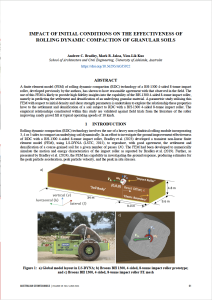
Impact of initial conditions on the effectiveness of Rolling Dynamic Compaction of coarse grained soils Bradley Jaksa Kuo 2024

Categories: Research Papers

Topics: Effectiveness of Impact Rolling

Published: 01/06/2024

A finite element model (FEM) of rolling dynamic compaction (RDC) technology of a BH-1300 4-sided 8-tonne impact roller, developed previously by the authors, has shown to have reasonable agreement with that observed in the field. The use of this FEM is likely to provide high fidelity insights into the capability of the BH-1300 4-sided 8-tonne impact roller, namely in predicting the settlement and densification of an underlying granular material. A parametric study utilising this FEM with respect to initial density and shear strength parameters is undertaken to explore the relationship these properties have to the settlement and densification of a soil subject to RDC with a BH-1300 4-sided 8-tonne impact roller. The empirical relationships constructed within this study are validated against field trials from the literature of the roller improving sandy gravel fill at typical operating speeds of 10 km/h.

Keywords: Impact Rolling

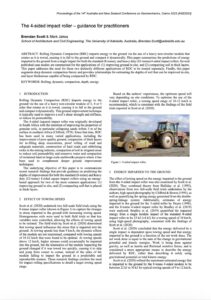
The 4-sided impact roller – guidance for practitioners - Scott & Jaksa - 2023

The 4-Sided Impact Roller – Guidance for Practitioners - Scott & Jaksa - 2023

Categories: Research Papers

Topics: Effectiveness of Impact Rolling

Published: 23/11/2023

Rolling Dynamic Compaction (RDC) / Impact Rolling imparts energy to the ground via the use of a heavy non-circular module that rotates as it is towed, causing it to fall to the ground and compact it dynamically. This paper summarises the predictions of energy imparted to the ground from a single impact for both the standard (8-tonne), and heavy duty (12-tonne) 4-sided impact rollers.

Several published case studies are summarised for the applications of: (1) improving ground in situ; and (2) compacting soil in thick layers. This paper addresses the need for these two distinctly different applications of RDC to be treated separately. Finally, this paper augments deep dynamic compaction theory and provides relationships for estimating the depths of soil that can be improved in situ, and layer thicknesses capable of being compacted by RDC.

Keywords: Impact Rolling

Experimental and Numerical Analysis of Rolling Dynamic Compaction Yue Chen PhD University of Adelaide 2022

Categories: Research Papers

Topics: Effectiveness of Impact Rolling

Published: 01/10/2021

Rolling dynamic compaction (RDC) is a ground improvement technique, which involves towing heavy (typically 6–15 tonnes) non-circular modules (3-, 4- and 5-sided) behind a towing unit to achieve soil compaction. RDC has gained increased popularity in recent years since it has a greater influence depth and it can be operated at a higher speed. Although RDC has been successfully applied to many construction projects, there is currently very limited understanding of the behaviour of soil beneath the ground during the RDC process. In addition, the relationships between soil response and the effectiveness of RDC are still not well understood. These often results in the use of RDC being based on intuition or experience obtained from previous projects with similar soils and site conditions.

Keywords: Impact Rolling

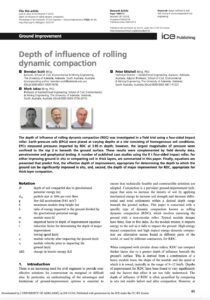
Depth of influence of rolling dynamic compaction - Scott Jaksa Mitchell - 2021

Depth of Influence of Rolling Dynamic Compaction / Impact Rolling - Scott Jaksa Mitchell - 2021

Categories: Research Papers

Topics: Effectiveness of Impact Rolling

Published: 02/03/2021

The depth of influence of rolling dynamic compaction (RDC) / impact rolling was investigated in a field trial using a four-sided impact roller. Earth pressure cells (EPCs) were placed at varying depths at a site consisting of homogeneous soil conditions. EPCs measured pressures imparted by RDC at 3·85 m depth; however, the largest magnitudes of pressure were confined to the top 2 m beneath the ground surface. These results were complemented by field density data, penetrometer and geophysical testing. A number of published case studies using the 8 t four-sided impact roller, for either improving ground in situ or compacting soil in thick layers, are summarised in this paper. Finally, equations are presented that predict first, the effective depth of improvement, appropriate for determining the depth to which the ground can be significantly improved in situ, and, second, the depth of major improvement for RDC, appropriate for thick-layer compaction.

Keywords: Impact Rolling

Ground Improvement of Contaminated Uncontrolled Fill using Impact Roller Compaction QJ Yang, A Succar, J McIlquham and K Chen 2020

Ground Improvement of Contaminated Uncontrolled Fill using Impact Roller Compaction QJ Yang, A Succar, J McIlquham and K Chen 2020

Categories: Research Papers

Topics: Land Development

Published: 30/09/2020

This paper presents a case study of the use of an alternative ground improvement technique to treat contaminated uncontrolled fill other than traditional “remove and replace” for major earthworks for the proposed container Import and Export (IMEX) Terminal at Moorebank, Sydney. Firstly, a brief discussion of the options considered for the ground improvement including removal and replacement and the Impact Roller Compaction (IRC) method is presented. The local geological setting and the historical form of the existing Stage 1 IMEX Terminal site will be described, with the geotechnical model and associated design engineering parameters being summarised. The key points in the development of a technical specification are presented to take account of the performance requirements, including on-site IRC trial and validation testing. The primary validation measures adopted comprise plate load testing, cone penetration test (CPT) profiling, in-situ density testing, dilatometer (DMT) testing and proof rolling after IRC treatment. Surcharging was undertaken for the remediated contaminated land areas where details of the remedial treatments were not available at the Stage 1 IMEX development stage, to ensure there would be no issues resulting from long-term settlement. At the time of writing this paper, the Stage 1 IMEX works have been completed and are operational. The monitoring results indicate the performance of the site is satisfactory.

Keywords: Impact Rolling

Rolling dynamic compaction for haul road construction and maintence - an update Coal Operators Conference Derek Avalle Boons Group Brendan Scott Proof Engineers James Miedecke Proof Engineers 2020

Rolling dynamic compaction for haul road construction and maintenance - an update Coal Operators Conference Derek Avalle Broons Group Brendan Scott Proof Engineers James Miedecke Proof Engineers 2020

Categories: Research Papers

Topics: Effectiveness of Impact Rolling, Mining

Published: 01/02/2020

The construction and management of haul roads remains a critical element in the efficient operation of all mines. Significant effort has been applied to design practices, extending the use of design charts and computer programs. Attention has been paid to the pavement materials and material properties, based on decades of geotechnical data and experience. Opportunities still exist for improvements to be realised in compaction protocols, particularly in the use of rolling dynamic compaction (RDC). RDC involves the delivery of a dynamic compactive effort using non-circular towed compactors, which are designed to deliver a combination of potential energy of a falling weight and kinetic energy mobilised due to the relatively high towing speed. The objectives include the proof-rolling and preparation of subgrade areas, exposing soft spots and weak zones and often establishing a sufficiently competent raft layer, as well as deep lift compaction offering cost-efficient construction of ramps and haul road pavements with programming benefits. The ability to compact deeper lifts allows fill particles to be larger without inhibiting the compaction process, which increases the sustainability of the process through reducing the constraints on the fill materials by allowing a larger maximum particle size. Case studies are cited where RDC has been trialled on several mine sites and many mines have benefited from the use of the technology. The continued attention to improving haul road construction will result in less road maintenance, less vehicle damage and improved truck tyre life, and RDC offers a method of contributing to these improvements. The compaction energy of RDC offers more leniency in moisture conditioning where adequate compaction densities can be achieved with much lower water addition than conventional laboratory optimum moisture content. When applied to coarse surface layer materials RDC will generate sufficient fines to provide a high-friction tyre-friendly low-maintenance finish on haul road surfaces.

Keywords: Impact Rolling

The Impact of Roller Dynamic Compaction Brendan Scott PhD Thesis University of Adelaide 2020

Categories: Research Papers

Topics: Effectiveness of Impact Rolling

Published: 01/02/2020

Rolling dynamic compaction (RDC) consists of a non-circular module of 3, 4 or 5 sides, that rotates as it is towed, causing it to fall to the ground and compact it dynamically. There is currently little guidance available for geotechnical practitioners regarding the depths of improvement that are possible in varying soil conditions. Current practice dictates that practitioners rely on personal experiences or available published project case studies that are limited in scope and applicability as they are typically aimed at achieving a project specification. There is a reluctance to adopt RDC as a ground improvement technique as there is uncertainty regarding its limitations and capabilities.

Keywords: Impact Rolling

Advancements in Haul Road Construction Maintenance - Coal Operators Conference 2020

Categories: Research Papers

Topics: Mining

Published: 01/02/2020

The construction and management of haul roads remains a critical element in the efficient operation of all mines. Significant effort has been applied to design practices, extending the use of design charts and computer programs. Attention has been paid to the pavement materials and material properties, based on decades of geotechnical data and experience. Opportunities still exist for improvements to be realised in compaction protocols, particularly in the use of rolling dynamic compaction (RDC). RDC involves the delivery of a dynamic compactive effort using non-circular towed compactors, which are designed to deliver a combination of potential energy of a falling weight and kinetic energy mobilised due to the relatively high towing speed. The objectives include the proof-rolling and preparation of subgrade areas, exposing soft spots and weak zones and often establishing a sufficiently competent raft layer, as well as deep lift compaction offering cost-efficient construction of ramps and haul road pavements with programming benefits. The ability to compact deeper lifts allows fill particles to be larger without inhibiting the compaction process, which increases the sustainability of the process through reducing the constraints on the fill materials by allowing a larger maximum particle size. Case studies are cited where RDC has been trialled on several mine sites and many mines have benefited from the use of the technology. The continued attention to improving haul road construction will result in less road maintenance, less vehicle damage and improved truck tyre life, and RDC offers a method of contributing to these improvements. The compaction energy of RDC offers more leniency in moisture conditioning where adequate compaction densities can be achieved with much lower water addition than conventional laboratory optimum moisture content. When applied to coarse surface layer materials RDC will generate sufficient fines to provide a high-friction tyre-friendly low maintenance finish on haul road surfaces.

Keywords: Impact Rolling

Evaluating rolling dynamic compaction of fill using CPT - Scott & Jaksa - 2014

Evaluating rolling dynamic compaction of fill using CPT - Scott & Jaksa - 2014

Categories: Research Papers

Topics: Effectiveness of Impact Rolling

Published: 21/11/2014

Rolling Dynamic Compaction (RDC) or Impact Rolling is a ground improvement technique that involves compacting soil using a non-circular roller. Whilst conventional circular rollers are able to compact layer thicknesses typically in the range of 200 mm to 500 mm, thicker layers are able to be compacted using RDC. However, the depth of influence of RDC can vary significantly depending on the soil type, moisture content, loose layer thickness and number of passes. This paper focuses on how cone penetration testing was used during a compaction trial as a key site investigation technique to determine the zone of influence of RDC at a site involving quartzose and carbonate sand fill. The results presented quantify the increase in cone tip resistance with depth and illustrates how a number cone penetration tests (CPTs) were used to evaluate changes in soil strength due to increased roller passes, changes in moisture content or placed loose layer thickness.

Keywords: Impact Rolling

Case Study - Compaction of Coal Ash fill by Impact Rolling as a Method for Subgrade Improvement beneath a Heavy Duty Pavement Rolf Rohleder, Hugh Stallard Australian Geomechanics 2014

Case Study - Compaction of Coal Ash fill by Impact Rolling as a Method for Subgrade Improvement beneath a Heavy Duty Pavement Rolf Rohleder, Hugh Stallard Australian Geomechanics 2014

Categories: Research Papers

Topics: Mining

Published: 01/04/2014

An intermodal logistics centre for bulk distribution of shipping containers by both road and rail is currently under construction at a site near Enfield in SW Sydney. The 70 ha project site was used as a rail maintenance facility until the early 1990’s, when it was largely dismantled. A container terminal yard will occupy approximately one-third of the project site, which will require construction of a heavy duty pavement to support the operational loads. The design of the terminal area is based on construction of a uniform earthworks platform, requiring both cut and fill to attain design levels, to act as a stable subgrade for the pavement layers. Previous studies revealed the presence of poorly compacted fills across the site that vary significantly both in composition and thickness. Of particular interest was the presence of a significant volume of coal ash fill, which was the thickest fill deposit across a large part of the site. The coal ash was found to be poorly compacted, but laboratory testing indicated it could achieve high strength and CBR index values when compacted to a dense state. The coal ash could thus be treated in place and incorporated into the subgrade earthworks or it could be mined and re-used as general fill in other parts of the site. A programme of field compaction trials was implemented, using conventional vibratory rollers and also impact rollers to determine the optimum compaction method for the coal ash and other fill materials. The field trials showed that compaction of the coal ash significantly reduced its void ratio by approximately 30% with corresponding settlement on compaction. The outcome of these field trials enabled the contractor to develop a ground treatment methodology tailored to the fill material type, which also conformed to the design specification for the subgrade layers.

Keywords: Impact Rolling

Mining Applications and Case Studies of Roller Dynamic Compaction Mining Applications and Case Studies of Rolling Dynamic Compaction Brendan Scott Mark Jaksa University of Adelaide ANZ Geo Conference 2012

Categories: Research Papers

Topics: Mining

Published: 18/07/2012

Rolling Dynamic Compaction (RDC) is a generic term associated with densifying the ground using a non-circular roller. The application and use of RDC in the mining industry is increasing because of its ability to compact ground efficiently by means of a faster operating speed (10-12 km/h) and compaction of thicker layers than conventional circular rollers. Whilst conventional rollers are able to compact fill in layers up to 400 mm, thicker layers are able to be adopted using RDC for the construction of tailings dams and mining haul roads. Increased layer thicknesses enable larger particle sizes to be used, therefore greater reuse of mine spoil material can be undertaken with a reduced need to screen out large quantities of oversized materials. As well as demonstrating how RDC has been used effectively for the compaction of bulk earthworks at two different mine sites, this paper also discusses various aspects and factors associated with conducting a compaction trial on mine spoil materials.

Keywords: Impact Rolling

Reducing Haul Road Maintenance costs and improving Tyre Wear through the use of Impact Rollers Derek Avalle 2006

Categories: Research Papers

Topics: Mining

Published: 06/12/2006

Manufactured and further developed in Australia over the last 21 years, the “square” Impact Roller has found a variety of applications in various parts of the world. Employing the well-established principles of rolling dynamic compaction, the Impact Roller densifies the ground to significant depths, without excavation or removal, allowing the retention of materials that may otherwise be considered unsuitable as engineered or controlled fill. It also facilitates the improvement of weak ground, either natural or man-made, breaking concrete and rock, and compressing waste. Broons now manufacture four models of the Impact Roller, all with solid modules, and two designed specifically with the mining sector in mind.

Keywords: Impact Rolling

Effectiveness of Rolling Dynamic Compaction on an Old Waste Tip Bouazza Avalle 2006

Effectiveness of Rolling Dynamic Compaction on an Old Waste Tip Bouazza Avalle 2006

Categories: Research Papers

Topics: Land Development, Landfill

Published: 01/08/2006

The concept of rolling dynamic compaction (RDC) dates from some decades ago, although the extent of potential applications has expanded significantly since the 1980s. It is aimed primarily at compacting large areas of ground for the purposes of road and building construction, as well as for the construction of haul roads and tailings dams for the mining industry. It can also be used to compact filled ground, including waste material present in landfills (Avalle, 2004). The fundamental principle of RDC is a non-circular drum rotating about one corner and falling to impact the ground (Figure 1). Impact rollers have demonstrated compaction to depths of more than one metre below the ground surface (and more than 3 m in some soils), far deeper than conventional static or vibratory rolling (Clegg and Berrangé 1971, Clifford 1976, 1978), which is generally limited to depths of less than half of a metre to a metre. In addition, RDC is unique in that it is able to compact large areas of open ground effectively and efficiently. This is due mainly to its relatively high towed speed (approx. 12 km/hr, compared with 4 km/hr for conventional vibrating drum rollers, Pinard 1999) and relatively deep compaction.

This paper presents a case study where rolling dynamic compaction has been used to compact a clay capping on top of landfill materials on a residential development overlying an old waste tip. The aim of the compaction process was to engineer the site to conditions suitable for the proposed dwellings. A constant surface wave system (CSWS) was used to monitor the compaction effectiveness. Shear wave velocity measurements were taken to evaluate the waste material stiffness parameters before and after the dynamic compaction process. This allows the assessment of the degree of improvement achieved on site with the use of RDC.

Keywords: Impact Rolling

Trial Programme and recent use of the Impact Roller in Sydney Derek Avalle Geoff Young 2004

Trial Programme and recent use of the Impact Roller in Sydney Derek Avalle & Geoff Young 2004

Categories: Research Papers

Topics: Land Development

Published: 06/08/2004

A substantial bulk earthworks exercise is in progress for a new bakery development at Chullora, New South Wales. The site had originally been cut into former rising ground to develop a level area as part of the Chullora railway yards.

Subsequently, the site was used as a tip for surplus spoil. The resulting site surface had a height differential of more than 6m and a filling treatment approach was adopted for the proposed development.

Previous site investigations identified up to approximately 7m of filling on the site, described as generally cohesive and primarily comprising clay, with variable quantities of ripped sandstone and shale, and other materials including metal, ash, glass, concrete, asphalt and cement fibre sheeting. The development necessitated a large level site for the main building and loading bays, with a cut-to-fill approach to minimise off-site disposal.

A trial programme was carried out in November 2003 to evaluate the performance of the impact roller and to assist with the design and specification for earthworks. The project commenced in January 2004.

Keywords: Impact Rolling

Use of Impact Roller to Reduce Agricultural Water Loss - D L Avalle 2004

Use of Impact Roller to Reduce Agricultural Water Loss - D L Avalle 2004

Categories: Research Papers

Topics: Agriculture

Published: 19/02/2004

The impact roller has been used to improve ground characteristics for many decades now. Of more recent interest to the agricultural industry has been the facility offered by the impact roller to densify the ground, reduce soil permeability and hence have a significant effect in reducing irrigation water losses. Other potential benefits that arise from the use of the impact roller on the floors of water storage reservoirs, growth paddocks and channel banks include reducing the adverse effects on groundwater table fluctuations and soil salinity. Cost benefits also result from the more prudent use of the water resource. The impact roller is shown to contribute to the sustainability of high water use agricultural applications through beneficial effects on soil permeability, and further research is warranted.

Keywords: Impact Rolling

Check Out Insitutek’s New Ground Improvement Portfolio

We are delighted to officially announce our Ground Improvement portfolio. For the last three years, we have been working on extending our offer from, just, in situ testing to testing...

Trusted by our clients

Trusted by our partners

Insitutek Blogs