
The standard NF P 94-105 for quality control of soil compaction using a Variable Energy Dynamic Penetrometer (VEDP) was updated in October 2025. NF P 94-105 applies to the compaction control for standard embankments and sub-base layers, including structures for road, rail and hydraulic purposes (construction of earth dams and dykes), and for compaction control on working platforms and in trenches.
The PANDA® dynamic penetrometer adheres to this standard and the GRIZZLY® dynamic probing rig follows a similar standard NF P94-063.
The major change concerns Function C, which is used when the material to be tested is not included in the function B catalogue. The Function B catalogue contains reference curves established from standardised reference charts for common materials, allowing direct interpretation of results without site specific material specific reference charts.
The new version extends the scope of Function C to materials that are:
- evolutionary, whose characteristics vary depending on the conditions of use or storage,
- not listed in the Function B catalogue, or
- where there is doubt about the nature of the material, water content, reference curves, or compaction quality.
Recycled materials, which are often heterogeneous and sensitive to site conditions, are typically considered to be progressive. Thus, when these progressive materials are used in backfill, Function B cannot be applied, and Function C becomes necessary.
Function C is based on the creation of a specific reference chart, allowing reference curves adapted to the material to be established. These curves are then used to interpret the results obtained in the field.
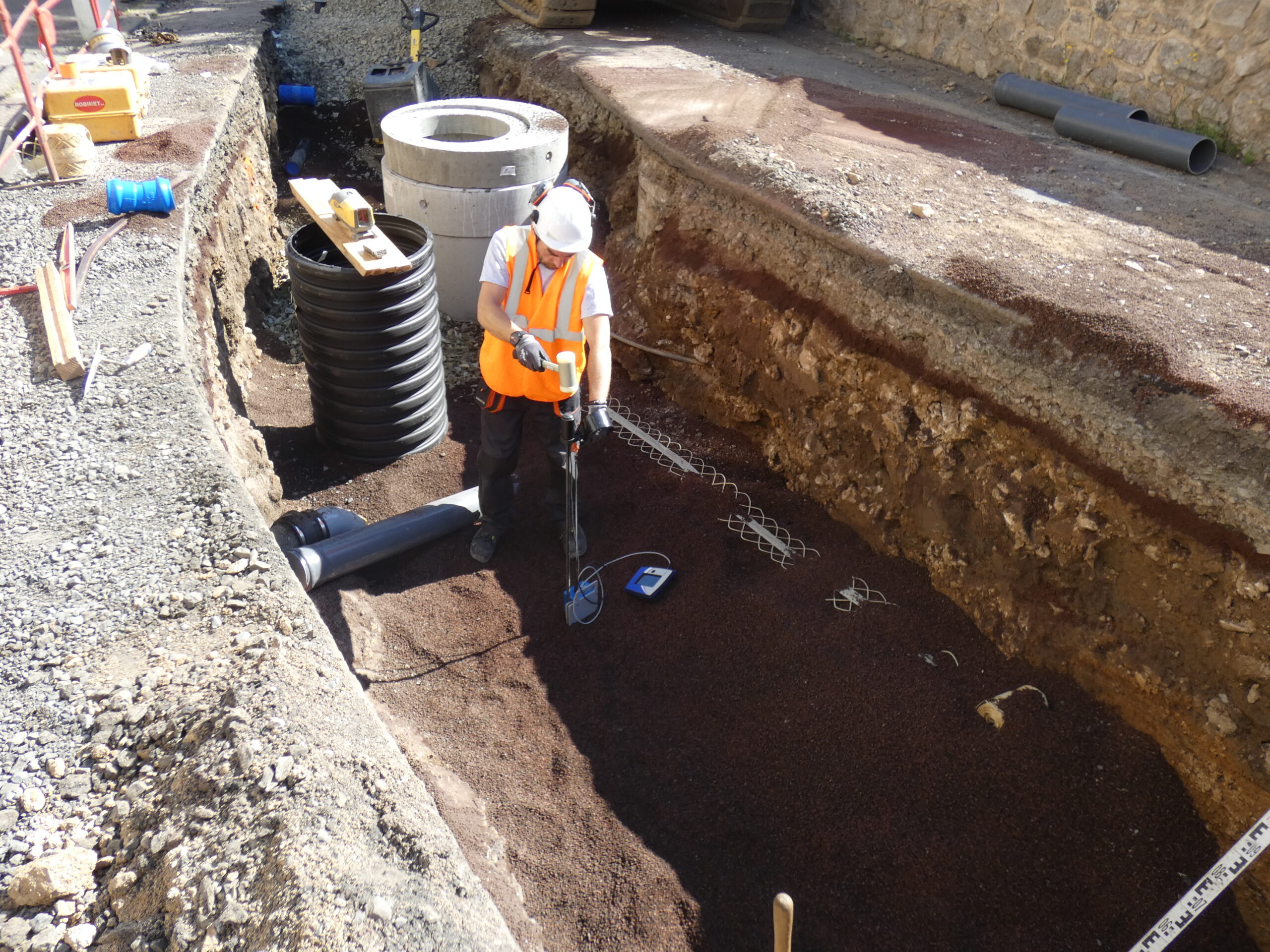

The PANDA® and GRIZZLY® dynamic penetrometers are particularly well suited to this approach: Function C can be directly implemented in the dialogue terminal / onboard computer and verify the acceptability of the material during the test. Thanks to its Websprint© web application, it facilitates data analysis.
By way of background, the NF P 94-105 method allows variable energy dynamic penetrometers to be used for one or more of the following compaction control functions:
- assessing layer thicknesses (Function A);
- verifying that the desired compaction target has been achieved (Function B). In this case, it is necessary to classify the materials used to know the compaction targets (percentage of optimum Proctor density and the moisture content of the materials at the time of the control tests;
- verify that the compaction complies with a site specific reference chart (Function C), particularly in the following cases:
- Evolving materials whose characteristics vary depending on the conditions of use or storage,
- Materials not listed in the catalogue (see Function B)
- If there is any doubt about the nature of the material, moisture content, reference curves of the material or the quality of compaction, only Function C should be used. The reference curves will be established on the basis of reference charts.
The complete title of NF P 94-105 is “Soils – Investigation and Testing – Compaction quality control – Variable energy dynamic penetrometer method – Principle and method of penetrometer calibration – Use of results – Interpretation”.

