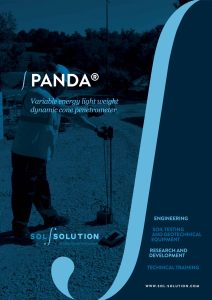
PANDA® Variable Energy Dynamic Cone Penetrometer (DCP)

  • Used for compaction control and site investigation
  • Portable method for evaluating soil strength
  • Immediate repeatable results so that on-site decisions can be made straight away
  • Overcomes traditional DCP rod friction issues
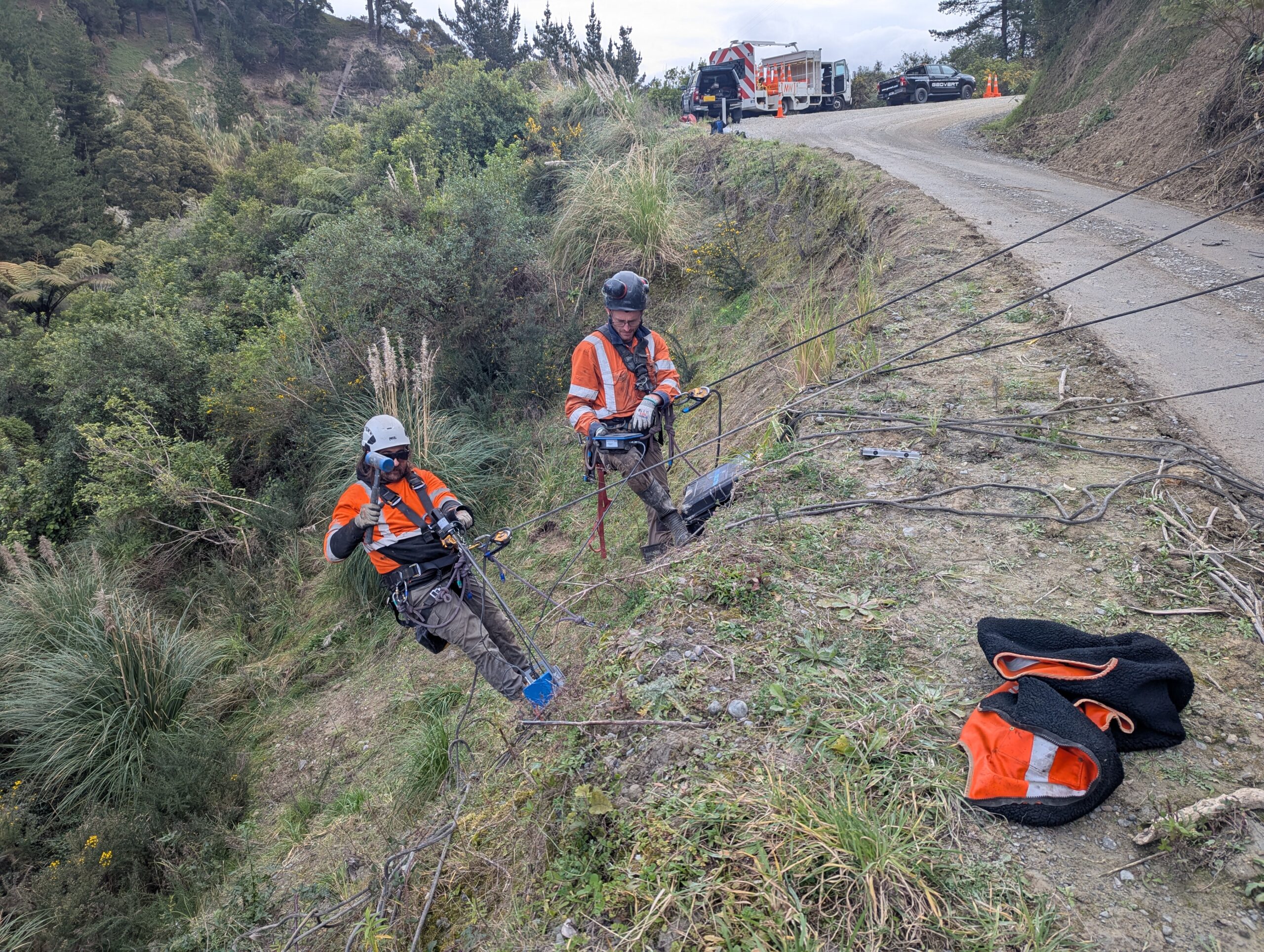
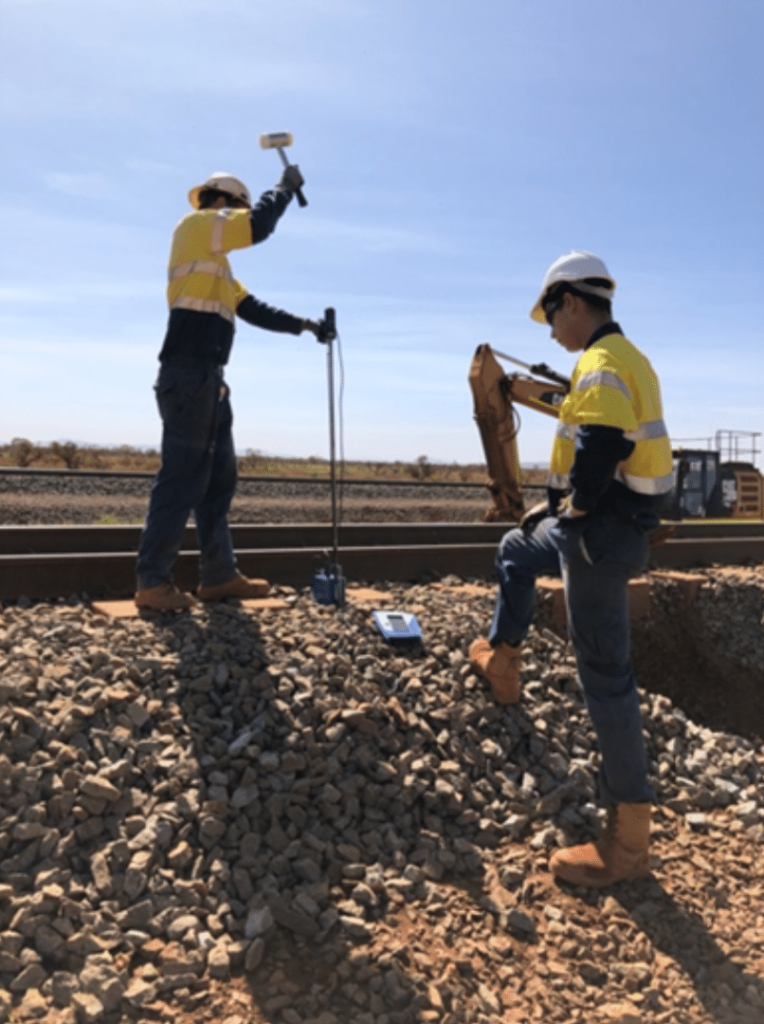
  • Good for testing in challenging conditions (e.g. steeply sloping ground, remote locations, soft and marshy ground, over water or confined spaces).
  • Meets NF P94-105 (2025) standard for compaction control

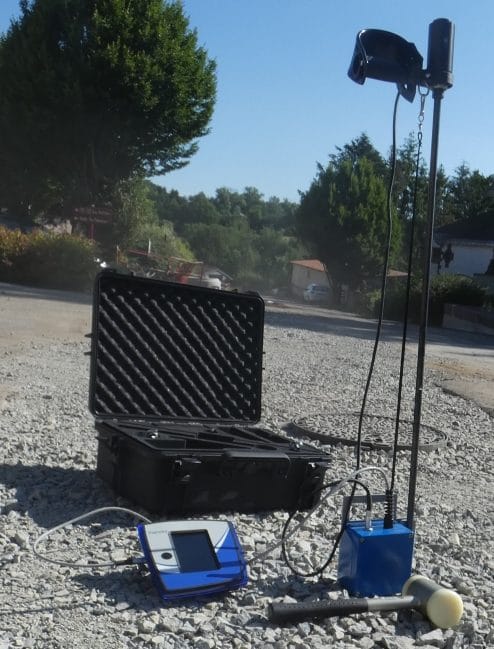
The PANDA® Variable Energy Dynamic Cone Penetrometer (DCP) measures and displays a material’s in-situ resistance to penetration through the depth profile of the material. The common generic name of the PANDA® is Variable Energy Dynamic Penetrometer (VEDP).

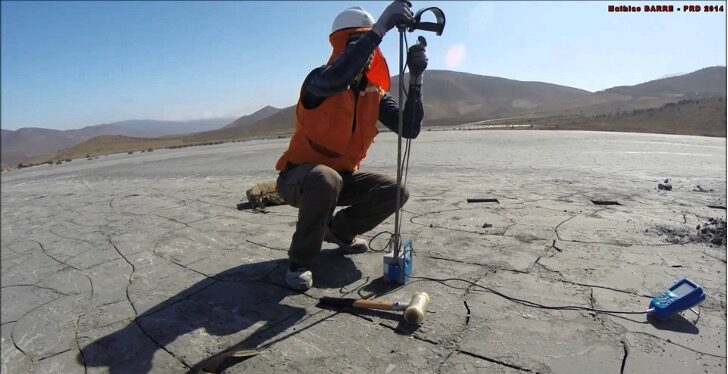
Many describe the PANDA® as a DCP on steroids or a poor persons CPT. It has so much more capability than a conventional DCP and overcomes the safety issues. To minimise rod friction, cones larger than the diameter of the rods are used, enabling meaningful data to be collected below the 1-2m limitation of the conventional DCP. Further, a torque wrench is used to measure the skin friction between the material being tested and the rod stem to identify whether the torque (Nm) is within the acceptable limits. In the WebSprint© software, torque is offset against the results, enabling a corrected cone resistance value to be reported. Several studies have shown that the PANDA® measurements correlate well with Cone Penetration Test (CPT) results. The benefit is that the PANDA® equipment can be used where the CPT vehicles are not suitable.

For deep or repetitive tests in the mid range of operation, a one person operated electric electric automatic hammer is available as an alternative to using the 1.7kg hammer.

For very stiff materials, the hammering column gives you more energy than with the 1.7kg manual hammer (heavier and axial energy).

PANDA® data is captured automatically by the built in sensors and is downloaded to WebSprint©, the cloud based software for securely storing, processing and interpreting your geotechnical data.

WebSprint© facilitates easy collaboration across your team and gives you access to compaction control, soil investigation and correlations modules.

PANDA Probe PANDA Instrumented Dynamic Cone Penetrometer DCP
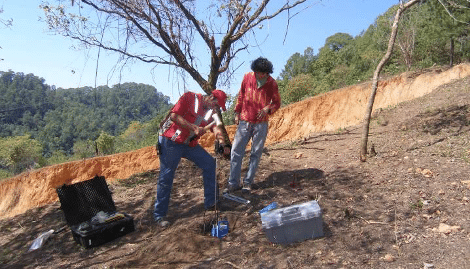
PANDA DCP Variable Energy Compaction Control mine Tailings TSF Site Characterisation Chile NF P94-105

Compaction Control

The PANDA® is used to monitoring layer thickness, and to assess compaction homogeneity. It’s also used for layer identification. It’s designed to NF P94-105 October 2025 Soils – Recognition and Testing – Compaction quality control – Variable energy dynamic penetrometer method – Principle and method of penetrometer calibration – Use of results – Interpretation.

You can see real time when doing the test if your material is within specification or not.

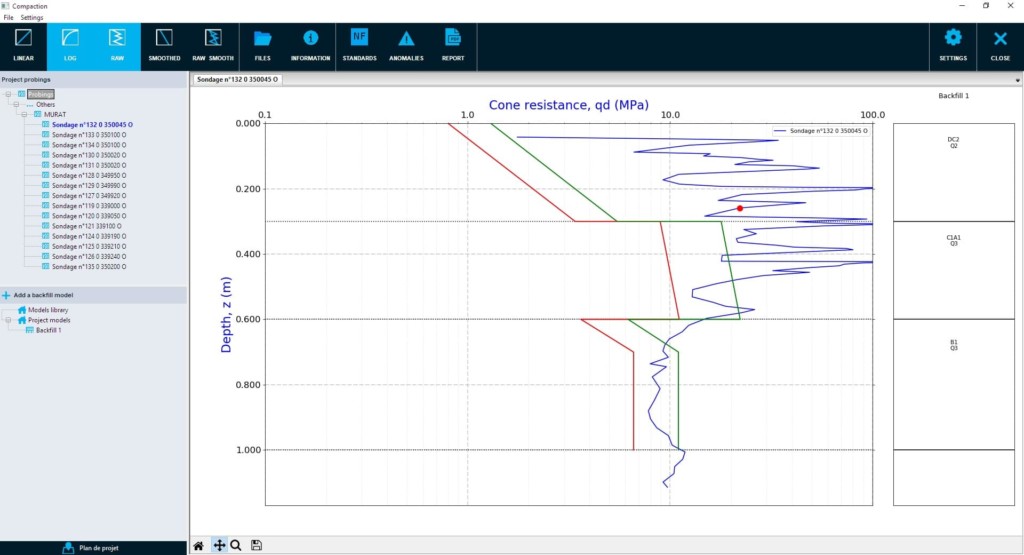
For compaction control, an integrated compaction control database for various soil types is used where the measurement of the driving depth (mm) and cone tip resistance (qd) is compared to a database based on the type of soil (soil classification), its water content and the required compaction quality (%OPN or OPM). The database of more than 2500 data points is catalogued in terms of plasticity, grain size distribution, water content, and level of compaction for both natural and artificial (crushed gravels) material types.

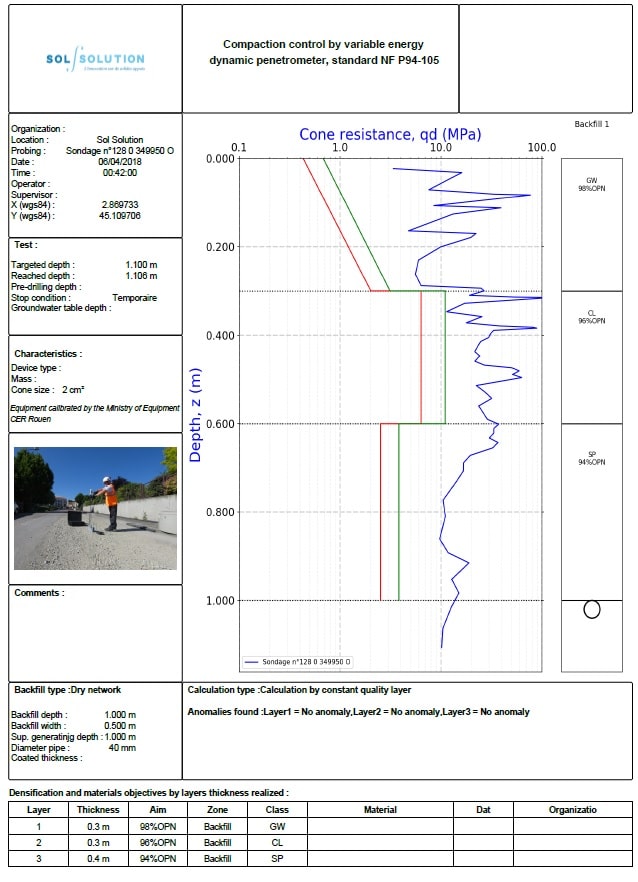
The related pre-calibrated reference and refusal lines, when compared to the test data, allow an assessment of the quality of the compaction to be made.

PANDA Instrumented DCP testing

Site Investigation

Site characterisation is unarguably the most important, but also most “difficult”, component of geo-engineering. The PANDA® probe is designed to improve the quality of site characterisation and reduce the difficulties involved.

A geological profile (database available) can be associated with the penetrogram, giving a pictorial representation of the geology and stiffness of the ground.

The typical operating range of the PANDA® is 4-6 metres depth in soils with a cone resistance (qd) of 20-30 MPa. Exceptionally, depths of about 17m have been reached in weak soils.

Variable energy means the operator can change the force applied so more data points can be taken in weak materials, like mine tailings.

Tests orientation can be anywhere from vertical to horizontal (e.g. for tunnel walls).

The PANDA® probe can be used where Cone Penetration Test (CPT) vehicles are not suitable.

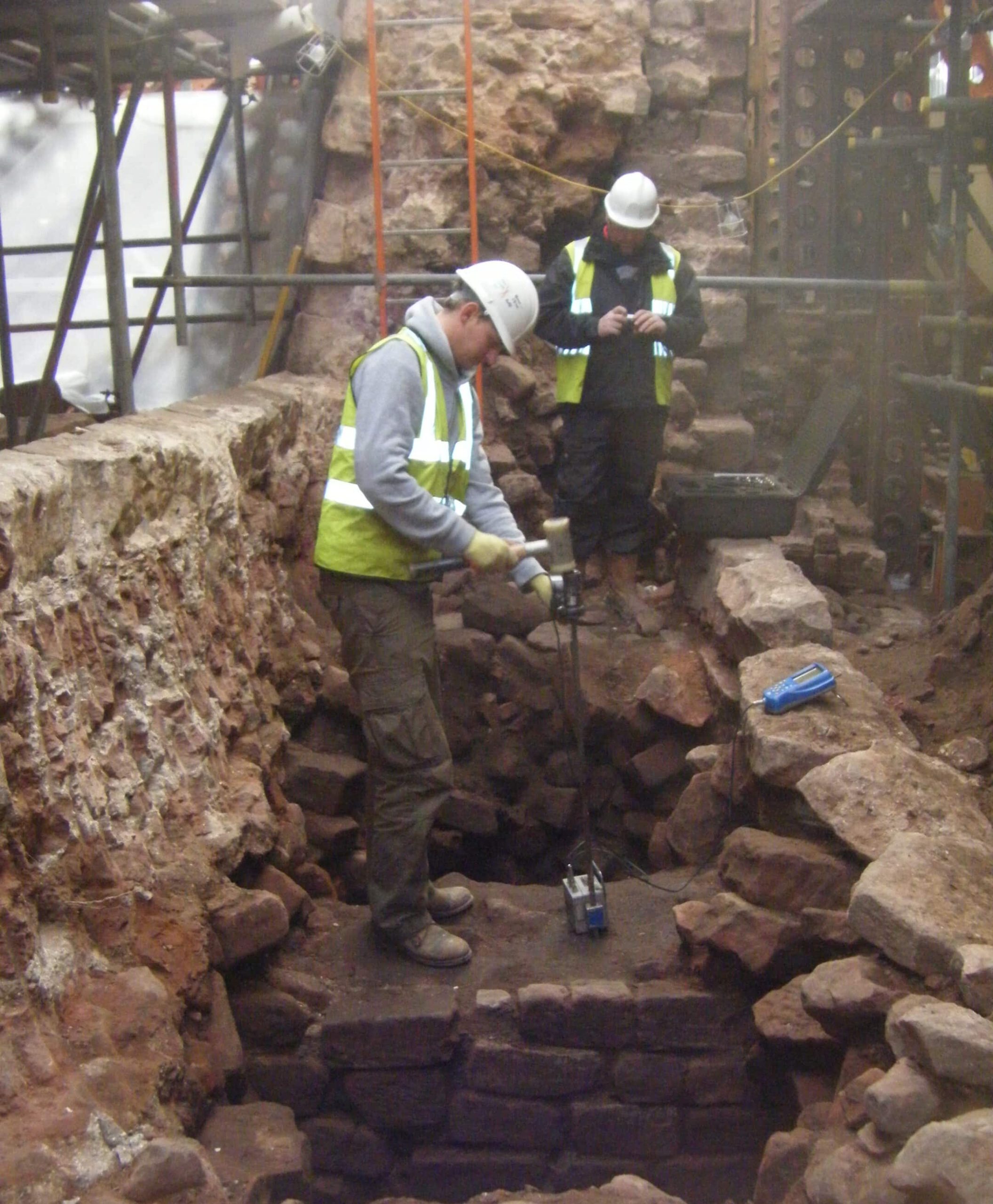
PANDA Archeology Chester Roman Walls

PANDA® Dynamic Cone Penetrometer (DCP) Options – Automatic Hammer, Hammering Column and Mechanical Rod Extractor

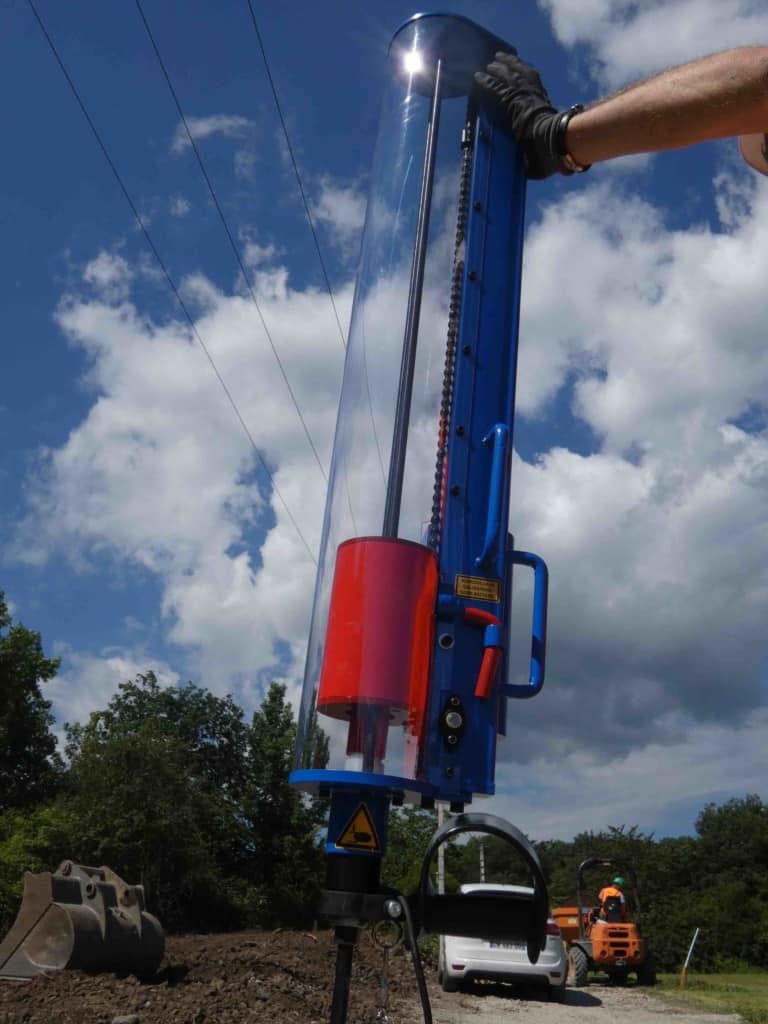
Automatic Hammer – For deep or repetitive tests, an automatic hammer is available as an alternative to using the 1.7kg hammer. The Automatic Hammer can also be operated by one person. It has a 10kg drop weight with a fixed drop height and is powered by small 240V electric generator. Penetration is at a rate of 1 blow per 3.5 seconds.

Hammering Column – The hammering column gives you more energy than with the 1.7kg manual hammer (heavier drop weight and axial energy)

  • Constant energy (free falling) or variable (by accelerated the 5kg drop hammer)
  • Alternating hammering left hand – right hand, two hands
  • Hammering type change possible during a single PANDA® test (manual hammering, hammering column, electric automatic hammer)
  • Suited for stiff and very stiff materials

Rod Extractor – Although the PANDA® Dynamic Cone Penetrometer (DCP) is supplied with a lightweight T-piece rod extractor, for most applications, this Mechanical Rod Extractor is preferable.

Advantages

  • Faster
    • Provides immediate results so that on-site decisions can be made straight away.
    • 5-10 minutes per test typical with results viewable on site
  • Accurate and Repeatable
    • By overcoming rod friction, correlates well with Cone Penetration Test (CPT)
  • Non destructive (almost)
  • Without errors
    • Equipment is instrumented (data is automatically and accurately recorded)
    • Results are machine produced (overcoming manual data recording, transposition or calculation errors and fictitious results)
    • Improved data flow and integrity using WebSprint©
  • GPS located and time stamped – know where and when every test is done
  • Visually presented results
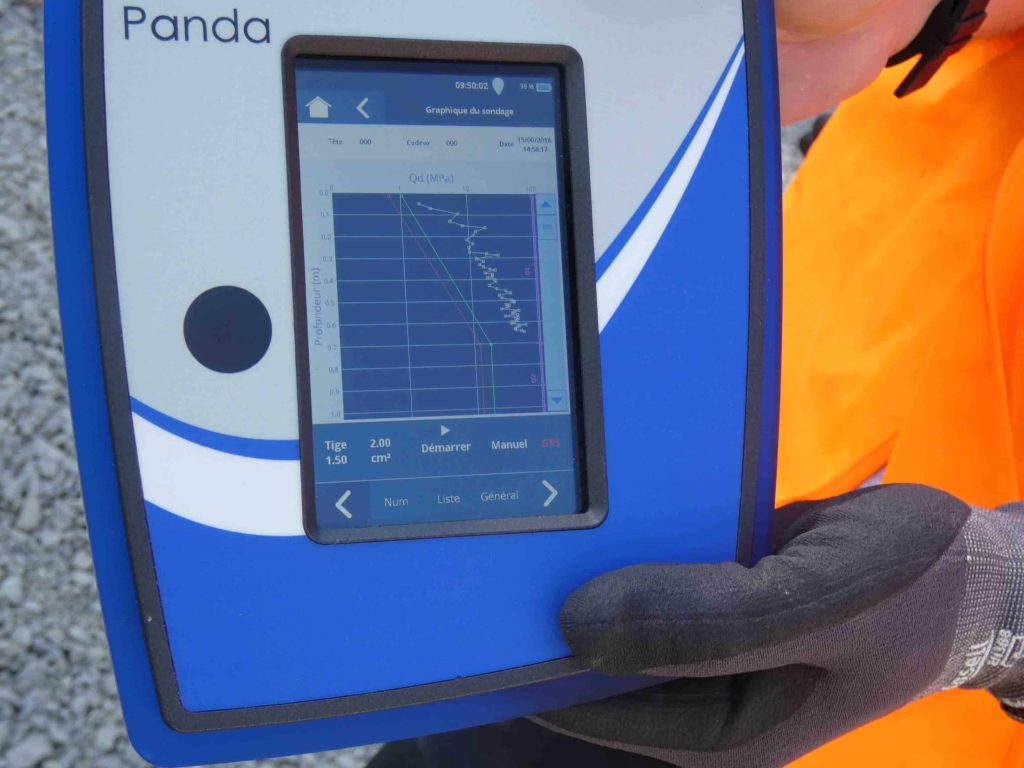
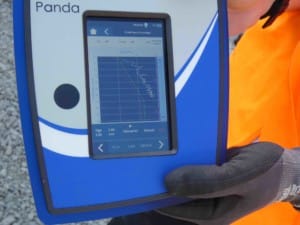
    • Graphical representation of the data (penetrogram) on the hand held terminal, potting depth and cone tip resistance (qd) and your compaction control specification (reference and refusal lines)
  • Improved safety
    • Safe to operate (overcomes the safety issues of hand / finger crushing and back injury associated with the conventional Dynamic Cone Penetrometer (DCP)
  • Cost effective
    • One person operation: Small, portable and lightweight – 18.5kg unit – ideal to transport in hold baggage on the aeroplane for transport to remote locations
    • Thanks to its compact size and light weight, the PANDA® probe is extremely mobile and able to investigate areas with limited access or height restrictions. For example, it can be used in basements, on very steep slopes, in back yards and tunnels. No support equipment is required.

Applications

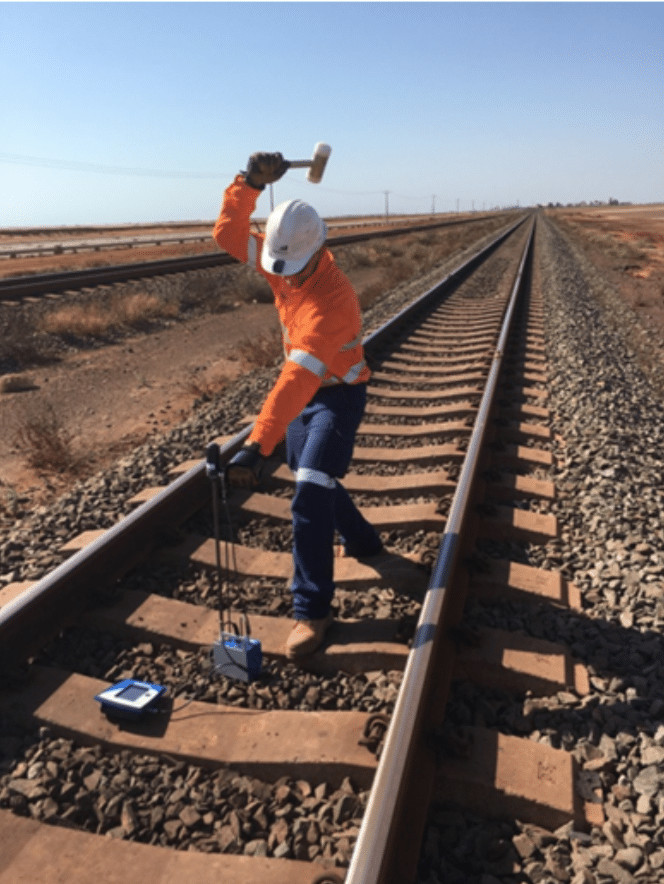
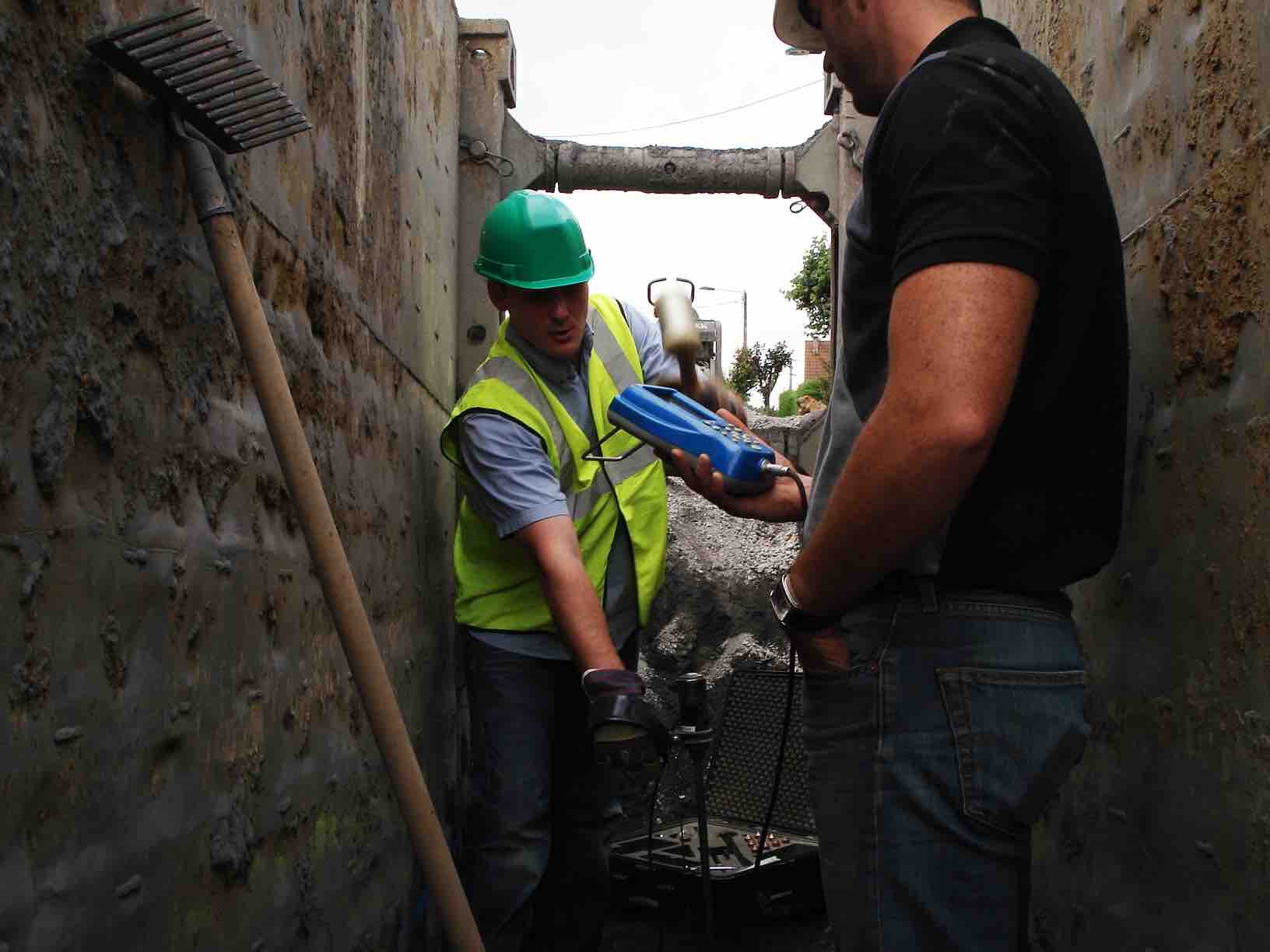
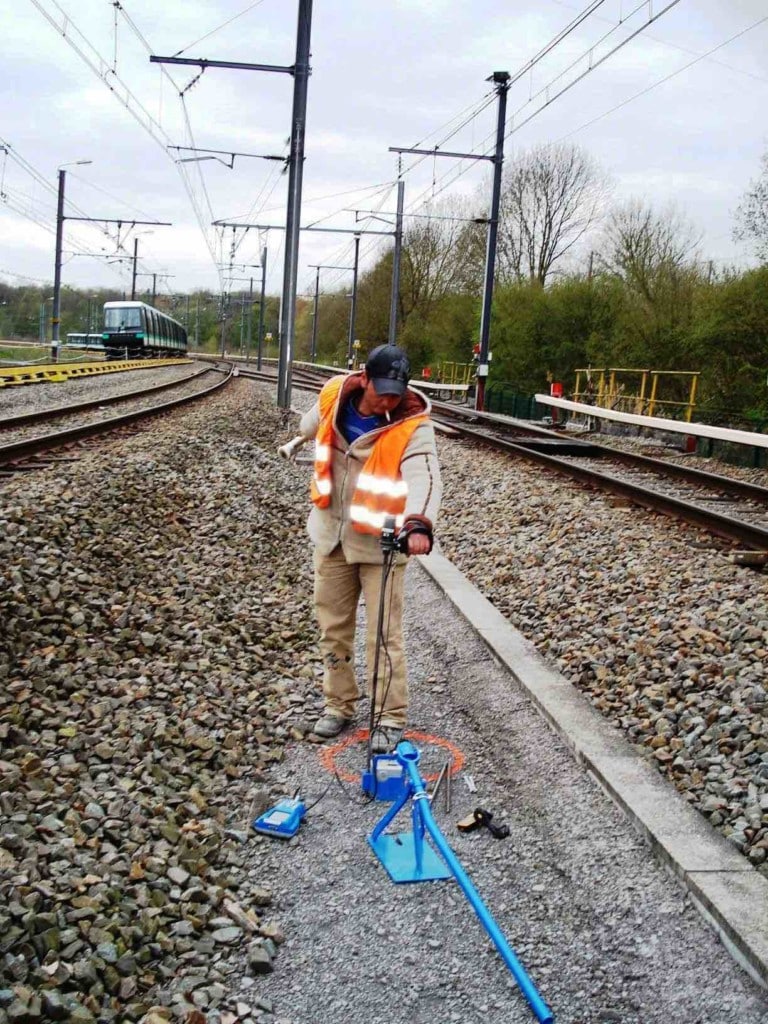
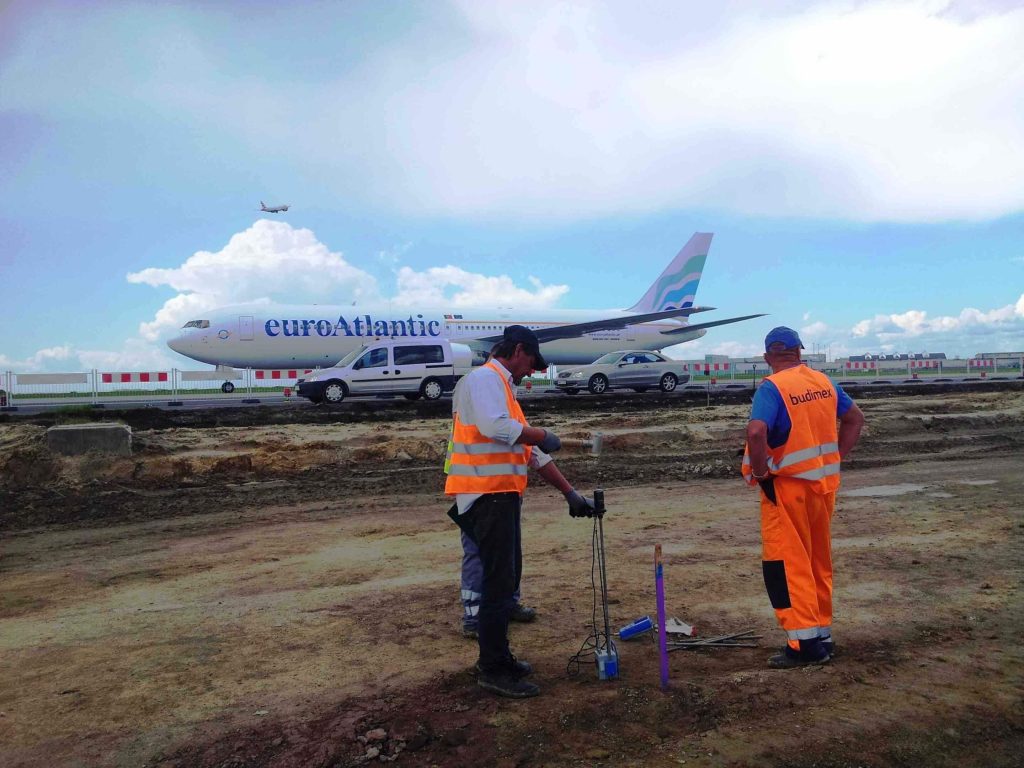
Applications for the PANDA® Variable Energy Dynamic Penetrometer (VEDP) from Sol Solution include archeology, cable and pipe laying, trench work, flexible pavements, backfill, unsealed roads and mine haul roads, landfill facilities, solar farms, tunnels (e.g. testing horizontally), railway / railroad track beds and ballast (ballast fouling and formation assessment), cuttings and embankments, bridge abutments (e.g. testing horizontally and vertically), airport runway and taxiways, hard standing areas, dam construction (and mine tailings), canal building, building foundations, electricity pylons and poles, telecom masts, property sub-divisions, backyards, very sleep slopes and temporary works platforms (piling rigs and mobile crane pads). Here is the PANDA® in action in various applications, case studies and research papers on some of these applications too.

Clients include those involved in pavement construction, pavement rehabilitation, material testing, geotechnical testing and site investigation and include utilities (gas, electricity and water), road and rail authorities, councils, asset managers, mines, mobile crane and piling rig contractors, engineering and construction groups, subcontractors, geotechnical consultancies and research organisations.

PANDA DCP Probe Hammering Column
PANDA Dynamic Cone Penetrometer (DCP) on Sewer Pipeline Backfill
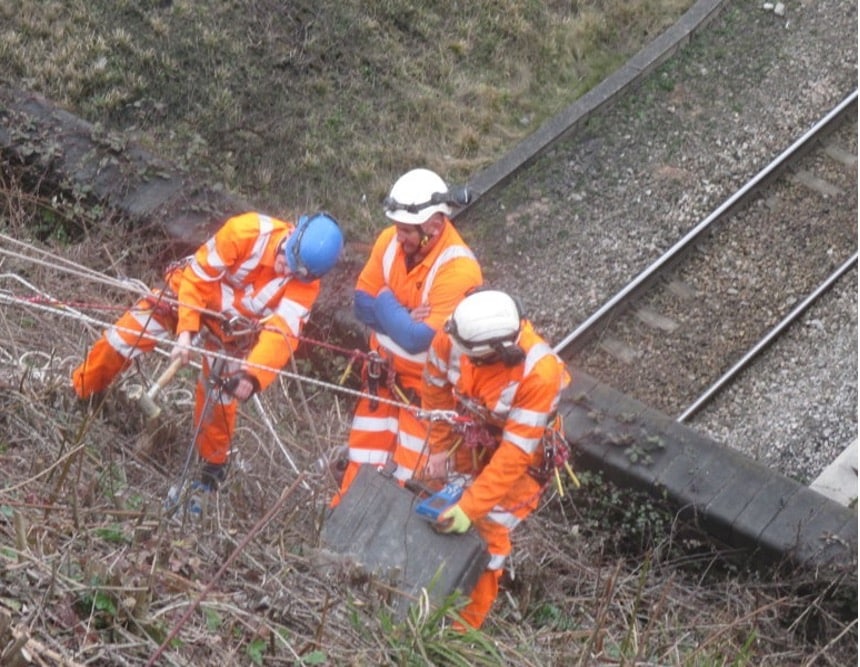
PANDA DCP Variable Energy Slope Stability Strength vs Depth Site Investigation Rail Cutting
PANDA DCP Variable Energy Slope Stability Strength vs Depth Site Investigation
PANDA VEDP Geovert WSP Slope Stability

PANDA Dynamic Cone Penetrometer (DCP) Calibration, Service and Spare Parts

Insitutek are proud to represent Sol Solution PANDA® Dynamic Cone Penetrometers (DCP’s) in Australia, New Zealand and the Pacific Islands and provide a very high level of client support. We offer a complete spectrum of services including after-sale technical support, servicing, repairs, and calibrations. Our service centre is also well stocked with spare parts and consumables.

To find out more, Contact Us.

Both the PANDA® Instrumented Variable Energy DCP and the Automatic Hammer are covered here.

  • For compaction control, an integrated compaction control database for various soil types is used where the measurement of the driving depth (mm) and cone tip resistance (qd) is compared to a database based on the type of soil (soil classification), its water content and the required compaction quality (%OPN or OPM). After entering the features of the trench, the type of the filling material used and the compaction quality required; the reference and failure will be plotted which, when compared to the test data, allow an assessment of the quality of the work to be made. The database of more than 2500 data points is catalogued in terms of plasticity, grain size distribution, water content, and level of compaction for both natural and artificial (crushed gravels) material types.
  • For soil investigation, a geological profile (database available) can be associated with the penetrogram.

The PANDA® device consists of three main components known commonly as:
(i) The Anvil
(ii) Dialogue Terminal (DT)
(iii) Central Acquisition Unit (CAU)

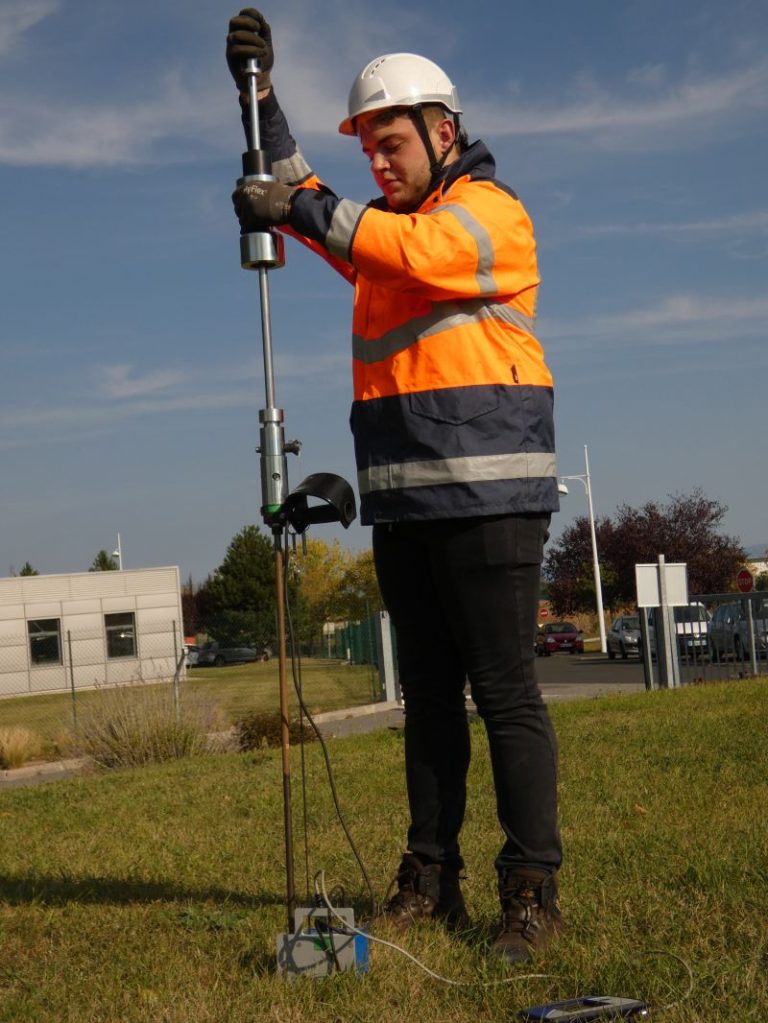
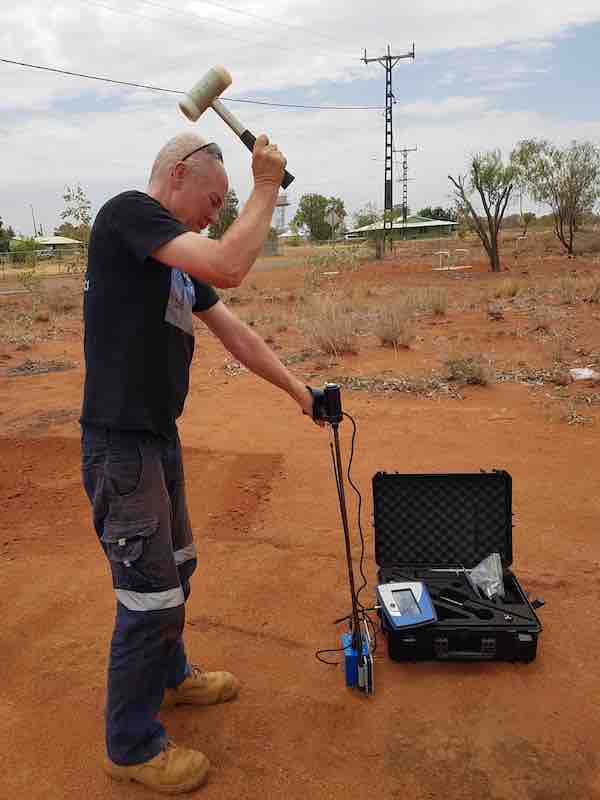
Dynamic Cone Penetrometer DCP PANDA Anvil being StruckThe Anvil

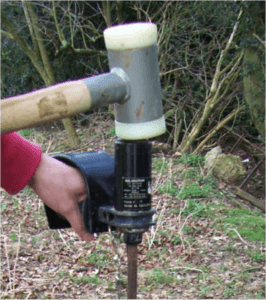
This part of the device is where strain gauges are built in to record strike effort from hammer blow. It is connected to the central acquisition unit by a transmission cable and a retractable measurement ribbon. The anvil sits over the rods used for ground penetration, and is repeatedly struck by the operator using a balanced hammer. Each time the anvil is hit, the relevant resistance is displayed on the Dialogue Terminal in MPa values. This is reached by strain gauges recording weight and velocity of hammer in conjunction of distance travelled through materials.

The device can be pre-set to provide an audible signal once a desired depth has been achieved and will allow the operator to cease immediately. If any object is encountered through penetration process the device will provide an audible alarm to inform the operative not to proceed further. Additional rods can be added at any time through the process, and can record readings from up to 6m in depth where conditions allow.

The Dialogue Terminal (DT)

This part of the device is where the operative can input and extract data in relation to relevant site or sounding. Data such as client information, site conditions, material, classification, and comments are easily loaded along with ability to set required maximum depth if required. Once this pre-set depth is achieved an audible warning will be heard along with a visual flashing of the screen.

This is connected to the Central Acquisitions Unit (CAU) via a serial cable which allows information to be displayed on the screen with each strike. The strike information is shown in large text format to allow the operative to clearly see the following information:

    • Strike distance achieved
    • Material resistance
    • Total depth achieved

A pre drilling depth can also be entered where hard surfaces have been removed as a result of a trial hole or core drilling where the CAU cannot sit on material surface. This will also allow for surface datum from where all depths are measured. Information for each sounding can be called up for display on the screen along with a table of strike results and a resistance graph known as a penetrograph. The device has a memory capable of holding hundreds of results before upload, and will maintain these results until the operative removes them.

The Central Acquisitions Unit (CAU)

The critical information for each sounding is returned from this unit in relation to overall depth, resistance, and strike distance. Information sent from the anvil passes through this unit where it is processed and sent on to the dialogue terminal. The DT will not allow a sounding to take place unless successful connection and data input has been achieved. Each sounding usually starts with 1m of rod length which can be added to in 500mm sections. A retractable reinforced measurement ribbon is connected to the underside of the anvil which will record each strike depth and total distance travelled through penetration.

Automatic Hammer

For deep or repetitive tests, the automatic hammer alternative is available as an alternative to using the 1.7kg hammer. The Automatic Hammer can also be operated by one person. Prior to or during a test with the PANDA® probe, you can switch from manual hammering to automatic hammering. The Automatic Hammer is safe, easy to use and need a minimum amount of maintenance.

  • 10kg drop weight with fixed drop height powered by small 24V electric generator.

The PANDA® probe measures the energy exerted to the system with each blow. Blows are exerted 30 blows /min so 1 blow every 2 seconds.

Automatic Hammer Electric 10kg for PANDA DCP Close Up
PANDA® Variable Energy DCP – Compaction Control
PANDA® Variable Energy DCP – Site Investigation
Mechanical Rod Extractor for PANDA Dynamic Cone Penetrometer (DCP)
PANDA Probe hammering column
Automatic Hammer Electric for PANDA Dynamic Cone Penetrometer
-
Applications of Impact Rolling in Mine Closure - Robin Power, Derek Avalle & Simon Dix - Mine Closure 2026

Applications of Impact Rolling in Mine Closure - Robin Power, Derek Avalle & Simon Dix - Mine Closure 2026

Categories: Research Papers

Topics: Effectiveness of Impact Rolling, Mine Tailings, Mining

Published: 11/09/2026

Mine closure presents complex geotechnical challenges associated with rehabilitating large, disturbed landforms, including waste rock dumps, tailings storage facilities (TSFs) and backfilled pits. These landforms often comprise heterogeneous, loosely placed or variably compacted materials with uncertain density, stiffness and long-term settlement behaviour. Closure objectives extend beyond stability to include prevention of spontaneous combustion and protection of groundwater from acid and metalliferous drainage. Achieving stable, low-permeability, trafficable surfaces is therefore essential to meet regulatory criteria, ensure public safety and enable sustainable post-mining land use.

Impact rolling has emerged as an efficient, cost-effective and quantifiable ground improvement technique well suited to these conditions. Impact rolling or rolling dynamic compaction applies high energy impact compaction (HEIC) using a tractor-drawn, non-circular drum that delivers concentrated impact loads to the ground surface. Unlike conventional cylindrical drum rollers, it induces deep-seated densification, increasing stiffness, reducing void ratio and lowering permeability across a broad range of mining wastes and overburden materials. This highly productive method enables large areas of uncontrolled or end-dumped fill to be treated rapidly and economically, reducing differential settlement risk and improving overall landform performance.

In landform reconstruction, impact rolling is used at pit bases to reduce permeability and limit contaminant migration. During backfilling, thicker lifts can be placed and compacted with confidence, maximising densification and increasing the effective volume of material placed within the void. At final levels, the technique assists in compacting capping layers designed to shed water and control infiltration. For existing landforms, applications include densification of waste rock dumps prior to or during capping, improvement of tailings beaches to support cover systems, and stabilisation of coal discard and overburden fills. Integrated intelligent compaction measurement provides traceability of roller passes, ground response and settlement. When combined with verification tools such as plate load testing, geophysics (MASW etc.), cone penetration testing or variable energy dynamic probing and dynamic probing super heavy, impact rolling supports a performance-based closure strategy, delivering durable rehabilitation and reduced long-term risk.

Keywords: impact rolling, settlement, permeability, compaction, mine closure, mine reclamation, mine tailings, coal ash ponds

Keywords: GRIZZLY® Dynamic Probing Super Heavy, Impact Rolling, PANDA® Instrumented DCP

Converting Uncontrolled Fill Sites into Controlled Engineered Fills through Rapid Cost-Effective and Quantifiable Impact Rolling - Power, King, Clenton & Avalle DFI-PFSF May 2026

Converting Uncontrolled Fill Sites into Controlled Engineered Fills through Rapid Cost-Effective and Quantifiable Impact Rolling - Power, King, Clenton & Avalle DFI-PFSF May 2026

Categories: Research Papers

Topics: Effectiveness of Impact Rolling, Land Development

Published: 01/06/2026

Uncontrolled fill sites pose significant geotechnical challenges for future development due to uncertain material quality, compaction, and load-bearing capacity. Converting these sites into reliable, controlled engineered fills is essential to ensure structural performance and reduce long-term settlement or failure risks. This paper presents the use of impact rolling as a fast, cost-effective, and quantifiable ground improvement technique for reworking and validating uncontrolled fills and significantly increasing the value of the development site.

Impact rolling applies high-energy, non-circular dynamic loads to the ground, promoting deep compaction and densification well beyond the reach of conventional rollers. It is particularly suited for heterogeneous fill materials, where traditional compaction methods may be ineffective. By integrating real-time Intelligent Compaction Measurement and in-situ validation tools such as the crawler based Dynamic Probing Super Heavy (DPSH) and portable Variable Energy Dynamic Cone Penetrometer (VEDP) with strength profile and compaction control capability, site improvement is not only achieved but verified with quantifiable data.

A case study is presented to illustrate the transformation of problematic fill sites into compliant platforms suitable for construction or infrastructure use. Results highlight the method’s ability to improve ground stiffness, reduce voids, and demonstrate uniformity—reducing the need for costly excavation and replacement. This approach offers a practical, low-risk solution for developers and engineers dealing with legacy or undocumented fill conditions.

Keywords: Impact rolling, uncontrolled fill, controlled engineered fill, compaction control, land development, ground improvement, dynamic probing

Keywords: GRIZZLY® Dynamic Probing Super Heavy, Impact Rolling, PANDA® Instrumented DCP

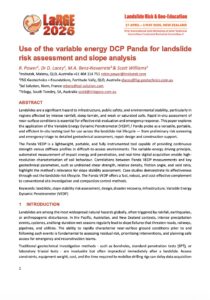
Use of the variable energy DCP Panda for landslide risk assessment and slope analysis - Presentation - Robin Power, Dr David Lacey, Miguel Benz-Navarrete & Scott Williams New Zealand LaRGE 2026

Use of the variable energy DCP Panda for landslide risk assessment and slope analysis - Presentation - Robin Power, Dr David Lacey, Miguel Benz-Navarrete & Scott Williams New Zealand LaRGE 2026

Categories: Research Papers

Topics: Slope Stability

Published: 05/05/2026

Presentation supporting Technical - Paper Use of the variable energy DCP Panda for landslide risk assessment and slope analysis - Presentation - Robin Power, Dr David Lacey, Miguel Benz-Navarrete & Scott Williams New Zealand LaRGE 2026

Landslides are a significant hazard to infrastructure, public safety, and environmental stability, particularly in regions affected by intense rainfall, steep terrain, and weak or saturated soils. Rapid in-situ assessment of near-surface conditions is essential for effective risk evaluation and emergency response. This paper explores the application of the Variable Energy Dynamic Penetrometer (VEDP) / Panda probe as a versatile, portable, and efficient in-situ testing tool for use across the landslide risk lifecycle — from preliminary risk screening and emergency triage to detailed geotechnical assessment, repair design and construction support.

The Panda VEDP is a lightweight, portable, and fully instrumented tool capable of providing continuous strength versus stiffness profiles in difficult-to-access environments. The variable-energy driving principle, automated measurement of impact energy and penetration, and real-time digital acquisition enable high-resolution characterisation of soil behaviour. Correlations between Panda VEDP measurements and key geotechnical parameters, such as undrained shear strength, relative density, friction angle, and void ratio, highlight the method’s relevance for slope stability assessment. Case studies demonstrate its effectiveness through-out the landslide risk lifecycle. The Panda VEDP offers a fast, robust, and cost-effective complement to conventional site investigation and compaction control methods.

Keywords: landslide, slope stability risk assessment, design, disaster recovery, infrastructure, Variable Energy Dynamic Penetrometer (VEDP)

Keywords: PANDA® Instrumented DCP

Use of the variable energy DCP Panda for landslide risk assessment and slope analysis - Robin Power, Dr David Lacey, Miguel Benz-Navarrete & Scott Williams New Zealand LaRGE 2026

Use of the variable energy DCP Panda for landslide risk assessment and slope analysis - Robin Power, Dr David Lacey, Miguel Benz-Navarrete & Scott Williams New Zealand LaRGE 2026

Categories: Research Papers

Topics: Slope Stability

Published: 05/05/2026

Landslides are a significant hazard to infrastructure, public safety, and environmental stability, particularly in regions affected by intense rainfall, steep terrain, and weak or saturated soils. Rapid in-situ assessment of near-surface conditions is essential for effective risk evaluation and emergency response. This paper explores the application of the Variable Energy Dynamic Penetrometer (VEDP) / Panda probe as a versatile, portable, and efficient in-situ testing tool for use across the landslide risk lifecycle — from preliminary risk screening and emergency triage to detailed geotechnical assessment, repair design and construction support.

The Panda VEDP is a lightweight, portable, and fully instrumented tool capable of providing continuous strength versus stiffness profiles in difficult-to-access environments. The variable-energy driving principle, automated measurement of impact energy and penetration, and real-time digital acquisition enable high-resolution characterisation of soil behaviour. Correlations between Panda VEDP measurements and key geotechnical parameters, such as undrained shear strength, relative density, friction angle, and void ratio, highlight the method’s relevance for slope stability assessment. Case studies demonstrate its effectiveness through-out the landslide risk lifecycle. The Panda VEDP offers a fast, robust, and cost-effective complement to conventional site investigation and compaction control methods.

Keywords: landslide, slope stability risk assessment, design, disaster recovery, infrastructure, Variable Energy Dynamic Penetrometer (VEDP)

Keywords: PANDA® Instrumented DCP

NF P94-105 October 2025 Soils - Cover page

NF P94-105 - Compaction quality control - Variable energy dynamic penetrometer method - Principle and method of penetrometer calibration - Use of results - Interpretation

Categories: Technical Standards

Published: 31/10/2025

Keywords: PANDA® Instrumented DCP

A REVIEW OF 30 YEARS OF FRENCH INSTRUMENTED DYNAMIC CONE PENETROMETER PANDA

A REVIEW OF 30 YEARS OF FRENCH INSTRUMENTED DYNAMIC CONE PENETROMETER PANDA

Categories: Research Papers

Topics: Comparative Studies – PANDA® vs other Compaction Control Methods, Comparative Studies – PANDA® vs other Site Investigation Methods, Understanding the PANDA® DCP – Compaction Control and Site Investigation results

Published: 25/06/2024

Dynamic penetrometer is a worldwide practice in geotechnical exploration and the French Panda® lightweight variable energy is the most developed device nowadays. Widely used in France and other countries, The Panda penetrometer is relatively unknown for characterizing surface soils domain and the possibilities it offers.

In this Article, the authors offer a brief review of the principle of measurement, its uses, advantages and disadvantages calibration, and interpretation, as well as the different relationships with other in-situ test (CPT, SPT…) and some geotechnical parameters.

A summary of the works that can be found and that are based on this technology is also presented.

The overall aim is to provide the reader with a basic historical document for a better understanding of the operation and analysis of the results obtained with this device, enabling it to be integrated, as a complement, into in situ investigation campaigns.

Keywords: PANDA® Instrumented DCP

Site testing for alternative quality testing - Smithfield Bypass Project, Cairns - Burt Look - ANZGeo2023

Site testing for alternative quality testing - Smithfield Bypass Project, Cairns - Burt Look - ANZGeo2023

Categories: Research Papers

Topics: Comparative Studies – PANDA® vs other Compaction Control Methods, Comparative Studies between the Light Weight Defectometer and other Devices, Comparative Studies between the Plate Load Test (PLT) and other Devices
Published: 10/11/2023

Industry familiarity with density-based assessment for Quality Control (QC) purposes currently hampers the use of more accurate tests. An ARRB research project identified several alternative quality tests that have the potential to provide improved accuracy (as compared to density). These “new” methods (most are over 20 years old) provide a reduction in both the duration of onsite testing and turnaround of test results and provide the direct measurement of a stiffness (modulus) value. Overall, these alternative tests do not correlate well with the common density ratio (DR) test. Most alternative field equipment tests seem to be positioned between the Plate Load Test (PLT) and density in terms of accuracy and precision. The results and comparisons at the Smithfield Bypass project (approximately 11.5 km North-West of Cairns CBD) is presented. This site was tested in early 2019 and is one of several “live” test sites between 2017 and 2019. Field testing was undertaken upon an embankment being constructed over Avondale Creek and in parallel to standard tests for QC. Lessons learnt and comparisons between equipment at this site are provided. Dendrogram analysis is used to show the relative relationship between tests.


Keywords: Light Weight Deflectometer, PANDA® Instrumented DCP, Plate Load Test

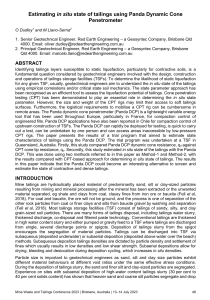
Estimating in situ state of tailings using Panda dynamic cone penetrometer - Oliver Dudley & Marcelo Llano - Mine Waste and Tailings Brisbane July 2023

Estimating in situ state of tailings using Panda dynamic cone penetrometer - Oliver Dudley & Marcelo Llano - Mine Waste and Tailings Brisbane July 2023

Categories: Research Papers

Topics: Mine Tailings

Published: 18/07/2023

Identifying tailings layers susceptible to static liquefaction, particularly for contractive soils, is a fundamental question considered by geotechnical engineers involved with the design, construction and operations of tailings storage facilities (TSFs). To determine the likelihood of static liquefaction for any given TSF, usually, geotechnical engineers aim to understand the in situ state of the tailings using empirical correlations and/or critical state soil mechanics. The state parameter approach has been recognised as an efficient tool to assess the liquefaction potential of tailings. Cone penetration testing (CPT) has been demonstrated to play an essential role in determining the in situ state parameter. However, the size and weight of the CPT rigs may limit their access to soft tailings surfaces. Furthermore, the logistical requirements to mobilise a CPT rig can be cumbersome in remote areas.

The Panda dynamic cone penetrometer (Panda DCP) is a lightweight variable energy tool that has been used throughout Europe, particularly in France, for compaction control of engineered fills. Panda DCP applications have also been reported in Chile for compaction control of upstream construction of TSFs. The Panda DCP can rapidly be deployed for testing, is quick to carry out a test, can be undertaken by one person and can access areas inaccessible by low-pressure CPT rigs.

The paper presents the results of a trial program that aimed to estimate state characteristics of tailings using the Panda DCP. The trial program was undertaken at a TSF in Queensland, Australia. Firstly, this study compared Panda DCP dynamic cone resistance, da against CPT cone tip resistance, c. Secondly, this study estimated in situ state of the tailings with the Panda DCP. This was done using two methods referred to in this paper as Method-1 and Method-2, with the results compared with CPT-based approach for determining in situ state of tailings. The results in this paper indicate that the Panda DCP could become an interesting alternative to screen and estimate the state of contractive and dense tailings.

Keywords: PANDA® Instrumented DCP

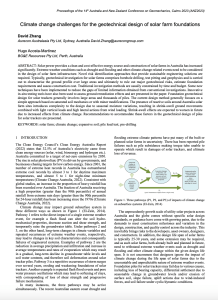
Climate change challenges for the geotechnical design of solar farms - David Zhang - ANZGeo2023

Climate change challenges for the geotechnical design of solar farms - David Zhang - ANZGeo2023

Categories: Research Papers

Topics: Solar Farms

Published: 10/07/2023

Solar power provides a clean and cost-effective energy source and construction of solar farms in Australia has increased significantly. Extreme weather conditions such as drought and flooding and other climate-change related events need to be considered in the design of solar farm infrastructure. Novel risk identification approaches that provide sustainable engineering solutions are required.

Typically, geotechnical investigation for solar farms comprises borehole drilling, test pitting and geophysics and is carried out to characterise the ground profile over large areas and ultimately to rule out major geotechnical risks, estimate foundation requirements and assess construction cost. Traditional investigation methods are usually constrained by time and budget. Some new techniques have been implemented to reduce the gaps of limited information obtained from conventional investigations. Innovative in-situ testing tools have also been used to assess ground remediation effects and are presented in the paper.

Foundation geotechnical design for solar trackers generally involves large areas and thousands of piles. The current design method generally focuses on a simple approach based on saturated soil mechanics or with minor modifications. The presence of reactive soils around Australia solar farm sites introduces complexity to the design due to seasonal moisture variations, resulting in shrink-swell ground movements combined with light vertical loads and high lateral actions from wind loading. Shrink-swell effects are expected to worsen in future due to increased effects from climate change. Recommendations to accommodate these factors in the geotechnical design of piles for solar trackers are presented.

Keywords: PANDA® Instrumented DCP

PANDA Variable Energy DCP hammering column brochure

Categories: Brochures

Published: 03/06/2023

Keywords: PANDA® Instrumented DCP

The Use of Lightweight Penetrometer PANDA for the Compaction Control of Classified Sand Tailings Dams - Villavicencio, et al - Minerals - Nov 2022

The Use of Lightweight Penetrometer PANDA for the Compaction Control of Classified Sand Tailings Dams - Villavicencio et al

Categories: Research Papers

Topics: Mine Tailings

Published: 10/11/2022

Sand tailings dams have historically been the most commonly used technology for tailings storage in Chile. Although engineering advances have resulted in the construction of approximately 250m high facilities, some operational challenges still remain, including compaction control. Control is currently performed at a few control points in a dam embankment, without considering a series of factors that affect its mechanical behavior (e.g.,layer thickness and material variability). Within this context, geostatistics can be applied in combination with low-cost geotechnical tools as an alternative to improve compaction control in tailings storage facilities. In this study, an extensive field investigation was carried out.

A total of 91 PANDA penetrometer tests were conducted to monitor the degree of compaction in an experimental classified sand tailings dam. The results were analyzed using stochastic interpolation for ordinary kriging and considering the spatial distribution of the cone resistance and the degree of compaction determined for the dam. The results showed that spatial variability was associated with the material variability of sand tailings and the compaction method used, and deviations from design requirements.

The article shows the value of the use of geostatistics in decision-making in the case of classified sand tailings dams. This is mainly due to the fact that it allows optimization of the compaction process used in these tailings dams. Additionally, a useful database is generated to continue deepening studies of physical stability during the useful life of the tailings storage facilities.

Keywords: PANDA® Instrumented DCP

PANDA DCP Automatic Hammer (10kg Electric) Brochure

Categories: Brochures

Published: 03/06/2022

Keywords: PANDA® Instrumented DCP

PANDA Instrumented Variable Energy DCP mechanical Rod Extractor Brochure

Categories: Brochures

Published: 03/06/2022

Keywords: PANDA® Instrumented DCP

PANDA Instrumented Variable Energy DCP Brochure

Categories: Brochures

Published: 03/06/2022

Keywords: PANDA® Instrumented DCP

An-application-of-Lightweight-Deflectometer-Portable-ICSMGE-2022

An application of Lightweight Deflectometer Portable Impulse and Variable Energy Dynamic Penetrometer PANDA DCP devices for compliance testing of performance-based rail formation - Blanchet & Doe - ICSMGE 2022

Categories: Research Papers

Topics: Comparative Studies – PANDA® vs other Compaction Control Methods, Comparative Studies between the Light Weight Defectometer and other Devices, Rail

Published: 05/05/2022

Results of compressive strength and resilient modulus measured in situ using a Variable Energy Dynamic Penetrometer (VEDP) – PANDA DCP, Light Weight Deflectometer – Portable Impulse (LWD-PI), and Plate Load Test (PLT) and laboratory Unconfined Compressive Strength (UCS) during a full-scale trial on the Australian Rail Track Corporation (ARTC) Inland Rail project. These alternative tests reduce the level of laboratory testing effort while the near real time display of results aids in construction time frames which is of particular benefit to projects in remote locations. The methods can be combined with traditional field testing methods to develop site-specific correlations and validate geotechnical parameters assumed in the design.

Keywords: Light Weight Deflectometer, PANDA® Instrumented DCP, Plate Load Test

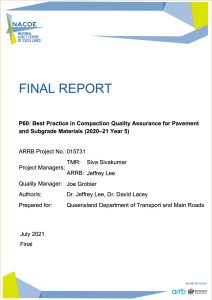
Best Practice in Compaction Quality Assurance for Pavement and Subgrade Materials NACOE DTMR QLD P60 Y5 Final Report Lee Lacey June 2021

Categories: Research Papers

Topics: Comparative Studies – PANDA® vs other Compaction Control Methods, Comparative Studies between the Light Weight Defectometer and other Devices, Comparative Studies between the Plate Load Test (PLT) and other Devices

Published: 23/07/2021

The current industry practice relies on the use of in situ dry density ratio (DDR) to control the quality of compaction during the construction of earthworks. The main reason is because the density measurements are relatively easy to undertake during construction, and the parameter itself is precise and with limited variability.

However, this approach has two major disadvantages, namely: (i) the in situ modulus of the layers is not directly measured, and (ii) there is a significant delay between the time of undertaking the DDR measurement and the delivery of the final test results. Such a (routine) delay in the provision of test results can lead to costly rework being required by the contractor if earthworks are found to be non conforming and require remediation after the works have further progressed. To address the above issues, this National Asset Centre of Excellence (NACOE) research project investigated the viability of using alternative testing techniques to control the quality of constructing earthworks.

This five-year study investigated a range of alternative testing devices, such as the light weight deflectometer (LWD), Clegg Hammer and PANDA probe with a focus to evaluate their effectiveness in assessing the quality of the earthworks constructed. A methodology has been developed to adopt the LWD as an alternative QA method. However, the methodology is equally applicable for other similar technologies.

The report presents the final research outcomes to allow the adoption or trialling of this alternative approach in future roadwork construction projects. The final deliverables include the proposed amendments to MRTS04 General Earthworks, and a technical note that details the technical basis and approach.

Appendix A of this report, includes the Queensland Department of Transport and Main Roads (QLD DTMR) Draft Technical Note – Guidance on Use of Light Weight Falling Deflectometers (LWDs) to be Accepted as an Alternative Method for Verification of Earthworks Compaction Requirements – June 2021. This provides guidance on moving from a density based specification for compaction control to a modulus based approach to testing in the field.

The draft technical note provides guidance on implementation of Light Weight Deflectometers as an alternative compaction control method including a flow chart showing key steps for assessment/derivation of equivalent acceptance thresholds for LWD use (in lieu of traditional (density) testing minimum thresholds included in MRTS04 – General Earthworks). We believe this “How to” guide will be very useful for industry on projects across the country.

Keywords: Light Weight Deflectometer, PANDA® Instrumented DCP, Plate Load Test

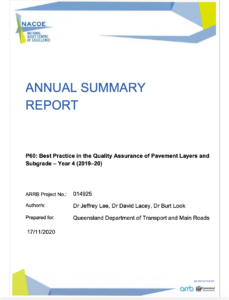
Best Practice in the Quality Assurance of Pavement Layers and Subgrade - Year 4 Report Jeffrey Lee, David Lacey & Burt Look NACOE P60 QLD DTMR, Australia Nov 2020

Best Practice in the Quality Assurance of Pavement Layers and Subgrade - Year 4 Report Jeffrey Lee, David Lacey & Burt Look NACOE P60 QLD DTMR, Australia Nov 2020

Categories: Research Papers

Topics: Comparative Studies – PANDA® vs other Compaction Control Methods, Comparative Studies between the Light Weight Defectometer and other Devices, Comparative Studies between the Plate Load Test (PLT) and other Devices

Published: 27/11/2020

This is Year 4 of the NACOE project which explores alternative testing to quality assurance pavement and subgrade materials. Year 1 (2016–17) completed a comprehensive literature review of different test methods available. Year 2 (2017–18) undertook equipment comparison testing in Ballina NSW and Rocklea QLD. Year 3 (2018–19) continued carrying out field testing at a major TMR project in Cairns. This year’s primary focus was to finalise the draft testing protocol into a technical note and conduct knowledge transfer activities to present the findings to the wider audience in Queensland and Australia.

Two webinars were presented by the NACOE project team, including presentations from two international speakers. The webinars were focussed on the implementation of the draft testing protocol and provided the road industry with updates of the latest development in the USA and the railway industry in Australia using similar technologies.

A technical note was also developed, which outlines a procedure to adopt Light Weight Deflectometer testing as a quality assurance tool for the construction of pavement layers and subgrade.

Keywords: Light Weight Deflectometer, PANDA® Instrumented DCP, Plate Load Test

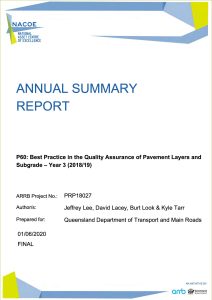
Best Practice in Compaction QA for Pavement and Subgrade Materials NACOE P60 Year 3 Report Lee, Lacey, Look & Tarr June 2020

Categories: Research Papers

Topics: Comparative Studies – PANDA® vs other Compaction Control Methods, Comparative Studies between the Light Weight Defectometer and other Devices, Comparative Studies between the Plate Load Test (PLT) and other Devices

Published: 01/06/2020

Industry’s familiarity with density-based assessments for the quality assurance (QA) of pavement layers and subgrades currently favours conventional density measurements over other field tests that have the potential to better validate design parameters achieved during construction. Although such alternative tests (e.g. Prima 100 LWD, Geogauge or PANDA probe) are not necessarily as precise as conventional density testing, the density test itself has significant limitations.

These limitations include the time required to undertake the tests and its inability to reliably assess the in situ devices evaluated in this report.

The background to Phase 3 of the study is covered in Section 2 which discusses the interim findings from Phases 1 and 2. The field testing and analysis conducted on a live construction site to evaluate the alternatives test method is summarised in Section 3. A proposed technical specification is outlined in Section 4 and conclusions and recommendations are discussed in Section 5.

Keywords: Light Weight Deflectometer, PANDA® Instrumented DCP, Plate Load Test

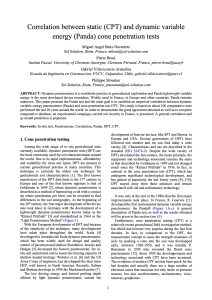
Correlation between static CPT and dynamic variable energy Panda cone penetration tests Benz Navarrete Breul Arancibia and Moustan ISC6 2020

Correlation between static (CPT) and dynamic variable energy (Panda) cone penetration tests – Benz-Navarrete, Breul, Arancibia and Moustan – ISC6 2020

Categories: Research Papers

Topics: Comparative Studies – PANDA® vs other Site Investigation Methods

Published: 01/01/2020

Dynamic penetrometer is a worldwide practice in geotechnical exploration and Panda lightweight variableenergy is the most developed device nowadays. Widely used in France, in Europe and other countries, Panda remains unknown. This paper presents the Panda test and the main goal is to establish an empirical correlation between dynamic variable energy penetrometer (Panda) and cone penetration test CPT. This study is based on about 100 comparative tests performed the last 20 years around the world. In order to demonstrate the good agreement obtained as well as to complete comparative database, an experimental campaign, carried out recently in France, is presented. A general correlation and qc model prediction is proposed.

Keywords: PANDA® Instrumented DCP

Prediction of in-situ dry unit weight considering chamber boundary effects on lateritic soils using Panda penetrometer - Gansonré, Breul, Bacconnet, Benz & Gourvès (2019)

Categories: Research Papers

Topics: Understanding the PANDA® DCP – Compaction Control and Site Investigation results

Published: 30/11/2019

This paper proposes a methodology that consists of testing Lateritic soils in-situ and in the laboratory, studying cone resistance according to compaction parameters in order to estimate the boundary effects and to propose a model to take them into account when predicting in-situ dry unit weight.

Keywords: PANDA® Instrumented DCP

Direct Validation of Design Parameters of Near-Surface Materials during Construction Phase Lacey Look and Lee AGS VIC 2019

Direct Validation of Design Parameters of Near-Surface Materials during Construction Phase Lacey Look and Lee AGS VIC 2019

Categories: Research Papers

Topics: Comparative Studies – PANDA® vs other Compaction Control Methods, Comparative Studies between the Light Weight Defectometer and other Devices

Published: 22/02/2019

This overview paper discusses a number of innovative insitu test techniques that could potentially be incorporated into Quality Assurance / Quality Control (QA / QC) for the assessment of near-surface materials during the construction phase of earthworks projects. The limitations of traditional QA test regimes (density-based assessments) and other tests frequently adopted for field assessment during the construction phase of projects (CBR and DCP) are initially discussed, with a critique of the continued use of index tests for such material evaluations provided. A number of alternative test techniques that are capable of rapid, direct insitu measurement of stiffness and strength parameters is made, presenting the Light Falling Weight Deflectometer (LWD), Borehole Shear Test (BST) and Variable Energy Dynamic Cone Penetrometer (PANDA Probe) as viable alternative assessment methods. The insitu parameters provided by these alternative tests can be used to directly evaluate if design parameters are being met onsite and, based on the authors extensive experience using each tool within recent major Australian construction projects, the advantages of using such innovative tools and developing project-specific thresholds for adoption of these tools within a QA / QC test regime, are discussed. Current limitations preventing the widespread implementation of these alternative test techniques are also identified.

Keywords: Compaction, LWD, PANDA Probe, Borehole Shear Tester (BST), Quality Control (QC)

Keywords: Light Weight Deflectometer, PANDA® Instrumented DCP

The PANDA Variable Energy Lightweight Dynamic Cone Penetrometer – A quick state of art – Benz-Navarrete, Breul, Bacconet and Moustan 2019

Categories: Research Papers

Topics: Comparative Studies – PANDA® vs other Compaction Control Methods, Comparative Studies – PANDA® vs other Site Investigation Methods

Published: 01/01/2019

Estimation of compaction control, density and bearing capacity (CBR)

Correlation with other geotechnical tests including Standard penetration test (SPT), Cone Penetration Test (CPT), Pressuremeter test (PMT), Dynamic Cone Penetrometer (DCP)

Estimation of soil characterisation parameters including friction angle, undrained shear strength, shear wave velocity and deformability modulus.

Keywords: PANDA® Instrumented DCP

COMPARISON-BETWEEN-PANDA-PENETROMETER-TESTING-AND-TRADITIONAL-TESTING-METHODS-IN-New-Zealand

Comparison Between PANDA Penetrometer Testing and Traditional Testing Methods in New Zealand – K Zamara, A Gilbert-Milne, M Larisch (Brian Perry Civil), L Wotherspoon (University of Auckland) – Sept 2018

Categories: Research Papers

Topics: Comparative Studies – PANDA® vs other Site Investigation Methods

Published: 01/09/2018

Estimation of compaction control, density and bearing capacity (CBR)

Correlation with other geotechnical tests including Standard penetration test (SPT), Cone Penetration Test (CPT), Pressuremeter test (PMT), Dynamic Cone Penetrometer (DCP)

Estimation of soil characterisation parameters including friction angle, undrained shear strength, shear wave velocity and deformability modulus.

Keywords: PANDA® Instrumented DCP

Advanced Methods for Compaction Quality Control - June 2018 Webinar Part 3 (Webinar Slides)

Categories: Research Papers

Topics: Comparative Studies – PANDA® vs other Compaction Control Methods, Comparative Studies between the Light Weight Defectometer and other Devices, Comparative Studies between the Plate Load Test (PLT) and other Devices

Published: 03/06/2018

Keywords: Light Weight Deflectometer, PANDA® Instrumented DCP

NACOE Advanced Methods for Compaction Quality Control June 2018 Webinar Part 2 (Webinar Slides)

Categories: Research Papers

Topics: Comparative Studies – PANDA® vs other Compaction Control Methods, Comparative Studies between the Light Weight Defectometer and other Devices, Comparative Studies between the Plate Load Test (PLT) and other Devices

Published: 02/06/2018

Keywords: Light Weight Deflectometer, PANDA® Instrumented DCP, Plate Load Test

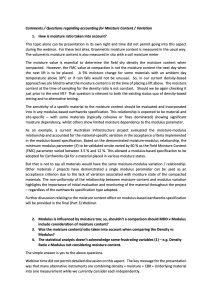
Advanced Methods for Compaction Quality Control Part 2 Question Answers

Categories: Research Papers

Topics: Comparative Studies – PANDA® vs other Compaction Control Methods, Comparative Studies between the Light Weight Defectometer and other Devices, Comparative Studies between the Plate Load Test (PLT) and other Devices

Published: 02/06/2018

Advanced Methods for Compaction Quality Control Part 2 Question Answers

  1. How is moisture ratio taken into account?
  2. Modulus is influenced by moisture too; so, shouldn't a comparison should MDD v Modulus include consideration of moisture content?
  3. Was the moisture content/ratio taken into account when comparing the Density vs Modulus?
  4. The statistical analysis doesn't acknowledge some frustrating variables (1) – e.g. Density Ratio v Modulus not considering moisture content.
  5. What was the moisture variations within all the testing?
  6. Density Ratio can be performed within 1 day as per AS 1289 5.7.1.
  7. Most Victorian testing for earthworks is using rapid HILF method which does not normally require curing if within the test method range.
  8. He [the presenter] is referring to assigned value and not the HILF compaction.
  9. Are there any case history recorded significant numbers of PLT vs LFWD?
  10. PLT has shown vice-versa results and how can we take it PLT as reliability test?
  11. The statistical analysis doesn't acknowledge some frustrating variables (2) – e.g. density ratio v CBR not considering material type
  12. Embankments need to have a required modulus for strength as well as minimise settlement. Isn't density a measure of minimising settlement and therefore still important?
  13. A dry material with low density will have a high modulus, but is this all we care about?
  14. Slide 17 – These are awful results and not representative of road construction projects in NSW. What is the source of this data? PS. You are showing density (ratio) results and not quality test results!
  15. Slide 19 – One crucial item is the location of the test results, that is layer and GPS / Chainage and Offset! Why is this mixing?
  16. Slide 23 – If you are placing and compacting in 300 mm lifts, the LFWD and PLT will not give you reliable results as it influenced by the underlying layers. Therefore, why would you use this equipment?
  17. Slide 25 – You have only tested and analysed one formation material. How can you draw any early conclusions?
  18. Slide 29 – Work in the USA has shown the portable hand held FWD devices are susceptible to moisture content of the material being tested and have you taken this into consideration to the reliability of the test results from these devices?
  19. Slide 50 - You would have to be a brave road agency engineer to allow a contractor to use 1000 mm lifts for embankments with a 18 T padfoot roller!

Keywords: Light Weight Deflectometer, PANDA® Instrumented DCP, Plate Load Test

NACOE Advanced Methods for Compaction Quality Control – June 2018 Webinar – Part 1 (Webinar Slides)

Categories: Research Papers

Topics: Comparative Studies – PANDA® vs other Compaction Control Methods, Comparative Studies between the Light Weight Defectometer and other Devices, Comparative Studies between the Plate Load Test (PLT) and other Devices

Published: 01/06/2018

Keywords: Light Weight Deflectometer, PANDA® Instrumented DCP, Plate Load Test

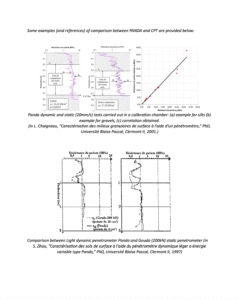
PANDA Variable Energy DCP vs Cone Penetration Testing CPT Synthesis of Comparisons Sol Solution 2018

PANDA Variable Energy DCP vs Cone Penetration Testing CPT Synthesis of Comparisons

Categories: Research Papers

Topics: Comparative Studies – PANDA® vs other Site Investigation Methods

Published: 01/02/2018

Some examples (and references) of comparison between PANDA and CPT are provided.

Based on the various comparisons made, 4 correlations were proposed and implemented in Websprint for 4 groups of materials (sand, clay, gravel, various soils).

Keywords: PANDA® Instrumented DCP

Effect of Pressure, Density and Tailings Water Content on PANDA DCP Cone Resistance – Gabriel VILLAVICENCIO – Tailings 2018 Chile

Categories: Research Papers

Topics: Mine Tailings

Published: 01/01/2018

Dynamic Lightweight Penetrometers (DLP) are an attractive technology when prospecting tailings storage facilities due to their low cost, ease of transportation and use. One of the shortcomings of LPs is that their sounding depth is usually limited to less than 10 m. Thus, DLPs are not intended to fully replace conventional penetrometers when deep characterization of soils is required. However, they are an attractive tool for routinary control of dams. Lightweight penetrometers have been used in Chile in recent decades as a tool for monitoring the compaction degree of retaining walls in tailings dams. In addition to this, DLPs have been used in thickened tailings deposits to characterize stiffness and strength of materials. For instance, a series of correlations between DLP’s cone resistance (qd) and friction angle (𝜙) and undrained shear strength (Su) of thickened tailings have been proposed. There have also been a series of efforts to correlate qd with the tip resistance of other well documented techniques, e.g. CPT, SPT, DSPT. Nevertheless, there still exist a series of uncertainties related to the effects of tailings state parameters, e.g. water content (w %), confining pressure (𝜎′𝑣) and void ratio (e), on the resulting qd. This is experimentally explored in the present study using a pressure chamber under controlled conditions. The outcomes of this study will contribute for the rational interpretation of DLP’s results when used for the monitoring of tailings dams.

Keywords: PANDA® Instrumented DCP

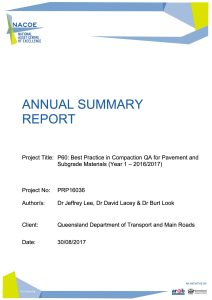
Best Practice in Compaction QA for Pavement and Subgrade Materials Year 1 Report Jeffrey Lee, David Lacey & Burk Look NACOE P60 QLD DTMR, Australia Aug 2017

Categories: Research Papers

Topics: Comparative Studies – PANDA® vs other Compaction Control Methods, Comparative Studies between the Light Weight Defectometer and other Devices, Comparative Studies between the Plate Load Test (PLT) and other Devices

Published: 30/08/2017

Currently, the acceptance of construction works (e.g. earthwork embankments, subgrade and pavement granular layers) by Australian road regulatory bodies requires in situ density testing to be completed in order that a relative percentage of the laboratory-determined maximum dry density can be determined. Current earthworks specifications often rely on the assumption that there is a direct correlation between density and modulus parameters (i.e. the greater the density achieved, the higher the modulus of the compacted material). However, this assumption may not be valid and it is affected by many properties of the engineering material.

Over the last two decades, some alternative field assessment methods have been developed which either directly measure the in situ modulus or correlate with the resilient modulus. This project focuses on exploring the use of these new assessment methods. Such innovative testing methods can be grouped into the following four main categories:

  • penetration test devices
  • surface based impact devices
  • geophysical methods
  • in situ sensors.

Among these four categories, the ‘penetration test devices’ and ‘surface based impact devices’ were identified to have the potential to be adopted in TMR’s current Quality Assurance (QA) framework.

A literature review conducted in 2016/2017 highlighted that some similar international studies had been completed in recent years. Recent projects in Australia also demonstrated the advantages associated with these innovative, commercially-available field assessment techniques.

The project team attempted to rank the different QA methods using a weighted rating approach.

The traditional density test techniques were also evaluated as reference values in this assessment. The overall comparative assessment of the different QA test techniques is shown in the following table.

Keywords: Light Weight Deflectometer, PANDA® Instrumented DCP, Plate Load Test

Statistical analysis of cone penetration resistance of railway ballast - Gilles Saussine, Amine Dhemaied, Quentin Delforge and Selim Benfeddoul SNCF Réseau 2017

Statistical analysis of cone penetration resistance of railway ballast - Gilles Saussine, Amine Dhemaied, Quentin Delforge and Selim Benfeddoul SNCF Réseau 2017

Categories: Research Papers

Topics: Rail

Published: 01/06/2017

Dynamic penetrometer tests are widely used in geotechnical studies for soils characterization but their implementation tends to be difficult. The light penetrometer test is able to give information about a cone resistance useful in the field of geotechnics and recently validated as a parameter for the case of coarse granular materials. In order to characterize directly the railway ballast on track and sublayers of ballast, a huge test campaign has been carried out for more than 5 years in order to build up a database composed of 19,000 penetration tests including endoscopic video record on the French railway network. The main objective of this work is to give a first statistical analysis of cone resistance in the coarse granular layer which represents a major component of railway track: the ballast. The results show that the cone resistance (qd) increases with depth and presents strong variations corresponding to layers of different natures identified using the endoscopic records. In the first zone corresponding to the top 30cm, (qd) increases linearly with a slope of around 1MPa/cm for fresh ballast and fouled ballast. In the second zone below 30cm deep, (qd) increases more slowly with a slope of around 0,3MPa/cm and decreases below 50cm. These results show that there is no clear difference between fresh and fouled ballast. Hence, the (qd) sensitivity is important and increases with depth. The (qd) distribution for a set of tests does not follow a normal distribution. In the upper 30cm layer of ballast of track, data statistical treatment shows that train load and speed do not have any significant impact on the (qd) distribution for clean ballast; they increase by 50% the average value of (qd) for fouled ballast and increase the thickness as well. Below the 30cm upper layer, train load and speed have a clear impact on the (qd) distribution.

Keywords: Ballast & Formation Condition Assessment, PANDA® Instrumented DCP, PANDOSCOPE

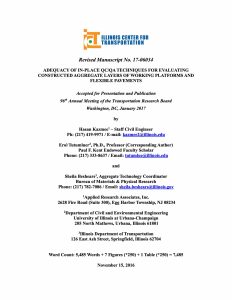
Adequacy Of In-Place QC/QA Techniques For Evaluating Constructed Aggregate Layers Of Working Platforms And Flexible Pavements – Hasan Kazmee – Applied Research Associates, Inc., Erol Tutumluer – University of Illinois at Urbana-Champaign & Sheila Beshears – Illinois Department of Transportation (January 2017)

Categories: Research Papers

Topics: Comparative Studies – PANDA® vs other Site Investigation Methods, Comparative Studies between the Light Weight Defectometer and other Devices, Temporary Works Platforms – Mobile Crane Pad and Piling Rig Working Platforms

Published: 01/01/2017

This paper summarizes key findings from QC/QA tests performed on full-scale pavement test sections in a recent Illinois Center for Transportation research study. The focus was to validate newly adopted Illinois DOT material specifications for large size unconventional aggregates, known as aggregate subgrade, through accelerated pavement testing. Seven representative aggregate types were used to construct test sections with aggregate subgrade and virgin and recycled capping and subbase layers. Density measurements from nuclear gauge were collected and routinely contrasted with modulus results of the lightweight deflectometer (LWD) and soil stiffness gauge (GeoGauge) from the constructed layers. Further, forensic strength assessment was carried out by dynamic cone penetrometer and variable energy PANDA penetration device. Geo-endoscopic imaging, coring and trenching were also conducted to identify depth of water table and as-constructed layer thicknesses. The PANDA penetrometer results in conjunction with geo-endoscopy proved to be effective in correlating rutting performances to QC/QA test results.

Keywords: Light Weight Deflectometer, PANDA® Instrumented DCP, PANDOSCOPE

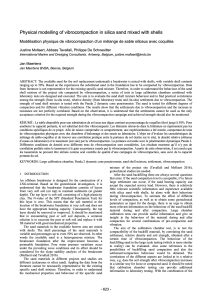
Physical modelling of vibrocompaction in silica sand mixed with shells – Mollaert, Tavallali & De Schoesitter (International Marine and Dredging Consultants) & Maertens (BVBA) – Belgium – 19th ICSMGE Seoul 2017

Categories: Research Papers

Topics: Other PANDA® Studies – Grain / Particle Size Distribution (PSD) etc

Published: 01/01/2017

The available sand for the soil replacement underneath a breakwater is mixed with shells, with variable shell contents ranging up to 50%. Based on experience, the substituted sand in the foundation has to be compacted by vibrocompaction. Data from literature is not representative for the existing specific sand mixture. Therefore, in order to understand the behaviour of the sand shell mixture of the project site compacted by vibrocompaction, a series of tests in large calibration chambers combined with laboratory tests are designed and executed. The aim is to evaluate the sand shell mixture behaviour and to find practical correlations among the strength (from in-situ tests), relative density (from laboratory tests) and (in-situ) settlement due to vibrocompaction.

The strength of sand shell mixture is tested with the Panda 2 dynamic cone penetrometer. The sand is tested for different degrees of compaction and for different vibration conditions. The results show that the settlements due to vibrocompaction and the increase in resistance are not perfectly correlated. Based on the observation, it is understood that the settlements cannot be used as the only acceptance criterion for the required strength during the vibrocompaction campaign and achieved strength should also be monitored.

Keywords: PANDA® Instrumented DCP

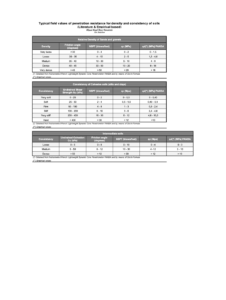
Typical field values of penetration resistance for density and consistency of soils (Literature & Empirical based) Miguel Benz Navarrete (July 2016)

Typical field values of penetration resistance for density and consistency of soils (Literature & Empirical based) Miguel Benz Navarrete (July 2016)

Categories: Research Papers

Topics: Comparative Studies – PANDA® vs other Site Investigation Methods, Understanding the PANDA® DCP – Compaction Control and Site Investigation results

Published: 01/07/2016

This table is a summary of typical field values of PANDA cone penetration resistance for density and consistency of soils (Literature & Empirical based).

Density vs PANDA Cone Resistance (Qd), Friction Angle (φ), SPT (N), and CPT (Qc)

Consistency of cohesive (silts & clays) – PANDA Cone Resistance (Qd), Undrained Shear Strength Su (kPa), Friction Angle (φ), SPT (N), and CPT (Qc)

intermediate soils – PANDA Cone Resistance (Qd), Undrained Cohesion Cu (kPa), Friction Angle (φ), SPT (N), and CPT (Qc)

Keywords: PANDA® Instrumented DCP

Correlation between Standard Penetration Test (SPT) and PANDA DCP in Compacted Dam with Tropical Soils – Brazil – 2016

Categories: Research Papers

Topics: Comparative Studies – PANDA® vs other Site Investigation Methods

Published: 03/06/2016

Traditionally, geotechnical projects in Brazil use the data from Standard Penetration Test (SPT). In order to enhance the accuracy and liability of the data of the soil, the PANDA 2 test was created. The light penetrometer test with variable energy is an alternative to study soil resistance and has as its main advantages the convenience, speed of the test and the automatic acquisition of the results.

The tests were carried out with the equipment on a tropical compacted soil and showed good performance, reaching depths between 8 and 9 m. The comparison of the value of “qd” from the PANDA 2 with the value of “N” from SPT, showed very good correlations as the results had similar behaviors and their comparison aims to transfer the technical experience of the SPT test to the PANDA 2 test.

Keywords: PANDA® Instrumented DCP

USE-OF-VARIABLE-ENERGY-PENETROMETER-IN-PERFORMANCE-ASSESSMENT-OF-WORKING-PLATFORMS-CONSTRUCTED-WITH-LARGE-SIZE-UNCONVENTIONAL-AGGREGATES-Kazmee-Tutumluer-Haddani-Navarrete-Gourves-2016

Use Of Variable Energy Penetrometer And Geo-Endoscopic Imaging In Performance Assessment Of Working Platforms Constructed With Large Size Unconventional Aggregates – Hasan Kazmee, Erol Tutumluer, Younes Haddani, Miguel A. Benz Navarrete & Roland Gourves (June 2016)

Categories: Research Papers

Topics: Temporary Works Platforms – Mobile Crane Pad and Piling Rig Working Platforms

Published: 01/06/2016

Transportation agencies commonly use large size aggregates, often referred to as rock cap or aggregate subgrade, e.g., by Illinois Department of Transportation (IDOT), for stabilizing weak subgrades at wet of optimum moisture states. Adequate characterization of these large rocks is not possible in the laboratory with the use of standard tests. Accordingly, a cone penetration based strength index is the best field assessment tool since shear strength profile is closely linked to unbound aggregate or aggregate subgrade layer performance. To this end, an innovative variable energy dynamic cone penetration (DCP) device, popularly known as PANDA in France, was utilized in a recent Illinois Center for Transportation (ICT) research study involving the performance assessment of large size aggregates over soft subgrades. Twelve full scale working platform sections were constructed with six different types of virgin and recycled large size aggregate materials. Accelerated pavement testing (APT) was carried out on these sections to monitor the rutting progression with number of passes of a certain wheel load assembly. To evaluate layer properties and adequately relate them to rutting performance, PANDA tests were conducted along with traditional DCP soundings on the loading applied pavement test section centerlines.

A Geo-endoscopic probe was also used in the holes opened by the PANDA tests to identify layer interfaces and visually document subsurface moisture conditions. The PANDA and Geo-endoscopy testing has proven very beneficial in the performance assessment of the large size aggregate subgrade materials under simulated traffic loading.

This paper presents current detailed technical knowledge on the PANDA and Geo-endoscopy test equipment and highlights field results associated with the recent ICT project soundings conducted in the pavement working platform test sections.

Keywords: PANDA® Instrumented DCP, PANDOSCOPE

Using an artificial neural network (ANN) for the identification of soil from penetrometer data – Nicolas ROMANOWSKI Polytech Clermont Ferrand (CUST) Thesis June 2016

Categories: Research Papers

Topics: Other PANDA® Studies – Grain / Particle Size Distribution (PSD) etc

Published: 01/06/2016

Keywords: PANDA® Instrumented DCP

Assessment of natural slopes susceptible to failure in heavy rainfall based on in-situ cone resistance data – Athapaththui (University of Sri Jayewardenepura) & Tsuchida (Hiroshima University) – Japan 2016

Categories: Research Papers

Topics: Slope Stability

Published: 01/01/2016

Slope failures are major natural disasters in Hiroshima prefecture, Japan under intense rainfall conditions. Geotechnical investigation of natural slopes is challengeable especially when natural slopes having higher gradients and access is difficult and also to estimate shear strength parameters spatially. Recently, authors have conducted a series of in-situ investigations based on the newly developed lightweight dynamic cone penetrometer to examine its applicability in analyzing the slopes covered with weathering remnants of granitic rocks. Semi-variogram analysis showed that the correlated distance of cone resistance varies with 11 to 30 m depending on the depth. A series of laboratory calibration tests based on the lightweight dynamic cone penetration tests, and direct shear tests were conducted at different void ratios and degrees of saturation. Based on the laboratory calibration test results, a method of determining void ratio, e from the data of qd was presented. Based on this, two formulas to evaluate shear strength parameters, cohesion and friction angle, were established with the cone resistance and the degree of saturation. As a whole proposed method can be successfully applied to individual slopes to determine the profile thickness, and to evaluate the shear strength parameters spatially. Based on this, hazard assessment of individual slopes can be made.

Keywords: PANDA® Instrumented DCP

Predicting-grain-size-class-from-dynamic-penetration-test-using-Artificial-Neural-Networks-Sastre-Benz-Gourves-Breul-Bacconnet-Sol-Solution-Universite-Blaise-Pascal-France-ISC5-2016

Predicting-grain-size-class-from-dynamic-penetration-test-using-Artificial-Neural-Networks-Sastre-Benz-Gourves-Breul-Bacconnet-Sol-Solution-Universite-Blaise-Pascal-France-ISC5-2016.pdf

Categories: Research Papers

Topics: Other PANDA® Studies – Grain / Particle Size Distribution (PSD) etc

Published: 01/01/2016

The Panda 2®, developed by Roland Gourvès in 1991, is a lightweight dynamic cone penetrometer. It provides the dynamic cone resistance (qd) and depth in real time with a high sampling frequency. Nevertheless it cannot take soil samples so the penetration test is called ‘blind’.

The aim of this paper is to propose an automatic methodology to predict the soil grading from the cone resistance using artificial neural networks. We have built a database based on the Panda® laboratory tests on soil samples and insitu tests next to boreholes during various geotechnical studies performed in France. Then the neural networks was used to classify the cone resistance logs according to grain size distribution of the tested soils by means of feature extraction using different signal analysis. The results show that we are able to separate 4 soil classes with 98% accuracy.

Keywords: PANDA® Instrumented DCP

Dynamic-CBR-as-a-method-of-embankment

Automatic methodology to predict grain size class from dynamic penetration test using Artificial Neural Networks Sastre, Benz, Gourves, Breul & Bacconnet Sol Solution & Universite Blaise Pascal – France

Categories: Research Papers

Topics: Other PANDA® Studies – Grain / Particle Size Distribution (PSD) etc

Published: 01/01/2016

Part of Application of Statistical Techniques – Prof Mark Jaksa – University of Adelaide – 5th International Conference of Geotechnical and Geophysical Site Characterisation ISC5 Australia 2016

Keywords: PANDA® Instrumented DCP

Innovative Technologies for the Control of Soil Compaction Review of the State of the Art & Experiences in Chile - Herrera, Espinace et Palma - 15 th PanAmerican Conference on Soil Mechanics 2015

Innovative Technologies for the Control of Soil Compaction – Review of the State of the Art & Experiences in Chile – Herrera, Espinace et Palma – 15th Pan American Conference on Soil Mechanics – 2015

Categories: Research Papers

Topics: Comparative Studies – PANDA® vs other Compaction Control Methods

Published: 01/01/2015

The company Geotecnia Ambiental together with the Geotechnical Group of the Pontificia Universidad Católica de Valparaíso, with financing from INNOVA-CORFO of Chile, approached the challenge of adapting innovative, efficient, environmentally sustainable and precise technologies as alternatives in the process control of soil compaction of Chilean road infrastructure and backfill projects, through an investigation from 2012 and 2014. During the investigation more than twenty state of the art control technologies that exist on a world level were reviewed. Based on the background information dynamic lightweight penetrometer PANDA and the dynamic load plate LFG Pro were selected, of French and German engineering respectively, for use in Chile. Advantages and disadvantages for each system, as well as fields of application, output parameters and proposed methodology were all considered for use in future compaction control projects.

Keywords: PANDA® Instrumented DCP

Methodology for the Spatial Representation of the State of Compaction in Tailings Dams – Ojeda, Zamora, Villavicencio, Espinace and Lemus – Tailings 2015

Categories: Research Papers

Topics: Mine Tailings

Published: 01/01/2015

An analysis of the dynamic variability cone resistance parameter (qd) is shown, which is obtained from the variable energy dynamic lightweight penetrometer test (Panda 2 ®). The assessment variability was estimated using classic statistical tools.

Estimations were performed for the qualitative characteristics as a function of the relative density (RD %), this parameter was obtained using a correlation with qdN1 (normalized dynamic cone resistance parameter). Then, the level of compaction, mechanical behavior and risk of liquefaction is determined showing weak zones. The data processing and geospatial modeling were made using the software Rockworks v.14 ®.

This work enabled a validation of the hypothesis regarding reconstruction of the internal structure of a tailings deposit, through the compaction test parameters whether quantitative (dynamic cone resistance parameter, qd) or qualitative (compaction, mechanical behavior). Weak zones and corroborating the quality of the compaction test process was performed. Furthermore post compaction control recommendations were completed.

Keywords: PANDA® Instrumented DCP

QC & QA with Panda and GTR Soil Classification Miguel Navarrete & Haddani – Sol Solution - The Panda Use for the Compaction Control and the Process of Compaction Control with Panda

Categories: Research Papers

Topics: Understanding the PANDA® DCP – Compaction Control and Site Investigation results

Published: 30/06/2014

Historical background on the PANDA Instrumented DCP and the development of the Compaction Control database relating density to cone resistance Qd and standard NF P 94-105.

Use for the Compaction Control and the Process of Compaction Control with Panda Variable Energy DCP.

Keywords: PANDA® Instrumented DCP

Liquefaction potential of sand tailings dams evaluated using a probabilistic interpretation of estimated in-situ relative density – Gabriel Villavicencio Arancibia, Pierre Breul, Claude Bacconnet, Andy Fourie, Raúl Espinace (2014)

Categories: Research Papers

Topics: Mine Tailings

Published: 01/01/2014

In Chile, sand tailings dams represent the most common deposits of mining residues. These structures present a potential risk in terms of mechanical instability due to their potential susceptibility to seismic liquefaction. In order to manage these risks, it is necessary to take a probabilistic approach, thus accounting for inherent variability of material properties. However, in practice, implementing such an approach is impeded by the difficulty of acquiring and managing the data to be used in the reliability calculations and is conditioned by the relevance of the probabilistic models chosen to represent this variability.
This paper proposes a method for onsite determination of the tailings relative density (DR%), and its variability, using dynamic penetration tests. This method was applied to typical Chilean sand tailings dams, and proposes a single model for all such tailings dams by associating a probability model to the variation of DR%. Finally, the validity of this approach is demonstrated by performing a reliability calculation of liquefaction potential (which is the main cause for the failure of this type of structure in this country) for a particular sands tailing dam.

Keywords: PANDA® Instrumented DCP

Railway-Ballast-Settlement-A-New-Predictive-Model-Saussine-Quezada-Breul-and-Radjai-Proceedings-of-the-Second-International-Conference-on-Railway-Technology-2014.pdf

Categories: Research Papers

Topics: Rail

Published: 01/01/2014

By means of a detailed parametric study of the settlement of ballast material per- formed on a full-scale track model, a predicting model for ballast settlement under cyclic loading has been developed. The model is based on track parameters: axle load, train speed and the initial mechanical state of ballast. A light dynamic penetrometer allows the characterization of the latter. Several loading tests, were performed, together with a characterization of the initial state of ballast close to the sleepers. The results show a settlement evolution in three stages (short, medium and long term settlement) depending on the initial conditions of the material and the intensity of the vibration.

The proposed model describes the three stages in the settlement evolution. With this model, we obtain a prediction of settlement evolution with an error less than 10% for almost all experimental data.

As a conclusion a method is proposed which has been tested on a track and which allows one to estimate the settlement of the sleepers by considering train traffic and cone penetration resistance in order to obtain an average settlement curve and a probability to reach a threshold value. This is a first step towards a general framework for the evaluation of the geometric potential degradation of railway tracks, which is a major issue for the cost reduction of maintenance operations on railway tracks.

Keywords: PANDA® Instrumented DCP

The Panda Technology Applied to Design and Operation of Tailing Dams – Espinace, Villavicencio & Lemus – Tailings 2013

Categories: Research Papers

Topics: Mine Tailings

Published: 30/08/2013

Tailings storage facilities (TSFs) in Chile are now built using the downstream method of construction, an approach that was triggered by the failure of a number of upstream constructed facilities during or immediately after large seismic events. In Australia, the upstream method continues to be used, because of the significantly lower cost and the perceived lack of a credible seismic risk. The design of TSFs in Australia is moving towards the adoption of maximum credible earthquake (MCE) considerations, particularly for closure, where the design life is increasingly expected to be ‘in perpetuity’.

Recent research in Chile has shown the viability of using a lightweight penetrometer, the PANDA penetrometer, as a tool for rapid, inexpensive and regular in-situ determination of the state of deposited tailings. The PANDA has been calibrated against density measurements and is frequently used to estimate the relative density, which is a useful indication of liquefaction susceptibility.

This paper describes an approach for managing upstream TSFs in Australia using the PANDA penetrometer for regular in-situ testing which, when coupled with the results of laboratory compressibility measurements, can be used to predict the future state of tailings once buried to a significant depth.

Keywords: PANDA® Instrumented DCP

Risk Minimisation in Construction of Upstream Tailings Storage Facilities based on in-situ testing – Fourie, Palma, Villavicencio, Espinace – Proceedings of the 18th International Conference on Soil Mechanics and Geotechnical Engineering, Paris 2013

Categories: Research Papers

Topics: Mine Tailings

Published: 01/01/2013

Keywords: PANDA® Instrumented DCP

Erste Erfahrungen mit neuen Schnellprüfverfahren im Erdbau – Uhlig und Kudla – Technische Universität Bergakademie Freiberg – Institut für Bergbau und Spezialtiefbau – 2013

Categories: Research Papers

Topics: Comparative Studies – PANDA® vs other Compaction Control Methods

Published: 01/01/2013

Keywords: Light Weight Deflectometer

Mesures dynamiques lors du battage du penetrometre PANDA 2 – Miguel-Angel Benz-Navarrete – Chemical and Process Engineering. Universite Blaise Pascal – Clermont-Ferrand (2009)

Categories: Research Papers

Topics: Understanding the PANDA® DCP – Compaction Control and Site Investigation results

Published: 27/08/2012

Keywords: PANDA® Instrumented DCP

Norma Chilena PANDA NCh-3261-2012 Depositos de Relave Control de Compactacion con Penetrometro Dynamico Ligero

Categories: Technical Standards

Topics: Mine Tailings

Published: 01/01/2012

Keywords: PANDA® Instrumented DCP

Validation & Refinement of Chemical Stabilization Procededures for Pavement Subgrade comparing Dynamic Cone Penetrometer (DCP), the PANDA penetrometer, and the Portable Falling Weight Deflectometer (PFWD) – Miller, Cerato, Snethen, Holderby & Boodagh – Oklahoma Department of Transport (Oct 2011)

Categories: Research Papers

Topics: Pavements

Published: 01/10/2011

This study compared results of field tests and laboratory tests on chemically stabilized soil at different curing times to assess whether a relationship exists between field and laboratory measurements. The goal was to determine if a field testing method could be used to assess whether the strength and stiffness in the field are consistent with laboratory measurements used for design.

Field testing included three devices that are portable, quick, and easy to use. These devices include: the Dynamic Cone Penetrometer (DCP), the PANDA penetrometer, and the Portable Falling Weight Deflectometer (PFWD). Laboratory testing was conducted to determine the unconfined compressive strength (UCS) and resilient modulus (MR) of laboratory specimens prepared using additive contents that were similar to samples taken from field test locations.

Correlations were examined and involved basic soil measurements (mineralogical, electrical, chemical and index properties) and mechanical properties (UCS and MR), and field test results (DCP, PANDA, and PFWD). The strongest trend was observed for the PFWD – MR comparison. The trend showed that both the PFWD modulus and MR increase with increasing curing time, as expected. These observations show that development of correlations between field and laboratory test results holds promise. However, development of such correlations will require that field and laboratory tests be performed on nearly identical soils and under identical curing conditions.

Keywords: Light Weight Deflectometer, PANDA® Instrumented DCP

On Site Mechanical Characterization of the Ballast State – Pierre Breul & Gilles Saussine (2010)

Categories: Research Papers

Topics: Rail

Published: 08/12/2010

Ballast is a major railway component whose behaviour is still not sufficiently controlled. The identification of mechanisms leading to track ageing is difficult to achieve as the process occurs over several years at particle scale.

Models have been proposed to take into account ballast characteristics and provide a description of geometrical and structural modifications of ballast particles through time. To be relevant, these models must be supplied with reliable and realistic input data such as on-site density and stiffness modulus.

This article presents results that could provide these parameters, starting with on-site tests that link them with cone penetration energy.

Keywords: PANDA® Instrumented DCP

Evaluating-the-Archaeological-Potential-of-Urban-Soil-Amelie-Laurent-Proceedings-of-the-36th-CAA-Conference-Budapest-2–6-April-2008

Evaluating the Archaeological Potential of Urban Soil - Amélie Laurent - Proceedings of the 36th CAA Conference, Budapest, 2–6 April 2008

Categories: Research Papers

Topics: Archeology

Published: 08/04/2008

The aim of the thesis was to answer historical questions about cities by assessing the informative potential of data available to archaeologists. It involved looking at the characteristics of the urban soil to understand how human activities have shaped the urban space and socio-spatial elements. More specifically, the analysis focused on assessing the thickness of the urban soil and its division into distinct functional layers in the city of Tours and sites of comparison.

Bringing together the perspectives of archaeologists and geotechnicians made it possible to develop stratification production models (maps charting the thickness of the archaeological deposit) and methods to model the heterogeneity of the deposit. Results reveal that a theoretical 100m2 grid is sufficient to understand variations in the thickness of the deposit. Vertically, the scale of analysis needed to distinguish the so-called “homogeneous” zones is roughly 10–25cm.

At the site level, an archaeological-mechanical referential frame was established for sites in Tours and Lyons. The study shows that the PANDA penetrometer can improve the characterization of the archaeological deposit. In the medium term, these advances can be furthered by developing a common referential frame for a group of sites.

Keywords: PANDA® Instrumented DCP

On-site-characterization-and-air-content-evaluation-of-coastal-soils-by-image-analysis-to-estimate-liquefaction-risk-P.-Breul-Y.-Haddani-R.-Gourves-2008

On-site-characterization-and-air-content-evaluation-of-coastal-soils-by-image-analysis-to-estimate-liquefaction-risk-P.-Breul-Y.-Haddani-R.-Gourvès-2008.pdf

Categories: Research Papers

Topics: Slope Stability

Published: 01/01/2008

Coastal structures are often submitted to intense wave forcing. In some cases, structures may have stability disorders due to the constant weakening of their foundations and to momentary liquefaction of the sea bed. Studies have shown that if classical geotechnical characterization is a necessity, air content in the soil is also a key parameter for liquefaction evaluation. That is why on site air content measurement and its time variation during a tide period may provide information and help to determine a better understanding of this problem. Unfortunately, this parameter is difficult to measure during investigations.

This article presents a technique based on the use of geoendoscopy and automatic image analysis, which makes it possible to characterize coastal soils and to estimate their air content. After a description of the technique, the results obtained on laboratory tests and on a real site are presented.

Keywords: PANDA® Instrumented DCP

Leichte Rammsonde mit variabler Rammenergie zur Baugrunduntersuchung und zur Verdichtungskontrolle – Blume und Reichenbach – Bundesanstalt für Straßenwesen (BAST) – Strasse und Autobahn 2008

Categories: Research Papers

Topics: Comparative Studies – PANDA® vs other Site Investigation Methods

Published: 01/01/2008

The French Panda is a lightweight dynamic cone penetrometer which uses variable energy and can be used both for site investigation and compaction control. Compared to dynamic cone penetrometers with a constant energy according to DIN EN 22476, the energy input for the Panda is provided by the blow of a hammer.

The dynamic cone resistance and the depth of cone penetration are calculated for each blow of the hammer by a microprocessor by using the “Dutch formula”. Because of the small energy input, the soil layers can be examined in detail. Due to its small size and light weight, the penetrometer is especially useful where access is restricted, for backfills, in trenches and for horizontal investigations. In France, the application for the measuring of compaction quality is standardized since 2000 in the XP P 94-105. The article describes the general principle of the penetrometer and the procedural method of compaction control according to the French standard.

The first positive experiences in using the Panda for the compaction control in Germany, mainly for the internal quality control of miminal trenches, are exemplified. Finally, the possibilities for the adaption in the German body of rules and regulations for road construction and the requirements for further research are outlined.

Keywords: PANDA® Instrumented DCP

PANDA-Research-Roland-GOURVES-Laboratoire-Genie-Civil-_Universite-Blaise-Pascal-de-Clermont-Ferrand-France-2006

PANDA Research - Roland GOURVES, Laboratoire Génie Civil Université Blaise Pascal de Clermont-Ferrand, France - 2006

Categories: Research Papers

Topics: Understanding the PANDA® DCP – Compaction Control and Site Investigation results

Published: 01/01/2006

Research behind the PANDA and the PANDOSCOPE by the product inventor, Dr Roland Gourves.

Keywords: PANDA® Instrumented DCP

CARACTERISATION DES MILEUX GRANULAIRES DE SURFACE A L'AIDE D'UN PENETROMETRE Chaigneau - 2001

CARACTERISATION DES MILEUX GRANULAIRES DE SURFACE A L'AIDE D'UN PENETROMETRE Chaigneau - 2001

Categories: Research Papers

Topics: Comparative Studies – PANDA® vs other Compaction Control Methods, Comparative Studies – PANDA® vs other Site Investigation Methods, Understanding the PANDA® DCP – Compaction Control and Site Investigation results

Published: 20/12/2001

Evaluating the mechanical behavior of a soil involves characterizing the in situ dry density and its variability.

The work presented in this report addresses this problem. Our approach addresses several aspects. It was first necessary to take into account the fact that the mechanical strength of the soil also depends on the nature of the material. We developed a method for indirectly evaluating in situ dry density based on peak strength. This method required the development of a database containing a finite number of soils subjected to systematic calibration. This database can allow the estimation of parameters other than the dry density of a soil; we developed an interpolation method.
The density measurement, known from a small number of tests, can be extended across the entire tested area. We presented a method for spatializing this measurement.

Dry Density/Peak Strength Relationship
We characterized the one-to-one relationship between the dry density of a soil and the peak strength (for a given non-evolving soil and for a given water state). Estimating dry density from the peak strength required developing a calibration procedure for the Panda penetrometer. The study of the repeatability and repeatability properties of the signal showed that the error in the qd measurement is less than 10%; the study of the calibration process showed that we can estimate the in situ density of a calibrated soil by indirect measurement with an accuracy of around 1% (provided the soil water content is not too high than the water content at the Proctor optimum). Analysis of the penetrometer signal showed that the signal dispersion is not, or only slightly, explained by the material properties.

The Database
The micromechanical approach highlights that a property of a non-evolving soil can be determined from a minimum of information by working through similarities between a soil described by certain parameters and a series of reference soils described using these same parameters and the property we are seeking to estimate. We have built a database, compiled from laboratory tests; it allows us to store the calibration results and the results of the mechanical and identification tests performed on each soil. Exploiting the database data makes it possible to link the nature and
assembly parameters with the mechanical response to a given stress or to correlate mechanical characteristics with each other. The database currently contains eight materials; it should eventually expand to more than twenty.

Variability
Statistical signal processing based on simple and conventional regularity control tools allows for a stratification of the penetrograms into layers (based on peak strength) with similar mechanical behavior. When a linear penetrometer test is available, it is possible to obtain a soil stratification. This stratification was improved by introducing shape functions. The analysis of the continuities between layers between two penetrograms made it possible to construct a geometric model of the soil's mechanical strength and, therefore, through coupling with the database, to accurately estimate the density at any point.

Several avenues for development can be explored in this work.

  • We hope that the noise surrounding the signal obtained from a future upgrade of the device will no longer be due primarily to the device itself; its analysis would provide information on the nature of the soil.
  • A further study of the calibration chamber boundary conditions (influence of wall stiffness and mold diameter) would allow further refinement of the dry density-peak strength relationship.
  • The database already allows for interpolation of peak strength or density values ​​for certain soil types based on information on reference soils. Expanding the database with new soils will expand the interpolation scope (to evolving soils or other water content ranges) and increase the accuracy of the results. Furthermore, expanding the database with additional mechanical tests will provide additional correlations between soil parameters and a mechanical response or correlations between two mechanical tests obtained on the same soil.
  • The proposed stratigraphy method is Markovian; an evolution toward a more comprehensive algorithm would further refine the division of the penetrograms. The shape functions cover all operational cases and serve as a basis for the 2D stratification based on the correlation of penetrometer signals. The development of a strategy for traversing the borehole grid following any layout would make it possible to construct a truly three-dimensional model of the identified soil.

Finally, the methodology presented here was developed around penetrometer testing; it seems interesting to use information from geoendoscopic techniques to characterize materials (nature and mechanical characteristics). In terms of applications, the method already allows for the control of embankment compaction; it will be applied for soil investigation.

Keywords: PANDA® Instrumented DCP

Compaction Control with a PANDA dynamic cone penetrometer.” Laboratoire de Genie Civil, CUST, Universite Blaise-Pascal de Clermont-Ferrand, France, BP 206 63174 Aubiere – Chaigneau L, Gourves R & Boissier D (2000)

Categories: Research Papers

Topics: Understanding the PANDA® DCP – Compaction Control and Site Investigation results

Published: 29/02/2000

The compaction control for the PANDA Variable Energy DCP consists in measuring the dry density and compares it with the standard Proctor density. The cone resistance in a known granular medium is directly linked to the dry density. It is the comparison between the in-situ penetrogram and a reference curve which permits the compaction. This reference curve corresponds, for a given soil and a required compaction level to the core resistance (for a passed compaction). A calibration process is necessary to establishes the reference curves. This paper sets out the compaction control method and the calibration process.

Keywords: PANDA® Instrumented DCP

Comparative Method Report inc PANDA 2 (USA) Prof. Ilan Juran Polytechnic University (2000)

Categories: Research Papers

Topics: Comparative Studies – PANDA® vs other Compaction Control Methods

Published: 22/09/1999

A Soil Compaction Control Technology Assessment and Demonstration

This project involved compaction control tests with three techniques generally used in the New York metropolitan area, including: The Gamma Densitometer, The Dynamic Cone Penetrometer, and the more recently developed Soil Compaction Meter. The project also included the assessment of the PANDA – a French developed soil compaction control technology. The tests were conducted in six different trenches with typical sandy backfill material compacted under different pre-selected site conditions.

Analysis of the test results demonstrated the reliability, efficiency, as well as the main advantages and limitations of each testing procedure. In particular, it was demonstrated that the PANDA provides a highly reliable tool for post-construction compaction quality control, which, due to its user-friendly software, is practically operator independent. This report briefly presents the main field test data along with site observations and summary of the main features, technical performance and cost details related to each testing procedure.

Keywords: PANDA® Instrumented DCP

The PANDA lightweight penetrometer for soil investigation and monitoring material – Ground Engineering Article September 1999 D.D.Langton

Categories: Research Papers

Topics: Comparative Studies – PANDA® vs other Compaction Control Methods, Comparative Studies – PANDA® vs other Site Investigation Methods, Understanding the PANDA® DCP – Compaction Control and Site Investigation results

Published: 01/09/1999

Keywords: PANDA® Instrumented DCP

Transport Research Laboratory Assessment Summary of the PANDA CONE PENETROMETER for Compaction Testing (UK)

Categories: Research Papers

Topics: Understanding the PANDA® DCP – Compaction Control and Site Investigation results

Published: 01/06/1999

Keywords: PANDA® Instrumented DCP

PANDA DCP Technical Description, Understanding Results & Correlations – D.D.Langton 1999

Categories: Research Papers

Topics: Comparative Studies – PANDA® vs other Compaction Control Methods, Comparative Studies – PANDA® vs other Site Investigation Methods, Understanding the PANDA® DCP – Compaction Control and Site Investigation results

Published: 01/01/1999

Dr. Roland Gourves, principle lecturer in soil mechanics at CUST, Blaise Pascal University, Clermont-Ferrand, France has designed and developed the Panda (a lightweight hand held dynamic cone penetrometer for testing soils and materials) since 1991. It has become widely used and accepted across France, parts of central Europe and in small numbers around the world. Sinced it’s initial development the Panda has been continuously developed to be used to test the compaction of fill in earth works through software analysis as well as in site investigation. Trials have been carried out at nine sites across the UK (both working sites as well as Building Research Establishment test bed sites) to clarify the usefulness and reliability of the software analysis and correlations for use in the UK.

Keywords: PANDA® Instrumented DCP

The development and use of the Panda in the United States - Calibration for soil compaction control and correlation for soil investigation applied to liquefaction analysis Cedric Vachon - 1998

The development and use of the Panda in the United States - Calibration for soil compaction control and correlation for soil investigation applied to liquefaction analysis Cedric Vachon - 1998

Categories: Research Papers

Topics: Comparative Studies – PANDA® vs other Compaction Control Methods, Comparative Studies – PANDA® vs other Site Investigation Methods

Published: 25/09/1998

Sub-soil characterization takes on a new dimension when using the PANDA, after its French name - Penetrometre Autonome Numerique Dynamique Assiste par ordinateur.

The multitude of tests already carried out throughout the world has proven the reliability of this ultra-light autonomus dynamic digital penetrometer with variable energy of impact. The benefits of the PANDA over traditional compaction testing methods include efficiency, simplicity and rapidity of use. Before imagining the improvements and changes it would cause in the United States, there is a primary need to understand American practices of geotechnical engineering. By keeping in mind sectors of application for the apparatus, this report introduces in the first part, a general overview of methods and specifications actually used.

This summary is not only based on technical criteria but also on present mentality without forgetting economical aspects. The first step of development is in compaction control. In order that the PANDA has a real impact and gains rapid acceptance, a detailed report about it has been written for a presentation to ASTM - American Society for Testing and Materials - or other nationally recognized organization.

Used to make this document, the second part presents results of a comparison between the different soil classification systems and an adapted reproducibility of a complete calibration.

Finally, notably in California, earthquakes cause lots of damage to substructures primarily due to soil liquefaction. Tests capable of detecting any potentially liquefiable, such as CPT or SPT, are expensive to use. With its speed of test deployment, PANDA constitutes a perfect apparatus for this purpose. Last, results of correlations carried out in a site rich in liquefiable soils are presented.

Keywords: PANDA® Instrumented DCP

Caracterisation des sols de surface a l'aide du penetrometre dynamique leger a energie variable type Panda - Zhou - 1997

Caracterisation des sols de surface a l'aide du penetrometre dynamique leger a energie variable type Panda - Zhou - 1997

Categories: Research Papers

Topics: Comparative Studies – PANDA® vs other Compaction Control Methods, Comparative Studies – PANDA® vs other Site Investigation Methods, Understanding the PANDA® DCP – Compaction Control and Site Investigation results

Published: 10/12/1997

The characterization of subsurface soil (up to several meters deep) is important for almost all the infrastructure study. Among the in situ tests which are more interesting than those in laboratory, the portable dynamic penetrometer with variable energy type "Panda" shows well its interests in this field of application.

The thesis presented makes the points of researches carried out around the Panda. Its objective is to exploit the information obtained from the test with this apparatus and we present this work from the following three themes:

First of all, the study of the signal reproducibility and the correlation with other in situ tests, the statistical treatment of the data, the establishment of reference curves for compaction control. Based on the impact theory for the case of "two bodies, one spring", an analysis of the energy transfer during the impact is realized in couple with a numerical simulation with the code PFC (Distinct Element Method). This permits to show clearly the nature of the shock between different parts of the apparatus and makes sure that the Dutch formula used to calculate the cone resistance ga is suitable to the Panda case.

Then, as the characterization of surface soil could be also carried out by other parameters such as the non-drained cohesion cu, the dry unit density etc..., one study of the relation between these parameters and the point resistance qa has been made so that we could characterize the subsurface soil indirectly.

The relation between the cone resistance qu and the material dry unit density permits to establish a series of data under the form of two curves - reference curve and refusal curve with which we could characterize indirectly the subsurface soil state and make control its compaction. This establishment was rigorously carried out in laboratory by varying the compaction energy for each material.

Finally, it is very interesting to characterize the subsurface soil with three important parameters : the cohesion c, the deformation module E and the friction angle φ. In order to do this, a static loading test with the penetrometer point has been developed. We define three variables to describe the loading curve (load versus displacement), then we make the research about the relation between these three variables and the soil parameters (E, c et φ). The same test was also simulated with the code FLAC (Finite Difference Method) and the results obtained are compared with what we got from the experimental tests on different soils. The parametric influence and the non linear regression were also carried out. *

KEYWORDS : subsurface soil characterization, portable dynamic penetrometer Panda, compaction, static load test.

Keywords: PANDA® Instrumented DCP

The Panda ultralight dynamic penetrometer - Proc 11th Euro. Conf. on Soil Mechanics and Foundation Engineering - June 1995 Copenhagen Gourves. R & Barjot. R. (1995)

Categories: Research Papers

Topics: Understanding the PANDA® DCP – Compaction Control and Site Investigation results

Published: 01/06/1995

Keywords: PANDA® Instrumented DCP

Alternatives to Traditional Compaction Control Assessment – Standards and Specifications

Current earthworks specifications often rely on the assumption that there is a direct correlation between density and modulus (i.e. the greater the density achieved, the higher the modulus of the...

How to Assess Compaction in Pipeline Trenches and around Culverts

It’s a common occurrence to see pavements settle and create a traffic hazard where trench works have been completed across a road, particularly when these trenches are installed after the...

Bridge Approaches – Managing the High Risk Transition Zone between Flexible and Rigid Structures

A bridge approach transition zone is the area where a road or railway track transitions from the rigid structure of a bridge to the flexible embankment or road pavement, aiming...

Webinar Invitation: Exploring the New PANDA DCP WebSprint Module for Liquefaction Risk Estimation

We are excited to introduce the addition of a new Liquefaction Risk Estimation module in WebSprint©. Paired with our cutting-edge products, PANDA® and GRIZZLY®, this module enables you to assess the liquefaction risk...

How innovative testing methods can save your clients significant time and money – Case Studies

In an industry set with challenges of staff and skills shortages, and unrealistically low pricing for some traditional test methods, our approach as an industry needs to change. What we...

WebSprint Software – Learn from the Best at Sol Solution (for PANDA Instrumented DCP, GRIZZLY DPSH, eKODIAK DCP and others)

Learn from the best at Sol Solution about the WebSprint Software for the PANDA Instrumented DCP (VEDP), GRIZZLY Dynamic Probing Super Heavy (DPSH), eKODIAK Multi Mass Automated DCP and others.

Assessment of Compaction Quality Control Methods – NACOE P60 Best Practice Research

The acceptance of earthwork and unbound pavement construction in Australia currently relies mostly on density testing and CBRs for Quality Assurance (QA). Though its National Asset Centre of Excellence (NACoE)...

How To Eliminate Service Trench Remediation, Post Construction In Trafficable Zones – Case Study

It’s a common occurrence to see service trench works completed across road pavements settle and create a traffic hazard particularly when these trenches are installed after the original road pavement...

Innovative Insitu Testing Methods for Solar Farm Foundations

Whether we are involved in the site selection phase or the detailed design and specification phase of a solar farm, it’s essential we understand clearly the underlying ground conditions. Are...

How to Double the Lift Thickness (and Halve the Number of Lifts) without Compromising Compaction Quality – An Australian Case Study

It sounds so straight forward ..... halve the number of lifts by doubling the lift thickness. So why hasn't it been done more commonly before? Here is the logic. Lifts are typically...

PANDOSCOPE Implementation Partner Training – STATS and 4DG – Rail Applications

Insitu Test recently completed PANDOSCOPE® training for our WA Implementation Partners, STATS Australia and 4DGeotechnics. The PANDOSCOPE® is a coupling of the PANDA® Instrumented Dynamic Cone Penetrometer (DCP) (tip resistance...

Harsh Pilbara heavy haul rail conditions puts PANDOSCOPE® to the test

There is nothing like jumping in at the deep end! With buy in from Fortescue Metals Group, BHP and Rio Tinto, we brought together our supply partner, Sol Solution from France, and the...

Forensic Review of Solar Farm Piles Post Construction

We always like getting involved in helping our clients solve difficult problems. This was on one of the world’s largest grid-connected PV power plants. Thousands of solar PV tracking panels across...

Top 10 trends in Site Investigation and Geotechnical Testing

We find our clients are increasingly demanding more accurate and more representative results that provide better insight on what’s going on below the surface when they are designing or constructing...

Alternative Testing Methods for Quality Assurance – ARRB Research

The acceptance of earthwork and unbound pavement construction in Australia currently relies on density testing and CBRs for Quality Assurance (QA). Though its National Asset Centre of Excellence (NACoE) research...

How to define the geotechnical behaviour of tailings dams and thickened tailings deposits

The geotechnical behaviour of tailings dams and thickened mine tailings or paste deposits can be defined by determining the compaction state and resistant properties. One of the methods to achieve this is...

Railway track characterization with coupled use of PANDA® DCP and Geo-endoscopy – a new technique

The PANDOSCOPE® is a ‘new' non-destructive method of railway ballast condition assessment, which uses light and cost effective tests, based on the coupled use of the PANDA® dynamic cone penetrometer (a sophisticated DCP)...

PANDA® Variable Energy Dynamic Cone Penetrometer

More than 3000 PANDA® Probe units have been distributed to:

  • Asset owners
  • Site investigation and ground investigation companies
  • Geotechnical engineering consultancies
  • Government authorities including road, rail and airport authorities and councils
  • Construction companies
  • Mining companies
  • Research institutions

The PANDA® has become widely used and accepted across Europe and internationally from Mexico to the USA and from Japan to Korea. To find out more, Contact Us.

The PANDA® is produced under licence by Sol Solution,  Les Portes de Riom Nord – BP 178 – 63204 RIOM Cedex FRANCE  www.sol-solution.com

Sol Solution spending more than 10% of their budget annually on research and development.

The PANDA® was designed and developed by Dr. Roland Gourves, the Principal Lecturer in soil mechanics at CUST, Blaise Pascal University, Clermont-Ferrand, France in 1991.

PANDA Probe PANDA Instrumented Dynamic Cone Penetrometer DCP

Does the PANDA® account for any dynamic effects in the test results?

The dynamic effects have not been considered for the PANDA®. Nevertheless, these effects are reduced to a minimum as the speed of deformation is very low. The advantage of the PANDA® sounding (compared to pile driving) is that you can reduce the hammering speed (and force) when you perform a sounding on a “weak” soil.

Is a continuous measurement of force and penetration is made?

Yes, the force and penetration is measured with each blow. This continuous measurement is what the user sees on the Dialogue Terminal and on the software: it is the penetrogram. The user can also check the data table on the dialog terminal or through the software. They will see, for every impact, the driving depth and the cone resistance per blow.

What different names is the PANDA® Variable Energy Dynamic Cone Penetrometer known as?
  • PANDA® lightweight dynamic penetrometer
  • PANDA® 2
  • PANDA®
  • PANDA® Probe
  • Dynamic Probe
  • Cone Penetrometer
  • Penetrometer
  • Dynamic Cone Penetrometer
  • DCP
  • Variable Energy Dynamic Cone Penetrometer
  • Variable Energy DCP
  • Variable Energy Dynamic Penetrometer
  • VEDP
  • PANDA® Variable Energy Light Weight Dynamic Cone Penetrometer
  • Sol Solution
What is the Maximum Depth that the PANDA® can reach?

It depends of the resistance of soils, but the PANDA® can be made to reach 5 to 7 m in classicals soils (<10 MPa). However, in certain cases, it will be only a few centimeters (e.g. rocks). The softer the soil, the deeper you can go. In exceptional circumstances, we have known tests done to 17 meters.

When doing soil investigation using the PANDA® (with the 4 cm² or 10cm² sacrificial cones), the main reason to stop a PANDA® test is because of lateral friction on the rods. If you cannot turn the rod with your hand, it means that the lateral friction becomes important and then the value qd in MPa is not only the resistance under the cone (which is the principle of the DCP), but the resistance under the cone added with the resistance along the rods. The qd value will be higher than it should be and we are not able to quantify this error. The operator has to take this into account. We do this by minimising the torque on the rods by using cones larger than the diameter of the rods (4cm² and 10cm²) and measuring the torque on the rods using a torque wrench. We can then correct for this automatically in the WebSprint software.

The lateral friction will appear normally more rapidly with sandy soils than with silty soils or clayed soils. Sandy soils will collapse more easily into the hole (and generate lateral friction on the rods) than clayed soils. This can be overcome with a 20mm PVC plastic pipe sleeve following the sacrificial cone (larger diameter than the rod) as it is driven into the ground.

What is the relationship between qc and qd?

qc is cone resistance measured with the Cone Penetration Test (CPT) where a cone is pushed into the ground at a constant speed (e.g. 2cm/second). It’s also know as the static cone penetration test. qd is cone resistance but measured dynamically and is known as the Dynamic Cone Penetrometer (DCP). To do a comparative test, the geology should be the same so test probes should be done approx 30-40cm apart. A minimum of three comparative tests would be required. When comparing qc and qd, care needs to be taken with sandy soils because of lateral friction / skin friction on the rods. We do this by minimising the torque on the rods by using cones larger than the diameter of the rods (4cm² and 10cm²) and measuring the torque on the rods using a torque wrench. We can then correct for this automatically in the WebSprint software.

The bearing capacity (qu) is calculated from the dynamic cone resistance (qd) as follows:

For soil investigation, the bearing capacity (qu) is calculated from the dynamic cone resistance (qd) as follows:

Lateral friction is avoided with ‘lost’ cones of area 4 or 10 cm².The maximum resistance you can test with the PANDA® is about 30 MPa. Note that 1 Mpa = 1000 kpa = 10 bars = 0,1 KN/cm²

We want to use the PANDA® to test crane pad locations and we have calculated that the ground must withstand 100 Tonnes / Square Metre.

How does this relate to the PANDA® results?

100 t/m² = 100000 kg/m² = 1 MPa = 10 bars : that is the pressure the crane gives to the soil under the crane foundation (pads)(insulated foundations).

So the soil must be able to “retain” 1 MPa under the foundation. This must be the minimum bearing capacity qu of the soil under the crane foundation.

And with the following correlation qu (in bar) = qd (panda in MPa) x 10 / (12 to 15) – let’s take 15 for safety and use only the 4 cm² PANDA® lost cone in order to avoid the lateral friction around the rods.

In this case the minimum qd panda® tip resistance would be : qd (in MPa) = qu x 15 /10 = 1 MPa x 15/10 = 1.5 MPa

So you should need a qd PANDA® cone resistance (qd) minimum of 1.5 MPa for an enough depth of 2 times the width of the foundation (insulated foundations). For example, with a foundation of 1m x 1m, you should need 1.5 MPa with the PANDA® for 2 meters under the foundation.

Test Hole Spacing – at the university which makes the calibration of the PANDA®, they consider that you can make tests with the PANDA® with 15 cm between each test hole. 20 cm is a conservative value.

Trusted by our clients

Trusted by our partners

Insitutek Blogs