

The more confident you can be in the design inputs, the more refined the design process can be. For rail track renewals and maintenance purposes, at a high level, problem areas need to be identified and then investigated in more detail. Ideally, the approach to maintenance can be pro-active and preventative, rather than reactive.
This pro-active approach enables prioritisation – think of it like precision rehabilitation. This maybe for the track formation (at grade, in cuttings or on embankments) itself and also for the surrounding slopes. Areas where rail goes from flexible pavement to rigid pavement (like bridge approaches) often cause issues.
The ability to obtain high quality insights during daily operations (working under lookout) or with overnight possession (e.g. 1am – 4am) to provide inputs for the design process is essential to minimise disruption. The inputs gained from insitu testing will inform the type of intervention required ranging from, for example, ballast cleaning to stabilisation to material removal and replacement.
Here are a three methods to improving design inputs (through worlds best practice in situ testing methods) ahead of the design process:
PANDOSCOPE®
The PANDOSCOPE® is a coupling of the PANDA® Variable Energy Dynamic Cone Penetrometer (DCP) (tip resistance vs depth profile) and Geoendoscopy (very high quality down the hole video & photo imagery) combined with sophisticated data presentation and analysis software.

The PANDOSCOPE® enables condition monitoring of the railway track substructure layers. The layer characterisation for ballast and subgrade includes layer identification, layer thickness, water content (qualitative), condition (ballast fouling) and even the estimation of the Particle Size Distribution (PSD).

The PANDA® Variable Energy Dynamic Cone Penetrometer (DCP) involves driving a variable energy cone penetration device into the rail track substructure to collect the strength (and modulus by correlation) profile with depth. The PANDA® is also used for slope stability assessment, testing at right angles to the slope.
Condition monitoring of the rail track substructure layers is accomplished through insertion of a camera into the same hole, called Geoendoscopy.
PANDOSCOPY is carried out as a stand alone technique or coupled with the use of Ground Penetrating Radar (GPR) data collection over the whole line. In simple terms, the GPR helps us pinpoint where to look in more detail and the PANDOSCOPE® provides the additional detail vital for track design purposes.
This provide a versatile diagnostic approach for pseudo-continuous condition assessment of subgrade, rail formation, sub-ballast capping and ballast layers. Ground Penetrating Radar (GPR) is a non-intrusive geophysical method that uses radar pulses to create a continuous profiling image of the subsurface. It is a method of surveying that provides continuous input data for track profile studies, in particular the depth of the various railway base layers.
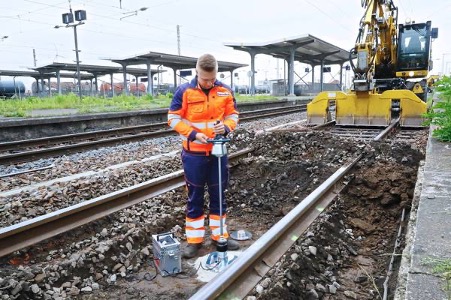
Light Weight Deflectometer
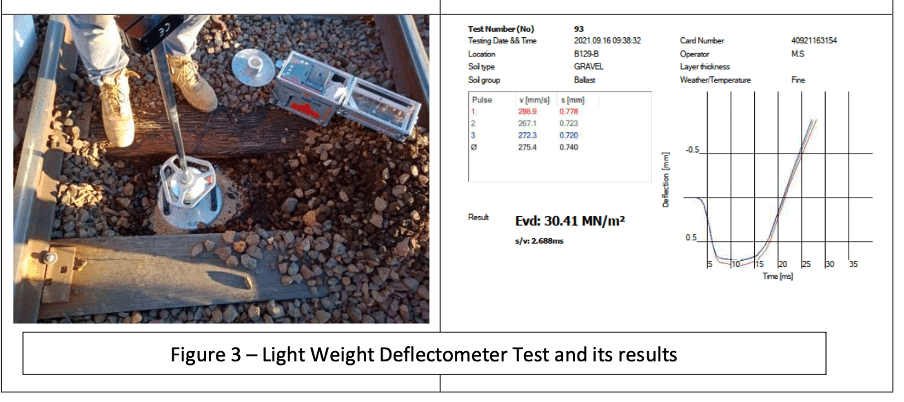
The Light Weight Deflectometer provides a fast, practical method for assessing rail formation stiffness (modulus) early in the design process. By applying a controlled dynamic load and measuring surface deflections, the LWD delivers immediate modulus values that reflect in-situ ground conditions. This rapid testing enables rail engineers to gather accurate formation data before finalising designs, reducing reliance on assumed parameters or delayed laboratory results.
Early insights allow better-informed decisions for track renewals and remediation, improving design inputs, reducing risk of settlement, and supporting efficient construction planning with reliable, real-time data for performance-focused rail infrastructure outcomes.
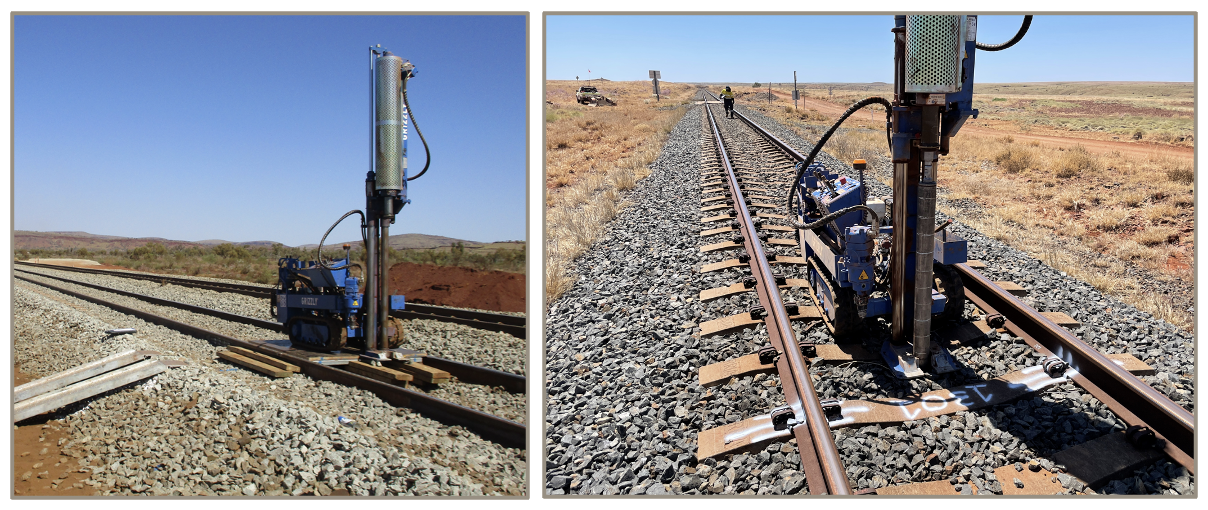
GRIZZLY® Dynamic Probing
The GRIZZLY® Dynamic Probing is a fixed or variable energy cone penetration device, (e.g. Dynamic Probing Super Heavy (DPSH), used to drive a cone into the rail track substructure. This process generates a continuous strength profile, and modulus can be estimated through correlation with penetration resistance.
The same equipment can also be used for push tube sampling, providing physical material samples from different depths. These techniques offer a faster, safer, and more cost-effective alternative to traditional pot holing processes to assess ballast fouling.
Additionally, dynamic probing and sampling can be used to verify and calibrate Ground Penetrating Radar (GPR) data, improving the accuracy of substructure condition assessments. By combining real-time field data with non-intrusive geophysical methods, rail engineers gain a comprehensive understanding of track formation performance and deterioration, ultimately supporting better design inputs and maintenance planning.
Modulus of Elasticity Estimation for Existing Track Formation – Case Study
Innovation is often a collaborative exercise. In this case, the organisation that manages and maintains the state’s regional rail infrastructure had specified large scale triaxial tests to determine an estimation for Modulus of Elasticity for the existing track formation, as a design input for subsequent rehabilitation works.
Given the constraints of large scale triaxial testing, our geotechnical testing client came up with an innovative way to determine an estimation of the Modulus of Elasticity, using a combination of the Plate Load Test and Light Weight Deflectometer. Here is a comparison table of the two approaches.
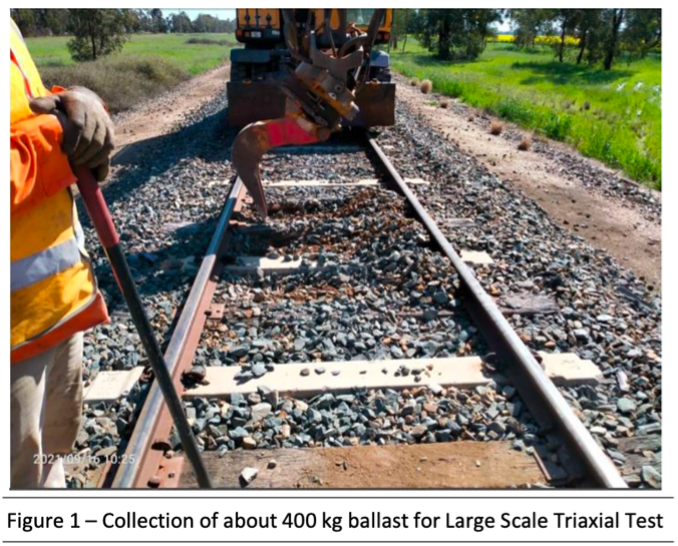

The scope of works included more than 500 tests along the track formation, giving a robust picture of the lines existing condition.
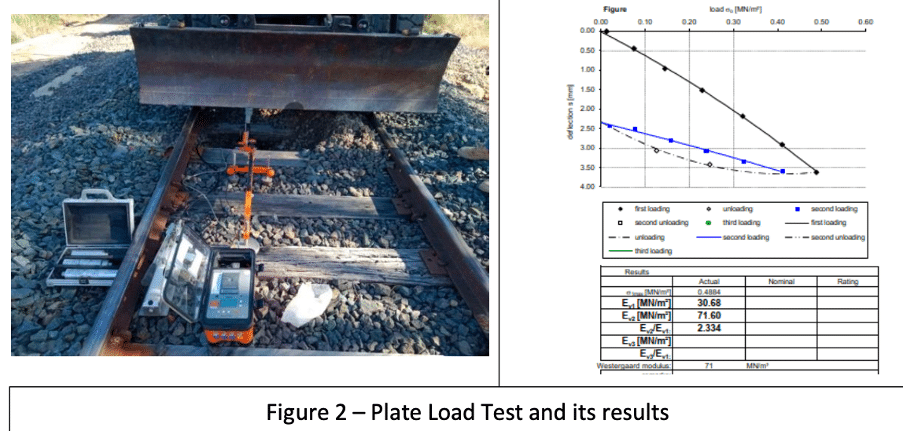
This is a great example alternative in-situ testing methods to make better informed, more timely decisions.
Interlayer Characterisation – Case Study
Over time, the interface between the ballast layer and the supporting soil layer develop their own characteristics under repeated traffic loading (Nicolas Calon, 2017). It was initially observed that, when the bottom ballast particles had migrated into the supporting layer, the interface developed characteristics which could be different to either the ballast layer or the sub-ballast layer in terms of stiffness values.
The Interlayer is not designed or constructed but is formed over many years under traffic loading and its presence can be identified from the outputs of the PANDOSCOPE® tests. The principle is simply, if the Interlayer exhibits a stiffness of a specified value or above, then it is performing the function of providing adequate support to the track system and need not be removed or replaced during renewals.
This is true even if the layers below it has lower values that would normally require intervention. The implication here is that we have been removing perfectly good material supporting the track layers which has cost, time and productivity implications. To find out more in this Rail Engineering 2025 paper and this PWI article.
If you want to explore these valuable in-situ testing methods for improving design inputs ahead of the design process for rail track renewals and remediation, let’s have a conversation.

