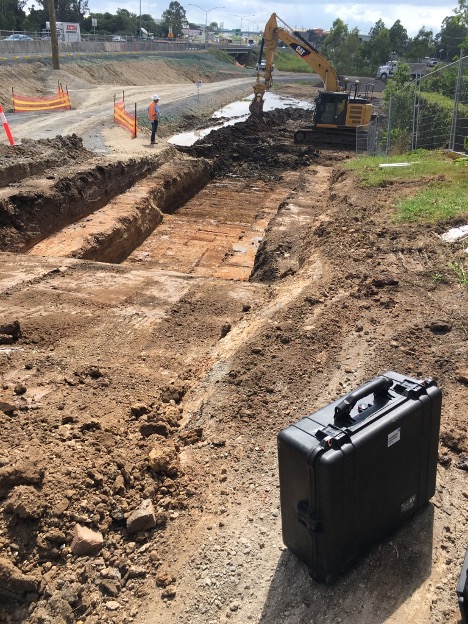
A bridge approach transition zone is the area where a road or railway track transitions from the rigid structure of a bridge to the flexible embankment or road pavement, aiming to minimise abrupt changes in stiffness and potential issues like differential settlement.
The primary function of a transition zone is to:
- Smooth the transition: Ensure a comfortable and safe passage for vehicles or trains as they move from the bridge to the embankment or road pavement or vice versa.
- Reduce differential settlement: Prevent or minimize uneven settlement between the bridge abutment and the embankment, which can cause “humps” or bumps in the road or track.
- Gradual stiffness change: Provide a gradual change in track stiffness, which can reduce stress on the track and improve the overall performance of the bridge approach.
To manage these transition zones during construction, we typically access compaction and likely settlement under load. To assess performance, in situ testing methods should be used. We shall explore three valuable approaches; the Light Weight Deflectometer (LWD), Intelligent Compaction (IC) and the PANDA Variable Energy DCP.
Light Weight Deflectometer (LWD)
The Light Weight Deflectometer (LWD) is a layer by layer compaction control tool for in-situ stiffness or modulus assessment of base, sub base and subgrade materials.
In the bridge approach setting, the Light Weight Deflectometer can be used to provide:
- Compaction quality check of fill behind abutment
- Layer-by-layer control to assess stiffness of the constructed layers
- Efficient way to avoid unwanted settlement
Modulus is the most accurate and independent means for judging deformation (stiffness) and, thus, a material’s level of compaction. By measuring the modulus value, the Light Weight Deflectometer (LWD) provides a link between the design specification (design modulus value) and the actual site condition (in-situ modulus value).
It’s repeatable, fast (test is done in 3 minutes) and gives you immediate GPS located results.

Intelligent Compaction
Intelligent Compaction uses instrumentation retrofitted onto the rollers compacting the soil to accurately assess location and, for vibratory rollers, to give an indication of stiffness.

Using the Völkel Navigator Intelligent Compaction system, on-the-fly real time feedback is provided to the operator. This means the operator can see a complete synchronised picture of the site compaction status, real time on their cab display which helps to:
- Avoid over compaction (which can damage compacted material)
- Avoid under compaction & gaps between passes (which leading to less defects and longer lasting pavement layers)
- Detect soft spots and anomalies and understand compaction uniformity
- Provide 100% coverage – overcoming the issues with a limited number of spot tests for Quality Assurance purposes
- Confidently move on to placement of the next layer (without waiting for traditional test results)
To calibrate the material stiffness measurements, Light Weight Deflectometer and Plate Load Test in situ testing methods are typically used.
PANDA Variable Energy DCP
The PANDA is a fully instrumented Variable Energy Dynamic Cone Penetrometer (DCP) used for site investigation and compaction control and is a widely accepted portable method for evaluating strength and density of soil.
In the bridge approach setting, the PANDA DCP can be used to provide:
- Compaction control layer by layer
- Layer thickness monitoring
- Compaction homogeneity control
- Compaction control of all types of embankment and backfill
For compaction control, an integrated compaction control database for various soil types is used where the measurement of the driving depth (mm) and cone tip resistance (qd) is compared to a database based on the type of soil (soil classification), its water content and the required compaction quality (% Standard or % Modified). The database of more than 2500 data points is catalogued in terms of plasticity, grain size distribution, water content, and level of compaction for both natural and artificial (crushed gravels) material types.

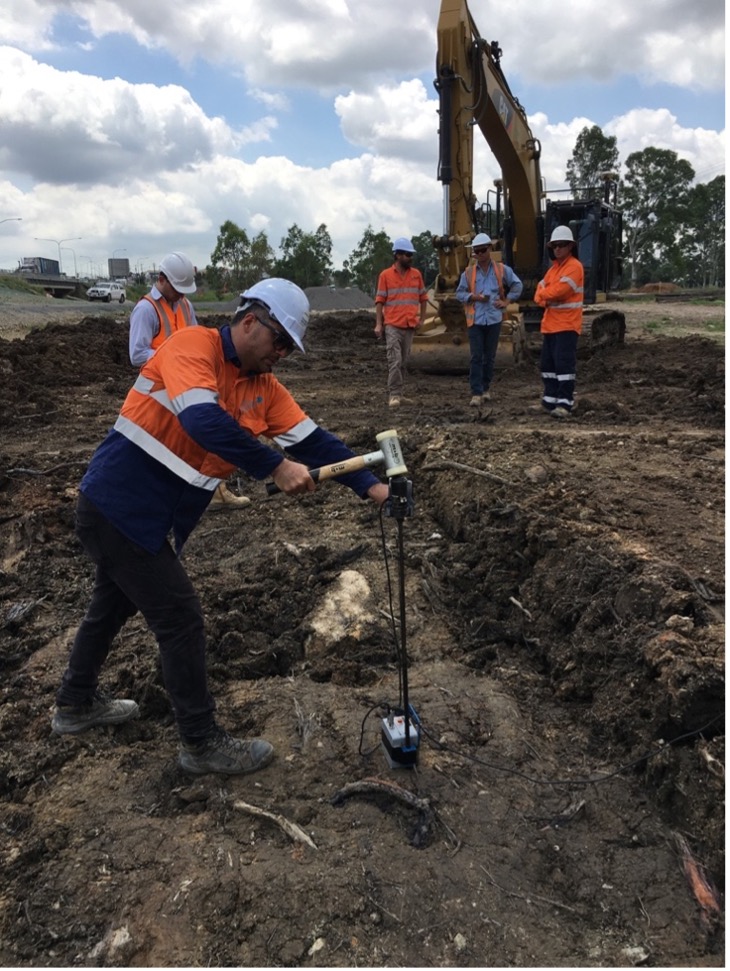
The related pre-calibrated reference and refusal lines, when compared to the test data, allow an assessment of the quality of the compaction to be made. You can see real time when doing the test if your material is within specification or not. The PANDA DCP provides immediate repeatable results so that on-site decisions can be made straight away.
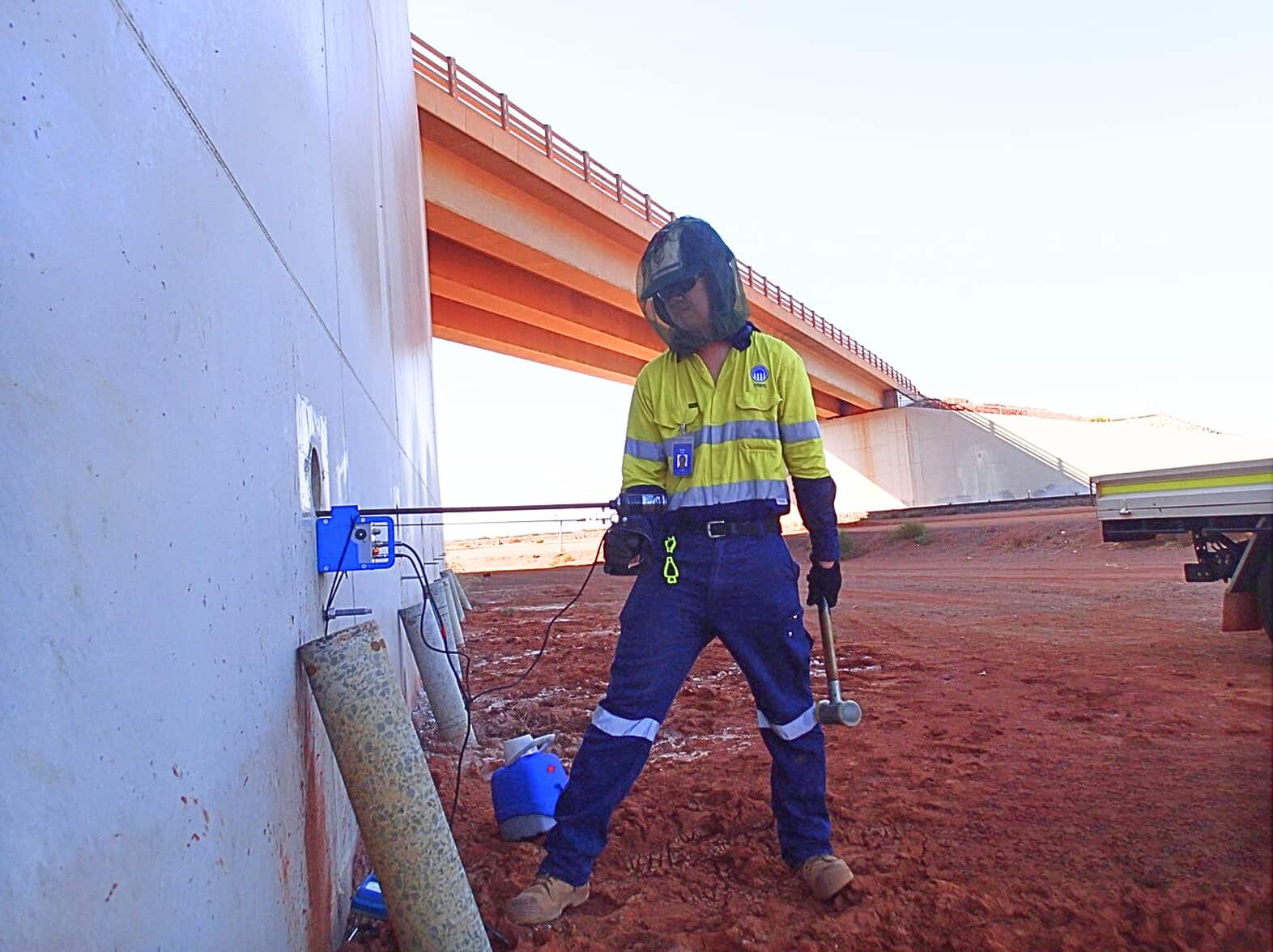
Tests orientation can be anywhere from vertical to horizontal (e.g. for bridge abutments).
To minimise rod friction, cones larger than the diameter of the rods are used, enabling meaningful data to be collected below the 1-2m limitation of the conventional DCP. Several studies have shown that the PANDA measurements correlate well with Cone Penetration Test (CPT) results. The benefit is that the PANDA equipment can be used where the CPT vehicles are not suitable.
Variable energy means the operator can change the force applied so more data points can be taken, for example, in weak materials.
Conclusion
Implementing these advanced in situ testing techniques for bridge approach transition zones during construction enables engineers to make better informed timely decisions, reducing risk associated with settlement issues and enhancing structural performance.