- Compaction control, bearing capacity estimation and investigating in-situ conditions
- Unbound or partially bound layers (sub-grade, sub-base, base)
- Measures the deflection and determine stiffness (modulus)
- Immediate repeatable results so that on-site decisions can be made straight away
- Meets Q258A, ASTM E2835-21 (2021), BS 1924-2 (2025), TP BF-StB Part B 8.3 (2016) standards
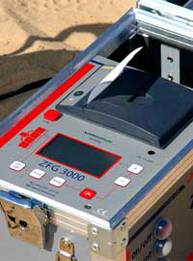
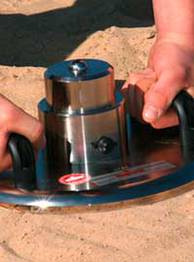
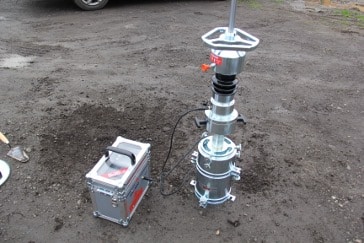
Light Weight Deflectometer (LWD) from Zorn Instruments
Compaction Control
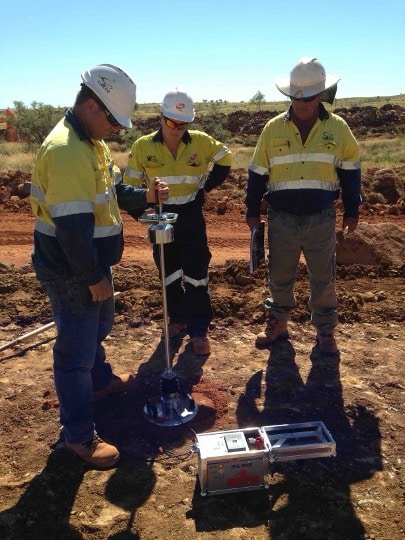
The Light Weight Deflectometer (LWD) is a layer by layer compaction control tool used to determine the stiffness of unbound materials (subgrade/subsoils and base layers, granular layers & backfilling materials) or sometimes partially bound material (e.g. stabilised) during construction or pavement rehabilitation. It measures a deflection and calculates a modulus value based on the force required to generate a given deflection. Modulus is the most accurate and independent means for judging deformation (stiffness) and, thus, a material’s level of compaction. By measuring the modulus value, the Light Weight Deflectometer provides a link between the design specification (design modulus value) and the actual site condition (in-situ modulus value).
The Zorn LWD’s measures the dynamic modulus of deformation Evd in the range from 15 up to 140 MN/m².
Using extensions to the Zorn LWD’s, dynamic CBR (California Bearing Ratio) can also be measured in-situ in the field and also laboratory CBR in a cylinder can be simulated.
The Light Weight Deflectometer (LWD) ZFG 3000, ZFG D Plus and ZFG 3.1 from Zorn Instruments are compaction control methods designed to ASTM E2835-21 (2021) Standard Test Method for Measuring Deflections using a Portable Impulse Plate Load Test Device, Department of Transport and Main Roads Queensland (DTMR) Test Method Q258A Dynamic Modulus of Deformation – Light Falling Weight Device – Accelerometer Type (March 2021), TP BF-StB Part B 8.3 Dynamic Plate Load Testing with the Light Drop-Weight Tester from the German Road and Transport Research Association (BaST), and the British BS 1924-2 (2025) – Unbound, hydraulically bound and stabilized materials for civil engineering purposes – Sample preparation and testing of materials during and after treatment.
Check out the latest research on alternatives to the traditional density approach to compaction. One outcome was the development of this Draft Technical Note – Guidance on Use of Light Weight Falling Deflectometers (LWDs) to be Accepted as an Alternative Method for Verification of Earthworks Compaction Requirements – June 2021 – a how to guide on moving from a density requirement to modulus based assessment in the field.
The Laboratory Light Weight Deflectometer (LWD) ZORN ZFG LAB is used to determination the relationship between moisture content and modulus of unbound granular material on laboratory compaction samples (Proctor compaction process). Deflection is measured using the Lab LWD on laboratory compacted samples in a Proctor mould at a range of moisture contents for a given material type. This method is used to determine target moduli or deflection values to achieve a given density and apply these values for LWD field testing. The Laboratory Light Weight Deflectometer ZORN ZFG LAB meets ASTM E3331-22 – Standard Test Method for Measuring Target Modulus Using the Light Weight Deflectometer on Laboratory Compaction Characteristic Samples.
Investigating In-situ Conditions
The Light Weight Deflectometer is used to assess the in-situ condition of base, sub-base and subgrade materials. Comparative testing can also be done on top of spray seal. Understand how much the pavement deflects under traffic loading provides useful input information for pavement designers and helps asset managers prioritising rehabilitation works.
Bearing Capacity
The Light Weight Deflectometer is used for allowable bearing capacity Quality Assurance (QA) of prepared surfaces, prior to the installation of permanent structures (e.g. slabs, footings, pavements) or temporary works platforms (crane pads, piling rigs). The bearing capacity under the plate is from 30 – 400 kPA, achieved by changing plate diameters, drop weights and drop height.
Let’s take a crane lift. The insitu ground conditions have been identified in order for the temporary works platform to be designed. However, immediately prior to the crane lift, the insitu conditions are required to be verified to determine if the bearing capacity of a site has altered due to changing conditions, like rain.


Applications
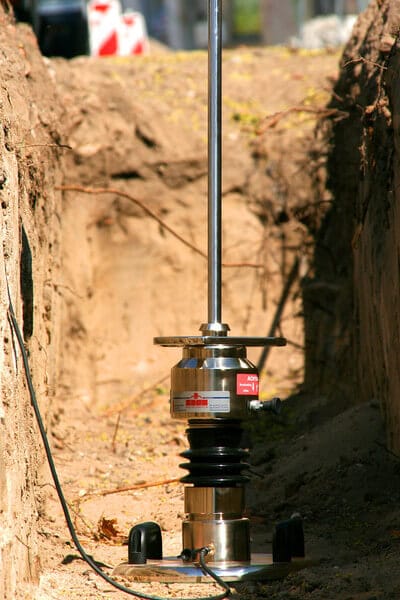
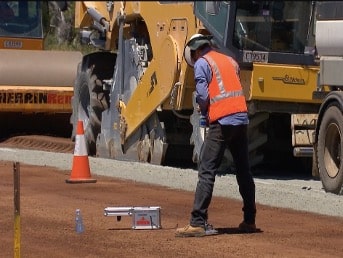
The Light Weight Deflectometer is a portable, non destructive test method well suited to in-situ testing of earthworks during construction, particularly where common techniques (e.g. nuclear gauge/sand replacement) are not appropriate or cost effective.
LWD’s are more accurate than the traditional DCP, especially in soft/loose materials or for estimating allowable bearing capacity.
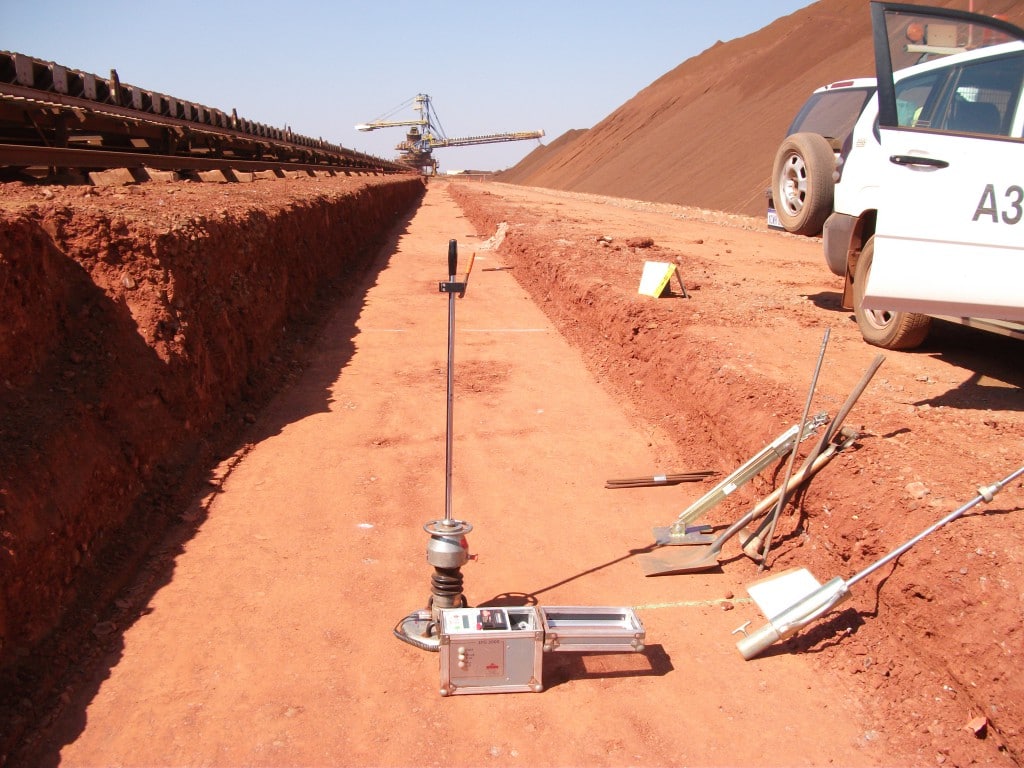
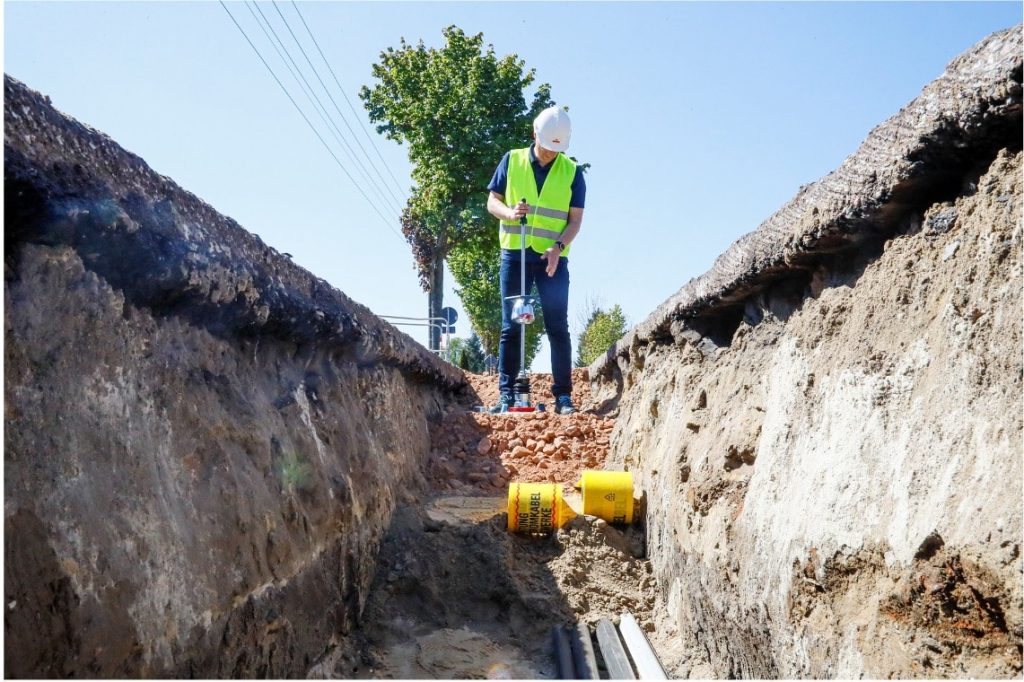
Applications include flexible pavements, unsealed roads and mine haul roads, access tracks, tunnels, railway track beds, airport runway and taxiways, hard standing areas (container ports, lay down areas etc), dam construction including dam wall raises, canal building, embankments, temporary works platforms (crane pads and piling rigs), building foundations (footings and slabs), wind farms, pipe laying (base and trench backfill), contaminated sites and tank farms.

Advantages
The advantages of the Zorn ZFG Light Weight Deflectometers (LWD’s) include:
Faster
- Results immediately available so on-site decisions can be made straight away with no construction delay.
- Approx 3 minutes per test
- Using the Web based Zorn FG-WebApp on your smartphone or tablet to easily and quickly import, edit and evaluate the data (directly on site) and send it as a data collection or in the form of completed high-quality test reports.
More accurate and repeatable
- Direct deflection readings: accelerometer directly connected to the base plate.
- High levels of repeatability
- Results provide ‘composite’ values, reflecting the moisture content and material variation within the zone of influence
Non destructive
- As a surface based test, the LWD has no footprint that needs to be remediated
- The surface is not disturbed, which is very important for contaminated sites
- Granular and geo-reinforced materials can be tested
More representative
- Provides a more representative picture of a pavement’s ability to handle traffic loads than density or CBR measurements.
- By measuring the modulus value, the LWD provides the link between the pavement design specification (design modulus value) and the actual site condition (in-situ modulus value).
- Provides calibration of Intelligent Compaction (IC) rollers output in relation to the pavement design specification (modulus value) for a specific site.
- By pairing with the PANDA Instrumented DCP, you can increase the depth of the zone of assessment e.g. for deep lift compaction
Without errors
- Equipment is instrumented (data is automatically and accurately recorded)
- Results are machine produced (overcoming manual data recording, transposition or calculation errors and fictitious results)
- Seamless flow of data from measuring equipment to report production
GPS located and time stamped – know where and when every test is done
- GPS-System for immediate determination of test position integrated with Google Maps.
Visually presented results
- Results including graphical outputs immediately available so integrity of results can be checked
- Data interpretation software allows data storage, analysis and manipulation and easy inclusion into reports.
Improved safety
- Less time testing near traffic at the construction site.
- Suitable for use in confined spaces and difficult to access locations, with no support equipment required.
Cost effective
- One person operation: portable, lightweight and easy to use.
- Cost-effective for completion at locations where equipment/plant has to be stopped whilst the test is completed.
- No additional counter weight vehicle or support is required.
Clients include those involved in pavement construction, pavement rehabilitation, material testing, geotechnical testing, pavement investigation and site investigation and include road authorities, councils, asset managers, mines, mobile crane operations, engineering and construction groups, EPCM’s, subcontractors, geotechnical consultancies and research organisations.
Light Weight Deflectometer (LWD) Calibration, Service and Spare Parts
Insitutek are proud to represent Zorn Instruments Light Weight Deflectometers (LWD’s) in Australia, New Zealand and the Pacific Islands and provide a very high level of client support.
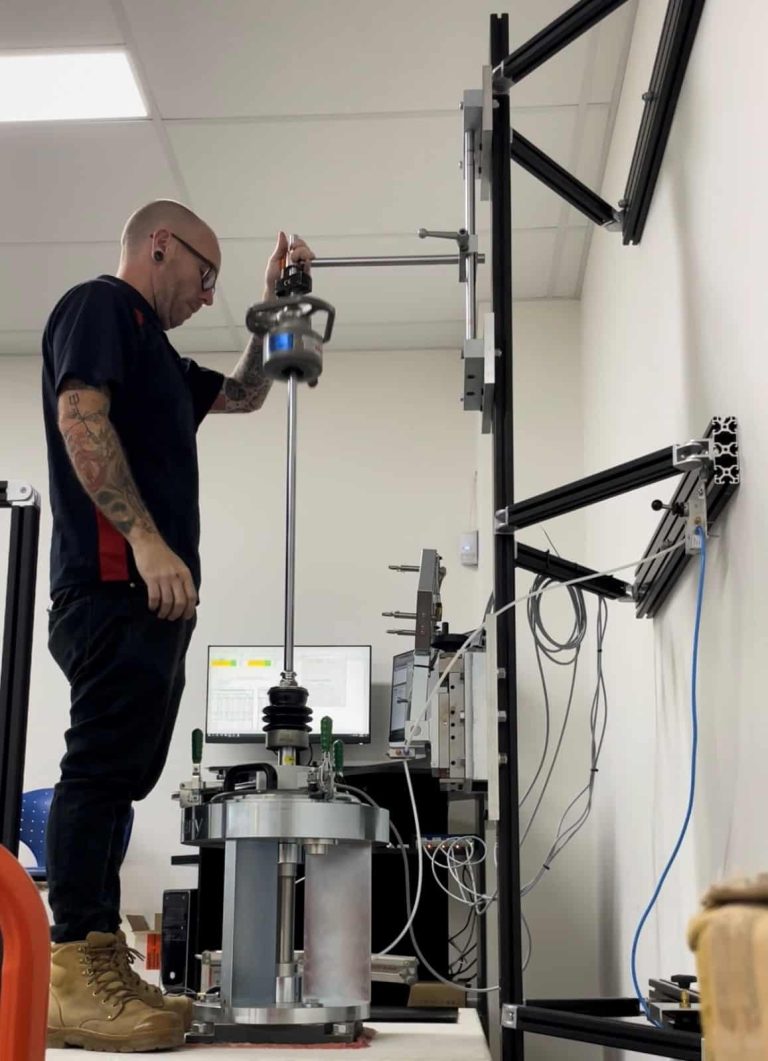
We offer a complete spectrum of services including after-sale technical support, servicing, repairs, and calibrations. Our clients have exclusive access to the only Light Weight Deflectometer calibration and service centre in the Southern Hemisphere. Run by Zorn Instruments trained technicians, our service centre is also well stocked with spare parts. Our Australian based Zorn Instruments Calibration Stand and Service Centre is exclusive to Zorn clients and saves you significant down time compared to calibration and repairs overseas.
To find out more, Contact Us.







Principles of Measuring Compaction
For a highway to perform well over the long term, its soil and aggregate layers need to provide a stiff, stable foundation. Inspections are required during construction to ensure that pavement foundation materials have been compacted enough to ensure this condition. Light Weight Deflectometer’s (LWD’s) are used to determine the stiffness of unbound materials (subgrade/subsoils and base layers, granular layers and backfilling materials) during construction. The device measures a deflection and estimates a modulus value (Evd) based on the force required to generate a given deflection for that soil type. Modulus is the most accurate and independent means for judging deformation (stiffness) and, thus, a material’s level of compaction.By measuring the modulus value, the Light Weight Deflectometer (LWD) provides the direct link between the design specification (modulus value) and the actual site condition (modulus value).
Stiffness is the relationship between stress and strain in the elastic range or, in layman’s terms, how well a material is able to return to its original shape and size after being stressed. In general, the more resistant to deformation a subgrade is, the more load it can support before reaching a critical deformation value. Three basic subgrade stiffness/strength characterizations are California Bearing Ratio (CBR), Resistance Value (R-value) and elastic (resilient) modulus. Resilient Modulus (Mr) enjoys widespread use in pavement design.
The subgrade must be able to support loads transmitted from the pavement structure. This load bearing capacity is often affected by the degree of compaction, moisture content, and soil type. A subgrade that can support a high amount of loading without excessive deformation is considered good.
Sub-grade materials are typically characterized by (1) their resistance to deformation under load, in other words, their stiffness or (2) their bearing capacity, in other words, their strength. In general, the more resistant to deformation a subgrade is, the more load it can support before reaching a critical deformation value.
How the Light Weight Deflectometer Equipment Works Technically
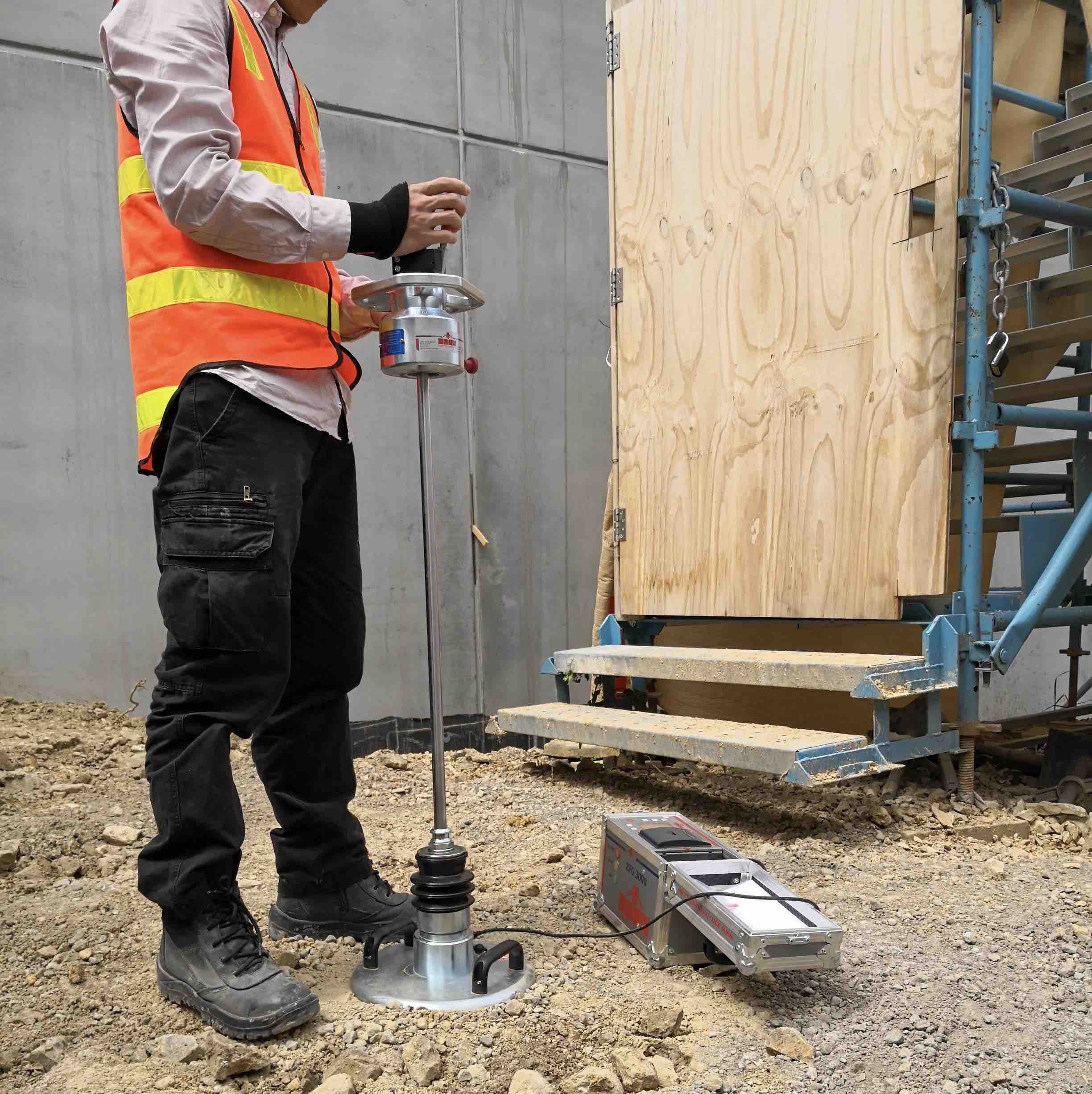
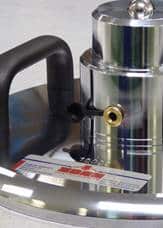
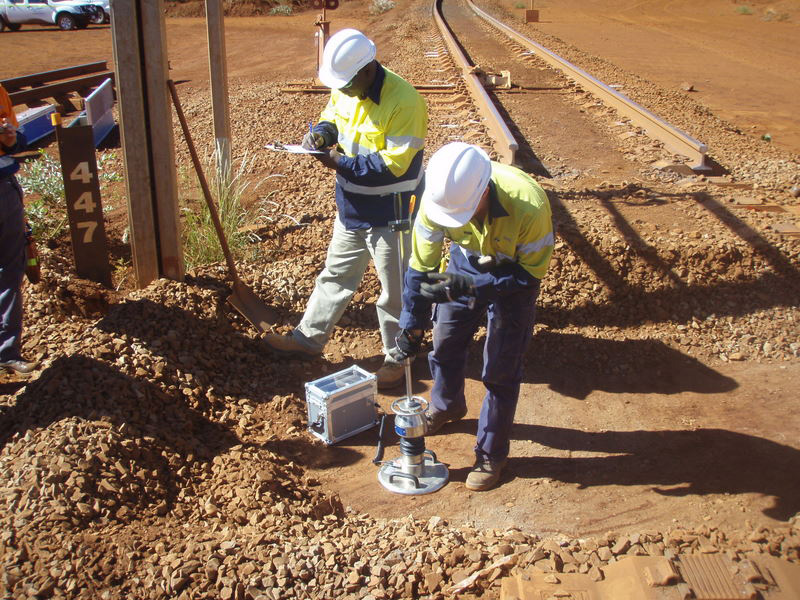
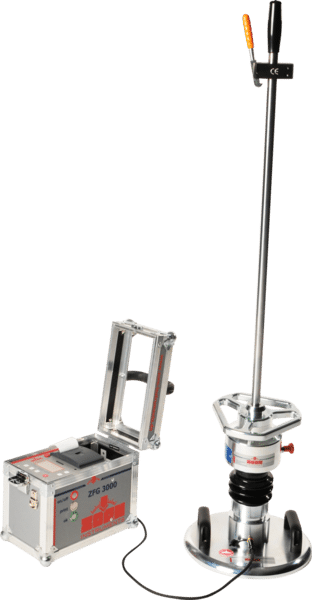
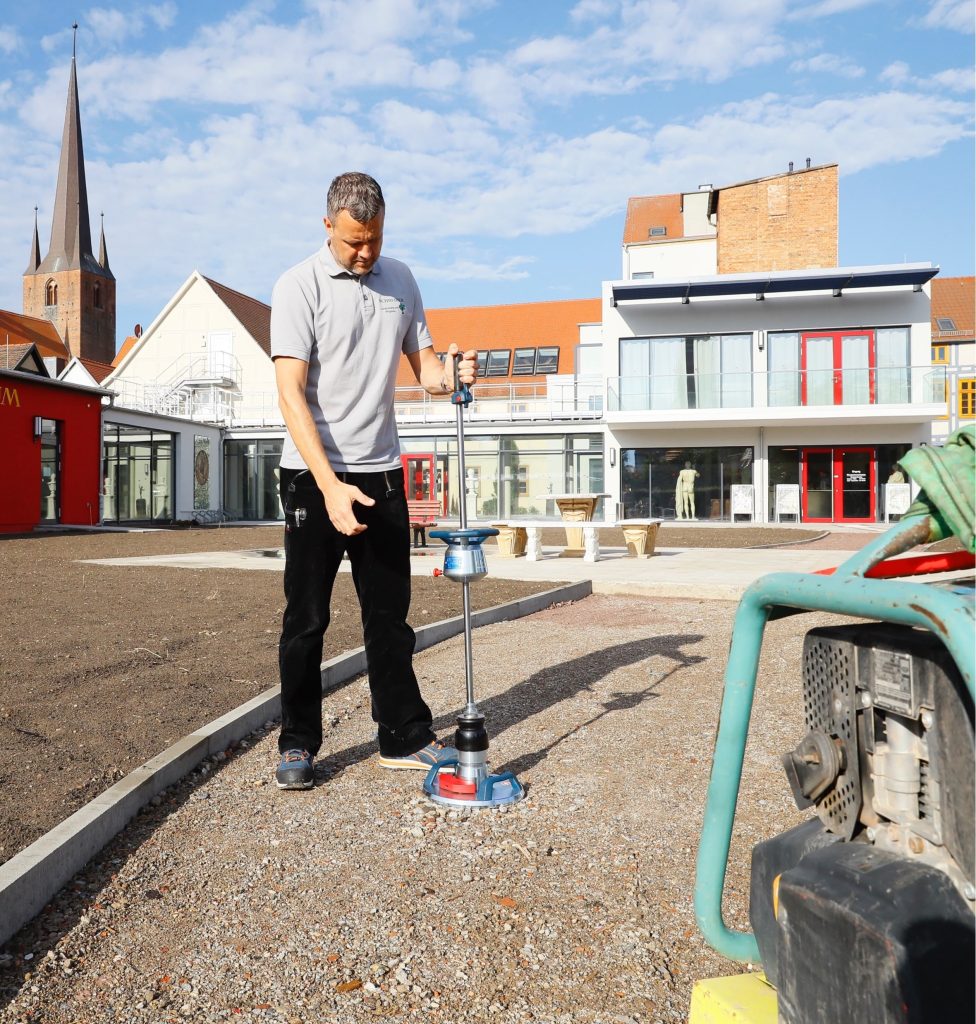
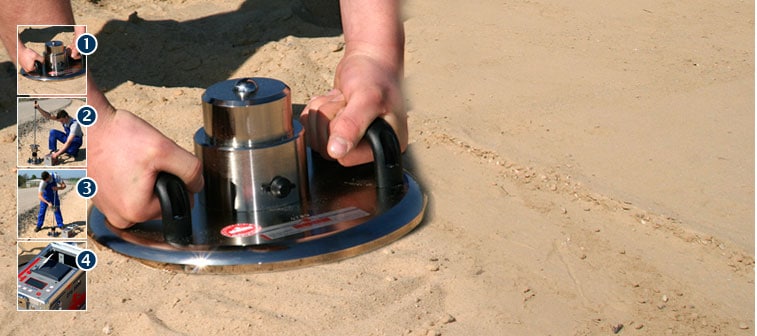
A mechanical impact on a circular steel plate produces a deformation on the soil surface. A light weight is dropped from a standard height and, after release, moves down a rod to a dumping spring that transfers the force to the centre of the load plate.
The load plate contains an accelerometer that measures movement and sends a signal to the control unit. The first integration of acceleration shows the velocity of the plate. And the second integration gives the deflection. The deflection and the velocity of the plate are calculated by double integration of the acceleration. The dynamic deformation modulus is calculated from these results provided that all further parameters like the contact pressure are constant. This simple approximation leads to stable results.
Using the 10kg falling weight, the Light Weight Deflectometer (LWD) measures in the range of 15 -70 MN / m². Using the 15kg falling weight (1.5 times the impact load), the measuring range extends from 70-105 MN / m².
The measuring procedure starts with three pre-loading drops for good contact with the ground. Then, three measuring drops are executed for registration and calculation of the average value and dynamic deformation modulus Evd. The results are stored on a SD-card or printed out directly. With the aid of a SD-card, the data can transferred to a PC.
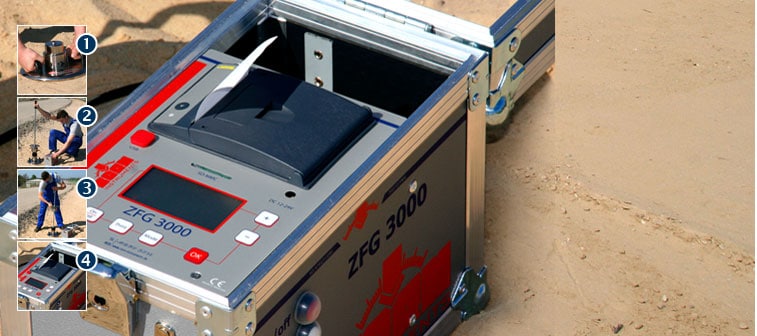
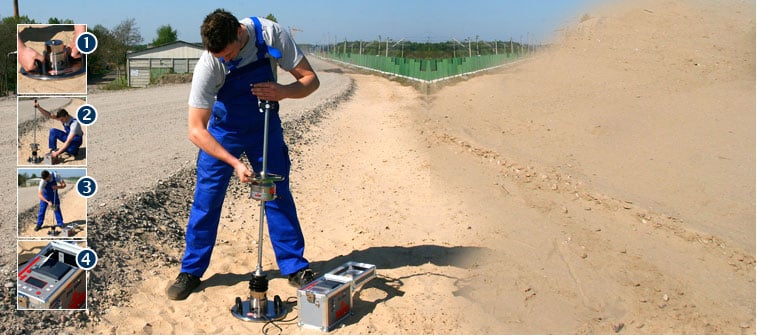
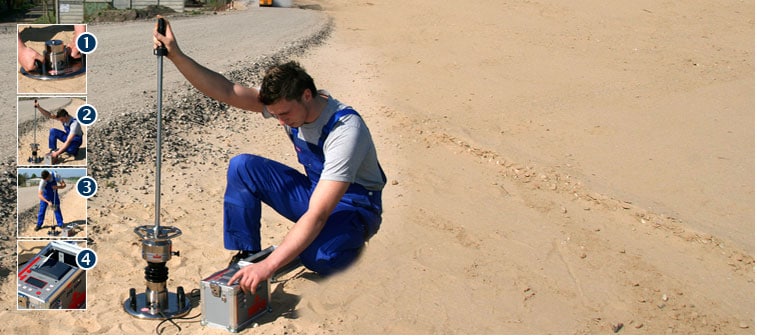
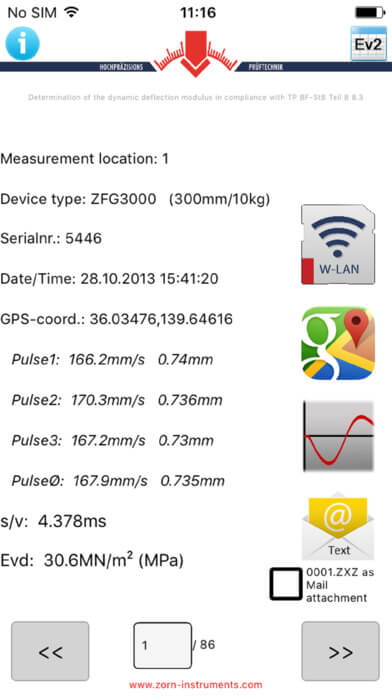
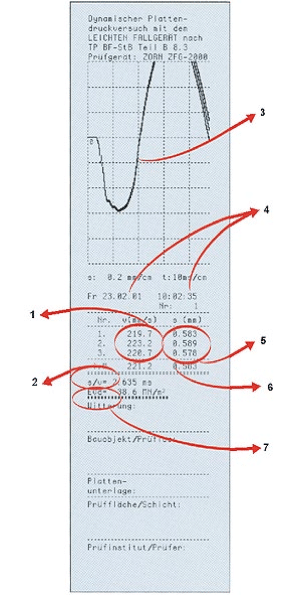
The print out results are presented in this format:
- 1. Sinking in speed
- 2. s/v: to evaluate compression
- 3. Deflection curves
- 4. Date and time of test
- 5. Deflections
- 6. Mean values
- 7. Evd: dynamic deformation modulus
Thinking behind the LWD Equipment Design
The principle of the Light Weight Deflectometer ZFG 3000 and ZFG 3.1 from Zorn Instruments is based on the principle of a truck loaded with 10 tonnes driving at 80km / hour and passing over 1 square metre. This is a typical dynamic process and the ZFG 3000 or ZFG 3.1 simulates these conditions. Under the rear double tyre, you have a pressure of approx 0.1MN/m2. When the 10kg weight drops on the 300mm diameter plate, you exert the same pressure of 0.1MN/m2 under the plate. (Plate diameter: 300 mm, area 0.07068 m² that means the falling weight must produce a force of 7.068 kN to get 0.1 MN/m²). For the 15kg falling weight, a force of 10.6 kN results in a pressure of 0.15 MN/m² under the plate. The time of this test is given by the spring under the falling weight.
- 0.1MN/m2 = 10.2 tonnes over 1 m2
If the test is done on a chip sealed pavement, the chip seal acts like an elastic band, as the binder holds the material together. Hence the results are not as direct / accurate as if the test was done on top of the sub-grade. None the less, the readings are meaningful for comparative purposes.
Density vs Modulus
Current earthworks specifications often rely on the assumption that there is a direct correlation between density and modulus (i.e. the greater the density achieved, the higher the modulus of the compacted material). As a result, existing specifications often require that either the sand replacement test or Nuclear Density Gauge (NDG) test be conducted to demonstrate that adequate density was achieved within the earthwork layers. However, the assumptions used when converting density to modulus have been shown to be highly idealised, and they can be affected by the properties of the compacted fill, subgrade or base material. More importantly, testing has shown that a higher density does not necessarily indicate a higher strength or modulus (Mooney et al. 2003, Mooney et al. 2010).
Issues with a reliance on density testing and CBR results for QA purposes include:
- Lag indicators – Several days / one week typical to complete. Contractor typically continues work and advances fill placement above the lift – before QA results are available. If non-conforming QA test results are then made available, there are significant costs associated with removing and replacing both the non-conforming material and the overlying material that has been placed whilst the contractor was waiting for the results.
- Density Oversize correction – This applies when greater than 20% of material exceeds 19 mm or 38 mm for Mould A and B size, respectively. This is not consistently being applied across the industry, with a recent study showing that 22% of 235 samples examined not applying that correction.
- Strength and modulus parameters – geotechnical and pavement designs are based on strength and modulus values. It is assumed during the design stage that a relationship exists between density and strength/modulus even though density is neither a strength nor a modulus parameter. The simple correlation between CBR and modulus (E) (e.g. E = 10 x CBR) often used in design is generic and there is a significant correlation error associated with its use.
- The CBR test is not applicable when more than 20% of the material is retained on the 19 mm sieve. Such material is often discarded as part of the test according to the Australian Standards. Differences in material preparation Road Authority Standards would result in different CBR test values being determined and reported.
For more details on these issues, check out the latest research.
Modulus is the most accurate and independent means for judging deformation (stiffness) and, thus, a materials level of compaction. Modern geotechnical and pavement designs are based on in-situ modulus values.
However, the current state of practice is to base the field-testing parameter selection on the result of a non-deformation parameter, such as DCP or CBR results from site investigation or density/moisture relationships in earthworks QA.
This means that there is currently a disconnect between design and construction control.
The Light Weight Deflectometer (LWD) addresses this gap. By measuring the modulus value, the Light Weight Deflectometer provides the direct link between the design specification (design modulus value) and the actual site condition (in-situ modulus value).
The LWD enables one to:
(a) reliably provide a direct measure of the strength or insitu modulus value; and
(b) offers significant time savings in turnaround time of QA test results.
Light Weight Deflectometer LWD ASTM E2835-11 for Compaction Control from Zorn Instruments
ZORN Light Weight Deflectometer Calibration Process
-
How to determine Modulus of Subgrade Reaction ks using the Light Weight Deflectometer
Categories: Research Papers
Topics: Comparative Studies between the Light Weight Defectometer and other Devices, Comparative Studies between the Plate Load Test (PLT) and other Devices, Understanding the Light Weight Deflectometer (LWD) and its Results
Published: 04/08/2025
The modulus of subgrade reaction (ks), useful for designing flexible foundations, pavements, and slabs, is defined as pressure per unit settlement (kN/m³). While traditionally measured using a 762 mm plate in static Plate Load Testing, the Light Weight Deflectometer (LWD) with a 300 mm plate can also estimate ks. To account for size differences, a correction factor of 2.22 is applied. Accurate results require homogeneous material to a depth of 1.5x the plate diameter. By plotting pressure versus deflection and interpolating to a target settlement of 0.568 mm, ks can be calculated for dynamic field conditions using LWD.

Test Method Q258A Dynamic Modulus of Deformation - Light Falling Weight Device - Accelerometer Type Department of Transport and Main Roads Queensland DTMR June 2025
Categories: Technical Standards
Published: 26/06/2025
Scope
This Test Method describes the procedure to determine dynamic modulus of deformation of a soil. The test involves the soil receiving an impact of maximum force transmitted through the fall of a drop weight onto a circular load plate of radius r that is assumed to be rigid. Force is selected during calibration, by adjusting the drop height, so the maximum normal stress under the load plate is 0.1 MPa during the test. The resulting deflections are measured at the centre of the top of the load plate. These deflections are used to calculate the dynamic modulus of deformation (Evd).
The data may be used for quality control of compacted layers of earthworks with fine-grained and coarse-grained materials up to a maximum particle size of 63 mm. It is suitable for materials with a dynamic modulus of deformation in the range of 15–70 MPa. It is not a replacement for proof rolling.
Keywords: Light Weight Deflectometer

Comparison of Light Weight Deflectometer Dynamic Deformation Modulus (Evd) and relative dry density or Density Ratio based on different soils group
Categories: Research Papers
Topics: Comparative Studies between the Light Weight Defectometer and other Devices, Comparative Studies between the Plate Load Test (PLT) and other Devices
Published: 19/06/2025
This document compares the Light Weight Deflectometer (LWD) Dynamic Deformation Modulus (Evd) with relative dry density or Density Ratio (Dpr) across various soil groups, based on German DIN 18196 and Australian AS1726 classification. While density is a static property representing mass per volume, modulus reflects stiffness and resistance to deformation under load—offering a stronger performance indicator. Although there are generic correlations between Evd and Dpr, these relationships are highly variable and influenced by factors like moisture content, compaction effort, and material type. Tables provide indicative Evd values corresponding to degrees of compaction for different soil types, highlighting LWD’s value in performance-based compaction assessment.
Keywords: Light Weight Deflectometer, Plate Load Test
How to Determine Resilient Modulus Mr from Light Weight Deflectometer Dynamic Deformation Modulus Evd
Topics: Comparative Studies between the Light Weight Defectometer and other Devices, Comparative Studies between the Plate Load Test (PLT) and other Devices
Published: 16/06/2025
This document outlines how to estimate the Resilient Modulus (Mr)—used in pavement design—from the Dynamic Deformation Modulus (Evd) measured by a Light Weight Deflectometer (LWD). While Evd represents stiffness under a single dynamic load, Mr reflects a material’s response to repeated traffic loading. Due to the high cost and complexity of direct Mr testing, indirect correlations using field tests like the LWD and Plate Load Test (PLT) are explored. These correlations must be used cautiously, as they are affected by factors like moisture content, density, and soil type. The document highlights recent methods such as LWD testing on Proctor-compacted lab samples to define target moduli. It also compares soil classification systems (DIN 18196 and AS1726) and provides tables linking soil types, compaction levels, and expected modulus values. While exact conversions are limited, combining field and lab data can produce reliable estimates for use in quality assurance and pavement design.
Keywords: Light Weight Deflectometer, Plate Load Test
Correlations between Ev1, Ev2 and Evd and Correlation to CBR
Categories: Research Papers
Topics: Comparative Studies between the Light Weight Defectometer and other Devices, Comparative Studies between the Plate Load Test (PLT) and other Devices
Published: 07/01/2025
This document explores the relationships between various soil strength and stiffness parameters commonly used in geotechnical and pavement engineering: Ev1 and Ev2 (static deformation moduli from Plate Load Tests), Evd (dynamic modulus from the Light Weight Deflectometer), and the California Bearing Ratio (CBR). Each test offers insight into different aspects of soil behaviour, from small-scale material strength to large-scale structural performance. While the CBR test provides a measure of a soil's bearing capacity in a confined mold—primarily at the top 5 mm of the sample—the plate load tests (static or dynamic) assess the performance of a much larger volume of soil, capturing a more holistic view of stiffness under load.
Though no universal mathematical formula links CBR directly with Ev1, Ev2, or Evd, empirical correlations have been established through research, particularly in Germany. Pioneers like Prof. Dr. Weingart and Prof. Dr.-Ing. Floss developed reference tables and graphs suggesting relationships between these parameters for different soil types. For instance, one commonly used approximation is Ev2 ≈ 2 × Evd. These insights support more informed decision-making during earthworks and pavement design.
Keywords: Light Weight Deflectometer, Plate Load Test
An Approach to Assess As-built Moduli of Compacted Foundation Layers Using Intelligent Compaction - Isaac Esteban Zuniga - ICTG 2024
Categories: Research Papers
Published: 31/10/2024
The satisfactory performance of well-designed pavement sectionshinges on the appropriate compaction of layers in the field, especially compacted geomaterials forming the foundation layers. In-situ spot density tests are standard practice for assessing the compaction effort, even though the mechanistic-empirical design procedures are based on layer moduli. The state of the practice in in-situ density measurements, and more recently modulus measurements, relies on limited in-situ spot testing meant to represent a large area of compacted geo-material. Intelligent compaction (IC) can be utilized to access the as-built moduli by vibratory rollers across the entire compacted geomaterial area to overcome the limitation of spot density tests.
This paper presents an approach to assess the layer-by-layer variation in the as-built moduli. The real-time IC mapping process has proved to be practical, efficient, and robust. The assessment results can be obtained by combining the IC measurement values (ICMV) with limited lightweight deflectometer (LWD) measurements for local calibration and laboratory-based resilient modulus non-linear parameters. The method's veracity and applicability are demonstrated through comprehensive data from two cells collected during the Minnesota Road Research Facility (MnROAD) reconstruction. The assessment results showed that the local in situ calibration of the ICMVs with the limited LWD modulus is necessary to obtain accurate layer-specific as-built moduli.
Keywords: Intelligent Compaction, Light Weight Deflectometer
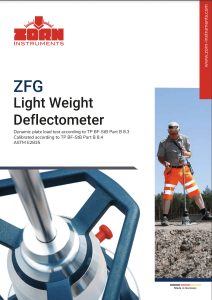
Light Weight Deflectometer
Categories: Brochures
Published: 13/11/2023
Keywords: Light Weight Deflectometer
Site testing for alternative quality testing - Smithfield Bypass Project, Cairns - Burt Look - ANZGeo2023
Categories: Research Papers
Topics: Comparative Studies – PANDA® vs other Compaction Control Methods, Comparative Studies between the Light Weight Defectometer and other Devices, Comparative Studies between the Plate Load Test (PLT) and other Devices
Published: 10/11/2023
Industry familiarity with density-based assessment for Quality Control (QC) purposes currently hampers the use of more accurate tests. An ARRB research project identified several alternative quality tests that have the potential to provide improved accuracy (as compared to density). These “new” methods (most are over 20 years old) provide a reduction in both the duration of onsite testing and turnaround of test results and provide the direct measurement of a stiffness (modulus) value. Overall, these alternative tests do not correlate well with the common density ratio (DR) test. Most alternative field equipment tests seem to be positioned between the Plate Load Test (PLT) and density in terms of accuracy and precision. The results and comparisons at the Smithfield Bypass project (approximately 11.5 km North-West of Cairns CBD) is presented. This site was tested in early 2019 and is one of several “live” test sites between 2017 and 2019. Field testing was undertaken upon an embankment being constructed over Avondale Creek and in parallel to standard tests for QC. Lessons learnt and comparisons between equipment at this site are provided. Dendrogram analysis is used to show the relative relationship between tests.
Keywords: Light Weight Deflectometer, PANDA® Instrumented DCP, Plate Load Test
Earthworks testing and the density Illusion - Burt Look - ANZGeo 2023
Categories: Research Papers
Topics: Comparative Studies – PANDA® vs other Compaction Control Methods, Comparative Studies between the Light Weight Defectometer and other Devices, Comparative Studies between the Plate Load Test (PLT) and other Devices
Published: 10/07/2023
Density has historically satisfied a 1 parameter need in quality control assessment. Other quality parameters are assessed independently. But modulus and performance-based subgrade design aggregates influences such as density, moisture content, material quality, thickness influence, underlying material and equipment used. Comparing density ratio (DR) to other equipment measurements often leads to a poor correlation, since a multivariate relationship is required - Dendrogram analysis is used in this paper to illustrate this inter-relationship. Yet field supervisors often ask for a correlation to provide a linkage with DR as the de facto standard. A higher DR does not necessarily produce a higher strength or modulus – although this is an implicit assumption.
Data from case studies with project trials over a period of 5 years are used to show the density illusion, which impedes the implementation of other modern testing. Issues associated with alternative tests are also discussed. Parallel testing results over several sites collectively indicate both Type I and Type II errors. Using 1-to-1 parallel testing can lead to DR results demonstrating a “pass” whilst LWD (or other tools) assessment could report a “fail” (or vice versa).
Keywords: Light Weight Deflectometer, PANDA® Instrumented DCP, Plate Load Test
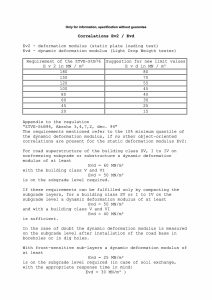
Comparison of Ev2, Evd and Ev2/Ev1 Ratio for Various Material Types
Categories: Technical Standards
Published: 03/06/2022
Keywords: Light Weight Deflectometer, Plate Load Test
An application of Lightweight Deflectometer Portable Impulse and Variable Energy Dynamic Penetrometer PANDA DCP devices for compliance testing of performance-based rail formation - Blanchet & Doe - ICSMGE 2022
Categories: Research Papers
Topics: Comparative Studies – PANDA® vs other Compaction Control Methods, Comparative Studies between the Light Weight Defectometer and other Devices, Rail
Published: 05/05/2022
Results of compressive strength and resilient modulus measured in situ using a Variable Energy Dynamic Penetrometer (VEDP) – PANDA DCP, Light Weight Deflectometer – Portable Impulse (LWD-PI), and Plate Load Test (PLT) and laboratory Unconfined Compressive Strength (UCS) during a full-scale trial on the Australian Rail Track Corporation (ARTC) Inland Rail project. These alternative tests reduce the level of laboratory testing effort while the near real time display of results aids in construction time frames which is of particular benefit to projects in remote locations. The methods can be combined with traditional field testing methods to develop site-specific correlations and validate geotechnical parameters assumed in the design.
Keywords: Light Weight Deflectometer, PANDA® Instrumented DCP, Plate Load Test
Best Practice in Compaction Quality Assurance for Pavement and Subgrade Materials NACOE DTMR QLD P60 Y5 Final Report Lee Lacey June 2021
Categories: Research Papers
Topics: Comparative Studies – PANDA® vs other Compaction Control Methods, Comparative Studies between the Light Weight Defectometer and other Devices, Comparative Studies between the Plate Load Test (PLT) and other Devices
Published: 23/07/2021
The current industry practice relies on the use of in situ dry density ratio (DDR) to control the quality of compaction during the construction of earthworks. The main reason is because the density measurements are relatively easy to undertake during construction, and the parameter itself is precise and with limited variability.
However, this approach has two major disadvantages, namely: (i) the in situ modulus of the layers is not directly measured, and (ii) there is a significant delay between the time of undertaking the DDR measurement and the delivery of the final test results. Such a (routine) delay in the provision of test results can lead to costly rework being required by the contractor if earthworks are found to be non conforming and require remediation after the works have further progressed. To address the above issues, this National Asset Centre of Excellence (NACOE) research project investigated the viability of using alternative testing techniques to control the quality of constructing earthworks.
This five-year study investigated a range of alternative testing devices, such as the light weight deflectometer (LWD), Clegg Hammer and PANDA probe with a focus to evaluate their effectiveness in assessing the quality of the earthworks constructed. A methodology has been developed to adopt the LWD as an alternative QA method. However, the methodology is equally applicable for other similar technologies.
The report presents the final research outcomes to allow the adoption or trialling of this alternative approach in future roadwork construction projects. The final deliverables include the proposed amendments to MRTS04 General Earthworks, and a technical note that details the technical basis and approach.
Appendix A of this report, includes the Queensland Department of Transport and Main Roads (QLD DTMR) Draft Technical Note – Guidance on Use of Light Weight Falling Deflectometers (LWDs) to be Accepted as an Alternative Method for Verification of Earthworks Compaction Requirements – June 2021. This provides guidance on moving from a density based specification for compaction control to a modulus based approach to testing in the field.
The draft technical note provides guidance on implementation of Light Weight Deflectometers as an alternative compaction control method including a flow chart showing key steps for assessment/derivation of equivalent acceptance thresholds for LWD use (in lieu of traditional (density) testing minimum thresholds included in MRTS04 – General Earthworks). We believe this “How to” guide will be very useful for industry on projects across the country.
Keywords: Light Weight Deflectometer, PANDA® Instrumented DCP, Plate Load Test
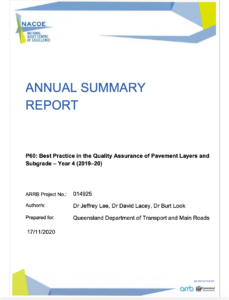
Best Practice in the Quality Assurance of Pavement Layers and Subgrade - Year 4 Report Jeffrey Lee, David Lacey & Burt Look NACOE P60 QLD DTMR, Australia Nov 2020
Categories: Research Papers
Topics: Comparative Studies – PANDA® vs other Compaction Control Methods, Comparative Studies between the Light Weight Defectometer and other Devices, Comparative Studies between the Plate Load Test (PLT) and other Devices
Published: 27/11/2020
This is Year 4 of the NACOE project which explores alternative testing to quality assurance pavement and subgrade materials. Year 1 (2016–17) completed a comprehensive literature review of different test methods available. Year 2 (2017–18) undertook equipment comparison testing in Ballina NSW and Rocklea QLD. Year 3 (2018–19) continued carrying out field testing at a major TMR project in Cairns. This year’s primary focus was to finalise the draft testing protocol into a technical note and conduct knowledge transfer activities to present the findings to the wider audience in Queensland and Australia.
Two webinars were presented by the NACOE project team, including presentations from two international speakers. The webinars were focussed on the implementation of the draft testing protocol and provided the road industry with updates of the latest development in the USA and the railway industry in Australia using similar technologies.
A technical note was also developed, which outlines a procedure to adopt Light Weight Deflectometer testing as a quality assurance tool for the construction of pavement layers and subgrade.
Keywords: Light Weight Deflectometer, PANDA® Instrumented DCP, Plate Load Test
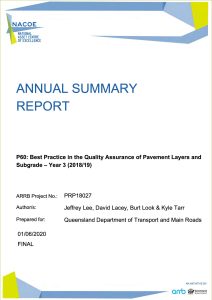
Best Practice in Compaction QA for Pavement and Subgrade Materials NACOE P60 Year 3 Report Lee, Lacey, Look & Tarr June 2020
Categories: Research Papers
Topics: Comparative Studies – PANDA® vs other Compaction Control Methods, Comparative Studies between the Light Weight Defectometer and other Devices, Comparative Studies between the Plate Load Test (PLT) and other Devices
Published: 01/06/2020
Industry’s familiarity with density-based assessments for the quality assurance (QA) of pavement layers and subgrades currently favours conventional density measurements over other field tests that have the potential to better validate design parameters achieved during construction. Although such alternative tests (e.g. Prima 100 LWD, Geogauge or PANDA probe) are not necessarily as precise as conventional density testing, the density test itself has significant limitations.
These limitations include the time required to undertake the tests and its inability to reliably assess the in situ devices evaluated in this report.
The background to Phase 3 of the study is covered in Section 2 which discusses the interim findings from Phases 1 and 2. The field testing and analysis conducted on a live construction site to evaluate the alternatives test method is summarised in Section 3. A proposed technical specification is outlined in Section 4 and conclusions and recommendations are discussed in Section 5.
Keywords: Light Weight Deflectometer, PANDA® Instrumented DCP, Plate Load Test
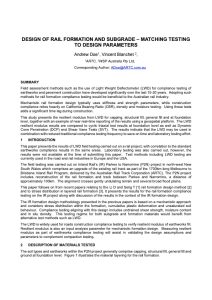
DESIGN OF RAIL FORMATION AND SUBGRADE – MATCHING TESTING TO DESIGN PARAMETERS - Vincent Blanchet & Andy Doe - Core 2020
Categories: Research Papers
Topics: Rail
Published: 01/01/2020
This study, from the Australian Rail Track Corporation (ARTC) Inland Rail project research, presents the resilient modulus from LWD for capping, structural fill, general fill and at foundation level, together with an example of near real-time reporting of the results using a geospatial platform. The LWD resilient modulus results are compared to cyclic triaxial test results at foundation level as well as Dynamic Cone Penetration (DCP) and Shear Vane Tests (SVT). The results indicate that the LWD may be used in combination with reduced traditional compliance testing frequency to save on time and laboratory testing effort.
Keywords: Light Weight Deflectometer
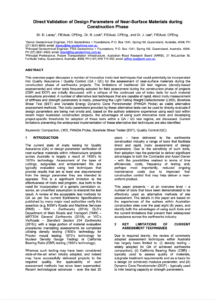
Direct Validation of Design Parameters of Near-Surface Materials during Construction Phase Lacey Look and Lee AGS VIC 2019
Categories: Research Papers
Topics: Comparative Studies – PANDA® vs other Compaction Control Methods, Comparative Studies between the Light Weight Defectometer and other Devices
Published: 22/02/2019
This overview paper discusses a number of innovative insitu test techniques that could potentially be incorporated into Quality Assurance / Quality Control (QA / QC) for the assessment of near-surface materials during the construction phase of earthworks projects. The limitations of traditional QA test regimes (density-based assessments) and other tests frequently adopted for field assessment during the construction phase of projects (CBR and DCP) are initially discussed, with a critique of the continued use of index tests for such material evaluations provided. A number of alternative test techniques that are capable of rapid, direct insitu measurement of stiffness and strength parameters is made, presenting the Light Falling Weight Deflectometer (LWD), Borehole Shear Test (BST) and Variable Energy Dynamic Cone Penetrometer (PANDA Probe) as viable alternative assessment methods. The insitu parameters provided by these alternative tests can be used to directly evaluate if design parameters are being met onsite and, based on the authors extensive experience using each tool within recent major Australian construction projects, the advantages of using such innovative tools and developing project-specific thresholds for adoption of these tools within a QA / QC test regime, are discussed. Current limitations preventing the widespread implementation of these alternative test techniques are also identified.
Keywords: Compaction, LWD, PANDA Probe, Borehole Shear Tester (BST), Quality Control (QC)
Keywords: Light Weight Deflectometer, PANDA® Instrumented DCP

Advanced Methods for Compaction Quality Control - June 2018 Webinar Part 3 (Webinar Slides)
Categories: Research Papers
Topics: Comparative Studies – PANDA® vs other Compaction Control Methods, Comparative Studies between the Light Weight Defectometer and other Devices, Comparative Studies between the Plate Load Test (PLT) and other Devices
Published: 03/06/2018
Keywords: Light Weight Deflectometer, PANDA® Instrumented DCP
Advanced Methods for Compaction Quality Control Part 2 Question Answers
Categories: Research Papers
Topics: Comparative Studies – PANDA® vs other Compaction Control Methods, Comparative Studies between the Light Weight Defectometer and other Devices, Comparative Studies between the Plate Load Test (PLT) and other Devices
Published: 02/06/2018
Advanced Methods for Compaction Quality Control Part 2 Question Answers
- How is moisture ratio taken into account?
- Modulus is influenced by moisture too; so, shouldn't a comparison should MDD v Modulus include consideration of moisture content?
- Was the moisture content/ratio taken into account when comparing the Density vs Modulus?
- The statistical analysis doesn't acknowledge some frustrating variables (1) – e.g. Density Ratio v Modulus not considering moisture content.
- What was the moisture variations within all the testing?
- Density Ratio can be performed within 1 day as per AS 1289 5.7.1.
- Most Victorian testing for earthworks is using rapid HILF method which does not normally require curing if within the test method range.
- He [the presenter] is referring to assigned value and not the HILF compaction.
- Are there any case history recorded significant numbers of PLT vs LFWD?
- PLT has shown vice-versa results and how can we take it PLT as reliability test?
- The statistical analysis doesn't acknowledge some frustrating variables (2) – e.g. density ratio v CBR not considering material type
- Embankments need to have a required modulus for strength as well as minimise settlement. Isn't density a measure of minimising settlement and therefore still important?
- A dry material with low density will have a high modulus, but is this all we care about?
- Slide 17 – These are awful results and not representative of road construction projects in NSW. What is the source of this data? PS. You are showing density (ratio) results and not quality test results!
- Slide 19 – One crucial item is the location of the test results, that is layer and GPS / Chainage and Offset! Why is this mixing?
- Slide 23 – If you are placing and compacting in 300 mm lifts, the LFWD and PLT will not give you reliable results as it influenced by the underlying layers. Therefore, why would you use this equipment?
- Slide 25 – You have only tested and analysed one formation material. How can you draw any early conclusions?
- Slide 29 – Work in the USA has shown the portable hand held FWD devices are susceptible to moisture content of the material being tested and have you taken this into consideration to the reliability of the test results from these devices?
- Slide 50 - You would have to be a brave road agency engineer to allow a contractor to use 1000 mm lifts for embankments with a 18 T padfoot roller!
Keywords: Light Weight Deflectometer, PANDA® Instrumented DCP, Plate Load Test

NACOE Advanced Methods for Compaction Quality Control June 2018 Webinar Part 2 (Webinar Slides)
Categories: Research Papers
Topics: Comparative Studies – PANDA® vs other Compaction Control Methods, Comparative Studies between the Light Weight Defectometer and other Devices, Comparative Studies between the Plate Load Test (PLT) and other Devices
Published: 02/06/2018
Keywords: Light Weight Deflectometer, PANDA® Instrumented DCP, Plate Load Test

NACOE Advanced Methods for Compaction Quality Control – June 2018 Webinar – Part 1 (Webinar Slides)
Categories: Research Papers
Topics: Comparative Studies – PANDA® vs other Compaction Control Methods, Comparative Studies between the Light Weight Defectometer and other Devices, Comparative Studies between the Plate Load Test (PLT) and other Devices
Published: 01/06/2018
Keywords: Light Weight Deflectometer, PANDA® Instrumented DCP, Plate Load Test
Characterisation of in-situ soils based on the resilient soil modulus obtained using Light Weight Deflectometer (LWD) – N.Barounis & T.Smith – New Zealand Geotechnical Society – Nov 2017
Categories: Research Papers
Topics: Comparative Studies between the Light Weight Defectometer and other Devices, Comparative Studies between the Plate Load Test (PLT) and other Devices, Pavements
Published: 01/11/2017
The Light Weight Deflectometer (LWD) is a portable device that measures the onsite dynamic or resilient modulus (Evd) of subgrade soils and pavements. The LWD, which has been used extensively in Europe and the United States, has become popular for assessing the stiffness of embankments, structural fills and other earth structures. It assesses the bearing capacity, the stiffness and the compaction degree of soils that have a maximum grain size of 63mm. The LWD assessment considers the stiffness (or compressibility) characteristics of the materials under testing to a depth of 600mm below plate level. The paper presents available correlations between Evd with the static soil modulus Ev obtained from static plate load tests. It also presents how Evd can be linked with CBR and thus be useful for pavement design, but also with the subgrade reaction modulus K of the assessed soils. It also discusses the fundamental principles behind the testing along with the benefits that may arise from its use on specific applications. Such applications include the design and construction monitoring of gravel rafts, the design of pavements, engineered and non-engineered fills, landfills, MSE walls, pipelines and services, evaluation of ground improvement effectiveness and soil stiffness mapping.
The paper presents available correlations between dynamic or resilient modulus (Evd) with the static soil modulus Ev obtained from static plate load tests. It also presents how Evd can be linked with CBR and thus be useful for pavement design, but also with the subgrade reaction modulus K of the assessed soils. Applications include the design and construction monitoring of gravel rafts, the design of pavements, engineered and non-engineered fills, landfills, MSE walls, pipelines and services, evaluation of ground improvement effectiveness and soil stiffness mapping.
Keywords: Light Weight Deflectometer, Plate Load Test
Standardizing Lightweight Deflectometer Measurements for Compaction QA and Modulus Determination in Unbound Bases and Subgrades – Schwartz, Afsharikia, Khosravifar – Maryland DOT – University of Maryland – Sept 2017
Categories: Research Papers
Topics: Pavements
Published: 01/09/2017
Includes AASHTO Drafts:
Standard Method of Test for Laboratory Determination of Target Modulus Using Light-Weight Deflectometer (LWD) Drops on Compacted Proctor Mold – AASHTO Designation: TP 123-01 (2017)
Standard Method of Test for Compaction Quality Control Using Light Weight Deflectometer (LWD) – AASHTO Designation: TP 456-01 (2017)
Keywords: Light Weight Deflectometer
Best Practice in Compaction QA for Pavement and Subgrade Materials Year 1 Report Jeffrey Lee, David Lacey & Burk Look NACOE P60 QLD DTMR, Australia Aug 2017
Categories: Research Papers
Topics: Comparative Studies – PANDA® vs other Compaction Control Methods, Comparative Studies between the Light Weight Defectometer and other Devices, Comparative Studies between the Plate Load Test (PLT) and other Devices
Published: 30/08/2017
Currently, the acceptance of construction works (e.g. earthwork embankments, subgrade and pavement granular layers) by Australian road regulatory bodies requires in situ density testing to be completed in order that a relative percentage of the laboratory-determined maximum dry density can be determined. Current earthworks specifications often rely on the assumption that there is a direct correlation between density and modulus parameters (i.e. the greater the density achieved, the higher the modulus of the compacted material). However, this assumption may not be valid and it is affected by many properties of the engineering material.
Over the last two decades, some alternative field assessment methods have been developed which either directly measure the in situ modulus or correlate with the resilient modulus. This project focuses on exploring the use of these new assessment methods. Such innovative testing methods can be grouped into the following four main categories:
- penetration test devices
- surface based impact devices
- geophysical methods
- in situ sensors.
Among these four categories, the ‘penetration test devices’ and ‘surface based impact devices’ were identified to have the potential to be adopted in TMR’s current Quality Assurance (QA) framework.
A literature review conducted in 2016/2017 highlighted that some similar international studies had been completed in recent years. Recent projects in Australia also demonstrated the advantages associated with these innovative, commercially-available field assessment techniques.
The project team attempted to rank the different QA methods using a weighted rating approach.
The traditional density test techniques were also evaluated as reference values in this assessment. The overall comparative assessment of the different QA test techniques is shown in the following table.
Keywords: Light Weight Deflectometer, PANDA® Instrumented DCP, Plate Load Test
Relationship between Field CBR and Dynamic Deflection Modulus for Black Cotton Soil – Landge, Gupta, Patni & Shahare – Visvesvaraya National Institute of Technology, India – IJCIET Vol8, Issue 3, March 2017
Categories: Research Papers
Topics: Comparative Studies between the Light Weight Defectometer and other Devices
Published: 01/03/2017
This study relates dynamic deflection modulus (from the Light Weight Deflectometer) with Field California Bearing Ratio (FCBR). The FCBR test was used to determine CBR on the field to counter practical problems associated with Lab CBR. The test results showed that there is a strong linear correlation between FCBR and Dynamic Deflection Modulus (Evd) for black cotton soil in saturated condition. By using LWD instead of FCBR would result in better quality control, significant cost and time saving.
Keywords: Light Weight Deflectometer
Adequacy Of In-Place QC/QA Techniques For Evaluating Constructed Aggregate Layers Of Working Platforms And Flexible Pavements – Hasan Kazmee – Applied Research Associates, Inc., Erol Tutumluer – University of Illinois at Urbana-Champaign & Sheila Beshears – Illinois Department of Transportation (January 2017)
Categories: Research Papers
Topics: Comparative Studies – PANDA® vs other Site Investigation Methods, Comparative Studies between the Light Weight Defectometer and other Devices, Temporary Works Platforms – Mobile Crane Pad and Piling Rig Working Platforms
Published: 01/01/2017
This paper summarizes key findings from QC/QA tests performed on full-scale pavement test sections in a recent Illinois Center for Transportation research study. The focus was to validate newly adopted Illinois DOT material specifications for large size unconventional aggregates, known as aggregate subgrade, through accelerated pavement testing. Seven representative aggregate types were used to construct test sections with aggregate subgrade and virgin and recycled capping and subbase layers. Density measurements from nuclear gauge were collected and routinely contrasted with modulus results of the lightweight deflectometer (LWD) and soil stiffness gauge (GeoGauge) from the constructed layers. Further, forensic strength assessment was carried out by dynamic cone penetrometer and variable energy PANDA penetration device. Geo-endoscopic imaging, coring and trenching were also conducted to identify depth of water table and as-constructed layer thicknesses. The PANDA penetrometer results in conjunction with geo-endoscopy proved to be effective in correlating rutting performances to QC/QA test results.
Keywords: Light Weight Deflectometer, PANDA® Instrumented DCP, PANDOSCOPE

Grading & Base Manual – Light Weight Deflectometer Procedure & Target Value Determination – Minnesota DOT – March 2016
Categories: Technical Standards
Published: 18/03/2016
Keywords: Light Weight Deflectometer
Working Platforms – To BRE or not to BRE is the question – Burt Look Foundation Specialists Group (Brisbane, Australia) and Neil Honeyfield Port of Brisbane (Brisbane, Australia) AGS Journal – 2016
Categories: Research Papers
Topics: Temporary Works Platforms – Mobile Crane Pad and Piling Rig Working Platforms
Published: 01/03/2016
The Building Research Establishment (BRE) produced a practice guide for working platforms for tracked plant, which has become a “standard” in the industry in the absence of any other widely published simple design method. The BRE design method does not apply for thick platforms or for soft subgrades, but continues to be used in those applications in the absence of an alternative document. A case study is discussed which applies the BRE in such a situation, but then compares with alternative methods (including the Light Weight Deflectometer) to assess the required working platform.
Keywords: Light Weight Deflectometer
TP BF-StB Part B 8.3 Dynamic Plate Load Testing with the Light Drop Weight Tester 2016
Categories: Technical Standards
Published: 01/01/2016
Keywords: Light Weight Deflectometer
TP BF-StB Part B 8.4 Calibration Rules for the Light and Medium Drop-Weight Tester 2016
Categories: Technical Standards
Published: 01/01/2016
Keywords: Light Weight Deflectometer
Geotechnical investigation of a French conventional railway track-bed for maintenance purposes - Lamas-Lopez, Cui, Costa D'Aguiar, Calon – SNCF - Soils and Foundations - Japanese Geotechnical Society Dec 2015
Categories: Research Papers
Topics: Rail
Published: 01/12/2015
A comparison of two methods of determining the stiffness of track-bed materials (dynamic penetration and dynamic plate load) comparing the PANDA and the Light Weight Deflectometer.
Keywords: Light Weight Deflectometer, PANDA® Instrumented DCP
Performance Evaluations of Pavement Working Platforms Constructed with Large-Sized Unconventional Aggregates – H Kazmee & E Tutumluer, University of Illinois & D Mishra, Boise State University – 2015
Categories: Research Papers
Topics: Temporary Works Platforms – Mobile Crane Pad and Piling Rig Working Platforms
Published: 01/01/2015
Use of unconventional aggregate materials, such as primary crusher run and concrete demolition waste, have become viable for the construction of pavement working platforms over very weak and often wet subgrade soils. To this end, a research study was undertaken at the Illinois Center for Transportation to evaluate the adequacy and field performances of such large-sized aggregate materials and validate new material specifications.
A state-of-the-art image analysis technique was utilized to characterize the size and morphological properties, e.g. shape, texture and angularity of two large-sized aggregates, referred to herein as primary crusher run and crushed concrete. For the field evaluation, full-scale test sections were constructed with these large-sized aggregate materials over a very weak engineered subgrade and subjected to accelerated pavement testing. Construction quality control was achieved through in-place density and modulus measurements on conventional aggregate capping surface layers using nuclear gauge, lightweight deflectometer and soil stiffness gauge type devices. Periodic rut measurements were carried out on the pavement surface throughout the accelerated loading process using an Accelerated Transportation Loading Assembly (ATLAS). Contributions of the underlying pavement layers to the total rut accumulation was evaluated through innovative applications of ground penetrating radar (GPR), a light weight penetrometer device, known as the French Panda, as well as a geo- endoscopy probe. Layer intermixing and material migration at the aggregate subgrade and subgrade interface was found to improve the layer stiffness and pavement performance results significantly.
Keywords: PANDA® Instrumented DCP, PANDOSCOPE
Modulus-Based Construction Specification for Compaction of Earthwork and Unbound Aggregate – Final Report - Transportation Research Board – NCHRP Project 10-84 – Nazarian et al – Aug 2014
Categories: Research Papers
Topics: Pavements
Published: 01/08/2014
The objective of this research was to develop a modulus-based construction specification for acceptance of compacted geomaterials that considers the following constraints:
The specification should be based on field measurement of modulus and moisture content.
Acceptance criteria should be correlated with design moduli.
The specification should be compatible with a variety of compacted geomaterials.
The specification should consider the principles of unsaturated soil mechanics.
Available models, devices, and methods should be incorporated in the specification.
The validity and practicality of the proposed specification should be documented by its use as a shadow specification for a number of actual construction projects.
Keywords: Light Weight Deflectometer
Modulus-Based Construction Specification for Compaction of Earthwork and Unbound Aggregate – Appendices - Transportation Research Board – NCHRP Project 10-84 – Nazarian et al – Aug 2014
Categories: Research Papers
Topics: Pavements
Published: 01/08/2014
The objective of this research was to develop a modulus-based construction specification for acceptance of compacted geomaterials that considers the following constraints:
The specification should be based on field measurement of modulus and moisture content.
Acceptance criteria should be correlated with design moduli.
The specification should be compatible with a variety of compacted geomaterials.
The specification should consider the principles of unsaturated soil mechanics.
Available models, devices, and methods should be incorporated in the specification.
The validity and practicality of the proposed specification should be documented by its use as a shadow specification for a number of actual construction projects.
Keywords: Light Weight Deflectometer
Non-Nuclear Methods for Compaction Control of Unbound Materials – Transportation Research Board – NCHRP 20-05 Topic 44-10 Synthesis 456 – Nazzal – 2014
Categories: Research Papers
Topics: Comparative Studies between the Light Weight Defectometer and other Devices
Published: 01/01/2014
This report synthesizes knowledge on national and international experiences and practices using non-nuclear devices and methods for compaction control of unbound materials. This includes:
Types of compaction control testing devices used by state DOTs, including construction specifications;
Non-nuclear devices that have been evaluated by state DOTs and those under consideration, including proposed specifications;
Various types of non-nuclear devices available and comparison of these devices with nuclear devices;
Correlation of non-nuclear device measurement results to material properties (e.g., density, modulus, stiffness, moisture content);
Issues with non-nuclear devices, such as accuracy, precision, ease of use, reliability of data, safety, test time, level of expertise required, Global Positioning System compatibility, calibration, durability, costs, and compatibility with various unbound materials; and
The advantages, disadvantages, and limitations of the various compaction control devices.
Indiana and Minnesota DOTs have widely implemented stiffness and strength-based specifications for compaction control using DCP and LWD measurements.
Keywords: Light Weight Deflectometer

Deflection Measurement Of Soils Using A Lightweight Deflectometer (LWD) – Modified Ndr Standard Test Method T 2835 – ASTM Designation: E 2835 – Nebraska DOT- 2014
Categories: Technical Standards
Published: 01/01/2014
Keywords: Light Weight Deflectometer
Influence of Lightweight Deflectometer Characteristics on Deflection Measurement – D. Stamp. and M. Mooney – ASTM Geotechnical Testing Journal, Vol. 36, No. 2, pp. 216–226 – 2013
Categories: Research Papers
Topics: Understanding the Light Weight Deflectometer (LWD) and its Results
Published: 01/01/2013
The Light Weight Deflectometer (LWD) is currently not standardized; as a result, there are a number of commercially available LWD designs that yield different deflection and elastic modulus values. This proves problematic because transportation agencies are beginning to prescribe target deflections and/or elastic modulus values during earthwork construction.
This paper presents the results of a comprehensive investigation into the influence of LWD design characteristics on measured deflection. The influence of the sensor type (accelerometer versus geo- phone), sensing configuration (measurement of plate versus ground surface), LWD rigidity, and applied load pulse were investigated through field testing and finite element analysis. The investigation revealed that the sensing configuration (i.e., the measurement of plate versus ground surface response) is the predominant cause of differences between the Zorn and Prima LWD responses (deflection normalized by peak force). Vertical plate deflection exceeded ground surface deflection by 65 % to 310 % on soils and by 20 % on asphalt. The relative influences of the sensor type (accelerometer versus geophone), plate rigidity, and load pulse each led to relatively small differences (<10 %) between Zorn and Prima LWD responses. The results of this investigation illustrate that each of the two LWD configurations will always produce different deflection and elastic modulus values for the same ground conditions, and that the differences will be difficult to predict.
Keywords: Light Weight Deflectometer
Foamed Asphalt Stabilized Base – A Case Study – Khosravifar, Schwartz & Goulias – University of Maryland – 2013
Categories: Research Papers
Topics: Pavements
Published: 01/01/2013
The primary objective of the project was to evaluate the suitability of using Foamed asphalt stabilized base (FASB) in high traffic volume pavements and to assess its fundamental engineering properties. FASB density, moisture content and hydraulic properties were evaluated in the field and its stiffness was monitored as the material dried and cured during the first week and at 4 to 6 months after placement. Field tests included nuclear moisture and density gauge readings, permeability assessment, and stiffness measurements using a lightweight deflectometer (LWD), a GeoGauge, and a falling weight deflectometer (FWD). Of particular interest was the increase in stiffness of the FASB with time during curing and the comparison of this increase with that observed in a companion GAB control section at the site.
Keywords: Light Weight Deflectometer
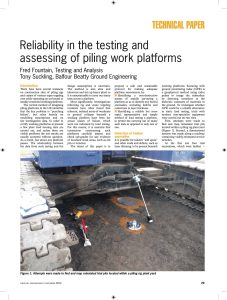
Reliability in the Testing & Assessing of Piling Work Platforms for Compaction & Bearing Capacity Ground Engineering Nov 2012
Categories: Research Papers
Topics: Temporary Works Platforms – Mobile Crane Pad and Piling Rig Working Platforms
Published: 01/11/2012
Proposed protocol for testing and assessing of piling work platforms using Ground Penetrating Radar (GRP) and the Light Weight Deflectometer (LWD)
Keywords: Light Weight Deflectometer
Field Determination of Deflection Using Light Weight Deflectometer ITM No. 508-12T - Indiana DOT - Nov 2012.pdf
Categories: Technical Standards
Published: 01/11/2012
Keywords: Light Weight Deflectometer
Validation & Refinement of Chemical Stabilization Procededures for Pavement Subgrade comparing Dynamic Cone Penetrometer (DCP), the PANDA penetrometer, and the Portable Falling Weight Deflectometer (PFWD) – Miller, Cerato, Snethen, Holderby & Boodagh – Oklahoma Department of Transport (Oct 2011)
Categories: Research Papers
Topics: Pavements
Published: 01/10/2011
This study compared results of field tests and laboratory tests on chemically stabilized soil at different curing times to assess whether a relationship exists between field and laboratory measurements. The goal was to determine if a field testing method could be used to assess whether the strength and stiffness in the field are consistent with laboratory measurements used for design.
Field testing included three devices that are portable, quick, and easy to use. These devices include: the Dynamic Cone Penetrometer (DCP), the PANDA penetrometer, and the Portable Falling Weight Deflectometer (PFWD). Laboratory testing was conducted to determine the unconfined compressive strength (UCS) and resilient modulus (MR) of laboratory specimens prepared using additive contents that were similar to samples taken from field test locations.
Correlations were examined and involved basic soil measurements (mineralogical, electrical, chemical and index properties) and mechanical properties (UCS and MR), and field test results (DCP, PANDA, and PFWD). The strongest trend was observed for the PFWD – MR comparison. The trend showed that both the PFWD modulus and MR increase with increasing curing time, as expected. These observations show that development of correlations between field and laboratory test results holds promise. However, development of such correlations will require that field and laboratory tests be performed on nearly identical soils and under identical curing conditions.
Keywords: Light Weight Deflectometer, PANDA® Instrumented DCP
US DOT FHWA Accelerated Implementation of Intelligent Compaction Technology for Embankment Subgrade Soils, Aggregate Base, and Asphalt Pavement Materials – Final Report – July 2011
Categories: Research Papers
Published: 01/07/2011
The goals of this three year project included:
- Demonstration of soils/subbase and Hot Mix Asphalt (HMA) IC technologies to department of transportation (DOT) personnel, contractors, etc.,
- Develop an experienced and knowledgeable IC expertise base within DOT,
Assisting DOT in the development of IC quality control (QC) specifications for the subgrade, subbase, and HMA pavement materials, and - Identification and prioritization of needed improvements and further research for IC equipment and data analysis.
- Identification and prioritization of needed improvements and further research for IC equipment and data analysis.
Goal No. 1 was accomplished by demonstrating the abilities of the IC system such as: tracking roller passes, HMA surface temperatures, and intelligent compaction measurement values (ICMV).
Goal No. 2 was accomplished by building the IC knowledge base with extensive field experiences, data, and analysis/reports from diverse demonstration projects.
Goal No. 3 was accomplished by training DOT personnel and earthwork/paving contractors on the IC technologies via field demonstrations and open house activities. Continuous support was provided to the TPF State DOTs for the development of local, customized IC specifications during the project period.
Goal No. 4 was accomplished by compiling a comprehensive list of recommendations for the IC roller vendors to further improve their systems for widespread use of the technologies. Various IC systems were reviewed in-depth and gaps were identified for future research and engineering practices.
Keywords: Intelligent Compaction, Light Weight Deflectometer
PILOT LIGHT WEIGHT DEFLECTOMETER (LWD) DEFLECTION METHOD (2105 or 2106 Excavation and Embankment) - Minnesota DOT - Nov 2011.pdf
Categories: Technical Standards
Published: 11/05/2011
Keywords: Light Weight Deflectometer
Implementation of Unsaturated Soil Mechanics during Pavement Construction QA John Siekmeier Article
Categories: Research Papers
Topics: Pavements
Published: 01/03/2011
Moduli and deflection target values (TVs) for the unbound pavement foundation materials have been proposed for use during pavement design. These TVs are estimated using the plastic limit (PL) for cohesive soils because the PL has been found to be a reasonably accurate predictor of the Soil Water Characteristic Curve (SWCC). Therefore, a family of SWCCs has been defined based on the PL. TVs are then verified during construction of the unbound pavement foundation using the lightweight deflectometer (LWD). Although the deflection values from LWD testing can be suitable to assess the performance of compacted soils, MnDOT has coupled the LWD response with laboratory resilient modulus testing and soil suction measurement to improve interpretation of the results.
Keywords: Light Weight Deflectometer
Geotechnical Studies for the Adelaide Rail Revitalisation Project – Comparing In-Situ and Laboratory Testing of Ballast & Subgrade Materials – Parsons Brinckerhoff Mark Drechsler & Chad Parken – Railway Engineering Conference Sept 2010
Categories: Research Papers
Topics: Rail
Published: 15/09/2010
The South Australian Department for Transport, Energy and Infrastructure (DTEI) commissioned Parsons Brinckerhoff (PB) to undertake geotechnical and environmental investigations over 104 km of rail network to provide information on track and drainage conditions and contamination levels of ballast and subgrade materials for the track reconstruction works.
The paper presents details of the investigative methods undertaken to collect and present the data, compares laboratory tests with in-situ test results, describes the main causes for track stability problems and recommends potential design and construction solutions.
Laboratory tests were undertaken on ballast and subgrade samples and included soaked and unsoaked California Bearing Ratio (CBR), total suction, and soil and pavement material classification tests. In-situ testing included pocket penetrometers, Dynamic Cone Penetration (DCP), Clegg Hammer, Light Weight Falling Weight Deflectometer (LWFWD) and Humboldt GeoGauge stiffness test methods.
PB recommended the LWFWD for inclusion into DTEI standard specifications for railway construction works.
Keywords: Light Weight Deflectometer
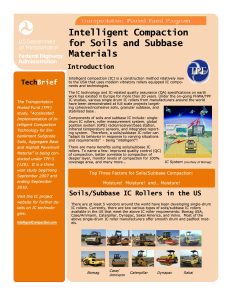
Intelligent Compaction for Soils and Subbase Materials – US DOT FHWA (US Department of Transport Federal Highway Authority) – Transportation Pooled Fund Program Summary
Categories: Research Papers
Published: 10/09/2010
Five single drum IC rollers (smooth drum and padfoot) were assessed from Bomag USA, Case/Ammann, Caterpillar, Dynapac, Sakai America, and Volvo.
For IC correlation analysis, in-situ tests are used to directly obtain the response of the compacted materials under various loading situations and drainage/moisture conditions. Recommended in-situ test devices for soils/ subbase/ stabilized IC are as followings:
- Light Weight Deflectometer (LWD)
- Dynamic Cone Penetrometer (DCP)
- Calibrated Nuclear Moisture-Density Gauge for soils and subbase (NG)
- Falling Weight Deflectometer (FWD)
- Static Plate Loading Test (PLT)
Keywords: Intelligent Compaction, Light Weight Deflectometer, Plate Load Test
Unsaturated Soil Mechanics Implementation During Pavement Construction Quality Assurance John Siekmeier, Minnesota Department of Transportation – 21st Annual CTS Transportation Research Conference – April 27-28, 2010.pdf
Categories: Research Papers
Topics: Pavements
Published: 28/04/2010
Country: Array
Compaction equipment and field tests are now available that can measure the properties used to design pavements and predict performance.
LWDs and DCPs can be used during construction quality assurance to efficiently verify design target values.
Several options exist to quantify moisture and more field measurement devices are coming.
The time is now to accelerate implementation of performance based quality assurance so that our investments are well spent.
Keywords: Light Weight Deflectometer
The Effect of Water Content on Light Weight Deflectometer Measurements – University of Deleware – Tehrani & Meehan – 2010
Categories: Research Papers
Topics: Understanding the Light Weight Deflectometer (LWD) and its Results
Published: 01/02/2010
Water content is one of the most important properties that affects the modulus measurements of compacted soil. To explore the sensitivity of measured modulus-based in-situ test results to the effect of compaction water content, a field study was performed in the State of Delaware in the summer of 2008. Two Light Weight Deflectometers (LWDs) were used in the study to measure compacted soil modulus values, one with a 300 mm contact plate diameter and one with a 200 mm plate diameter. The fill material tested during this study was a poorly graded sand with silt (SP-SM). This paper demonstrates the sensitivity of the measured soil modulus values to fluctuation in soil moisture content in the field, and discusses possible approaches for interpreting this type of variable LWD data.
Keywords: Light Weight Deflectometer
Performance Testing Of Unbound Materials Within The Pavement Foundation - Scott Wilson Pavement Engineering for UK Highways Agency - 2010
Categories: Research Papers
Topics: Pavements
Published: 01/01/2010
Pavement design requires knowledge of the performance of the foundation layers. The specific condition at a given site can be considered in the design; such as the use of locally available material, recycled or secondary aggregate in the pavement foundation, provided the specified end-product performance requirements are achieved.
Performance testing is required in order to ensure that the design assumptions for the material properties are met during construction. Both the capping and sub-base layers need to attain adequate strength and stiffness. Therefore there is a need to undertake complimentary compliance testing that would include target values based on the behaviour of the materials.
This paper describes the research into the development of performance testing for foundation layers based on case studies performed by Scott Wilson Pavement Engineering (SWPE). The performance testing was carried out by Falling Weight Deflectometer (FWD), German Dynamic Plate (GDP) and Prima 100. The results using these test methods were compared and correlated.
The results indicated that the relationships between FWD, GDP and Prima were material type and thickness dependent. The Prima usually gave broadly similar results to the FWD, but was significantly more variable from point to point. The GDP almost always gave a lower stiffness than the other devices, but to varying degrees.
Keywords: Light Weight Deflectometer
Use of the Lightweight Deflectometer (LWD) at Highland Valley Copper Mine - Singh, Mejia, Martison and Shah (KCB Vancouver), Fleming and Fitzpatrick (Teck Highland Valley Copper Partnership, Logan Lake, BC, Canada) - GEO2010
Categories: Research Papers
Topics: Mining
Published: 01/01/2010
Use of the LWD at the L-L Tailings Dam, the ore stockpile cover foundations, fuel tank station, and at the multiplate overpass foundations and backfill. A comparison of the LWD capabilities with alternative field testing measures is presented along with an evaluation of its effectiveness at Highland Valley Copper Mine.
Keywords: Light Weight Deflectometer
Using the Dynamic Cone Penetrometer and Light Weight Deflectometer for Construction Quality Assurance – Minnesota DOT - 2009
Categories: Research Papers
Topics: Pavements
Published: 02/12/2009
Specification target values for granular materials and fine grained soils are proposed. For granular material, the grading number and field moisture content are used to select the dynamic cone penetrometer (DCP) and light weight deflectometer (LWD) target values. A sieve analysis is used to determine the grading number and an oven dry test to determine the field moisture content. For compacted fine grained soil, the plastic limit and field moisture content are used to determine the target values. The plastic limit is used to classify the soil and to estimate the optimum moisture content for compaction.
The DCP and LWD estimate the strength and modulus of compacted materials. More specifically, they measure the penetration and deflection. When measuring penetration and deflection, the moisture content remains a critical quality control parameter for all compaction operations. Therefore, the moisture content needs to be measured, or estimated confidently, at each location. The LWD and DCP are performance related construction quality assurance tests that are expected to: increase compaction uniformity, lower life cycle pavement costs, increase inspector presence at the construction site, improve documentation, and increase inspector safety and productivity.
Keywords: Light Weight Deflectometer
PFWD, CBR and DCP Evaluation of Lateritic Subgrades of Dakshina Kannada, India – 2008
Categories: Research Papers
Topics: Comparative Studies between the Light Weight Defectometer and other Devices
Published: 06/10/2008
The performance of pavements depends to a large extent on the strength and stiffness of the subgrades. Among the various methods of evaluating the subgrade strength, the use of portable falling weight deflectometers (PFWD) is gaining popularity in the recent years. This is due to its simplicity in design, portability, and the added advantages of providing quick and reliable estimates of the Young’s modulus of elasticity of pavement subgrades.
This study developed correlations between PFWD results and those obtained using the traditional approaches such as the California bearing ratio (CBR) test and the dynamic cone penetrometer (DCP) test. Regression models were developed as part of this study to enable the prediction of CBR values based on the average of observed values of the Young’s modulus obtained using the PFWD (Epfwd), and prediction of Epfwd from the average penetration-rates of DCPs performed for field density, and field-moisture content.
Keywords: Light Weight Deflectometer
Intelligent Compaction Implementation: Research Assessment – University of Minnesota (July 2008)
Categories: Research Papers
Published: 01/07/2008
IC provides only an index, which is specific to the conditions associated with a particular site. An interpretation of comments provided the basis for the following recommendations:
- Use light weight deflectometers (LWD) for quality assurance of stiffness
- Establish a procedure to determine the target LWD value
- Eliminate calibration areas (control strips)
- Simplify IC data evaluation and presentation
- Calibrate the IC roller and related transducers
- Support development of alternative IC methodologies
- Simplify or eliminate moisture corrections
Keywords: Intelligent Compaction, Light Weight Deflectometer
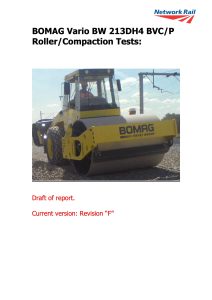
Network Rail BOMAG Report RevG Roller Compaction Trials
Categories: Research Papers
Topics: Rail
Published: 24/07/2007
Trial to test the Bomag Vario 213 roller’s ability to suitably consolidate bottom ballast for a railway environment, and additionally, to compare methods of measuring the achieved stiffness, including the Light Drop Weight Tester and Plate Bearing Test.
Keywords: Light Weight Deflectometer, Plate Load Test
Field Validation of Intelligent Compaction Monitoring Technology for Unbound Materials – Iowa State University (2007)
Categories: Research Papers
Published: 01/04/2007
The objective of this research project was to evaluate intelligent compaction (IC) monitoring technology for use in earthwork construction for purposes of quality control and assurance. The following research tasks were established for the study:
- Develop relationships between roller-integrated and in situ compaction measurements, including dry unit weight, dynamic cone penetration (DCP) index, Clegg impact value (CIV), and light weight deflectometer (LWD) modulus.
- Characterize measurement variation observed for the various measure- ment systems.
Identify the influences of compaction energy and method on laboratory moisture-density relationships. - Characterize laboratory resilient modulus in terms of soil type, stress state conditions, moisture content, and density.
- Develop QC/QA guidelines for incorporating roller-integrated compac- tion monitoring technology into soil compaction specifications.
Keywords: Intelligent Compaction, Light Weight Deflectometer
A Review Of The Lightweight Deflectometer (Lwd) For Routine Insitu Assessment Of Pavement Material Stiffness – Loughborough University – TRB Annual Meeting 2007 (Fleming, Frost, and Lambert)
Categories: Research Papers
Topics: Comparative Studies between the Light Weight Defectometer and other Devices, Understanding the Light Weight Deflectometer (LWD) and its Results
Published: 14/11/2006
Light Weight Deflectometer ZFG 2000 Understanding Results Paper – Prof. Dr. Ing. W. Weingart – 2005
Categories: Research Papers
Topics: Understanding the Light Weight Deflectometer (LWD) and its Results
Published: 17/04/2005
How to understand accelerometer based Light Weight Deflectometer graphical and numerical results
Keywords: Light Weight Deflectometer
Investigation of the Dynamic Plate Load Test with Light-Weight Deflectometer using the Boundary Element Method (Kopf, Adam & Paulmichl) 2005
Categories: Research Papers
Topics: Understanding the Light Weight Deflectometer (LWD) and its Results
Published: 01/01/2005
The dynamic plate loading test using the Light-Weight Deflectometer is an innovative field test designed to determine the dynamic deformation modulus of subsoils and fills in all types of earth working and ground engineering applications. In earth working, the test can be used for compaction control and for assessing the load-bearing capacity of the subsoil.
This article compares the results of numerical investigations on the Light-Weight Deflectometer obtained with the boundary element method against results from experimental tests.
Keywords: Light Weight Deflectometer
Investigation of the Dynamic Plate Load Test with Light-Weight Deflectometer using the Boundary Element Method (Kopf, Adam & Paulmichl) 2005
Categories: Research Papers
Topics: Understanding the Light Weight Deflectometer (LWD) and its Results
Published: 01/01/2005
The dynamic plate loading test using the Light-Weight Deflectometer is an innovative field test designed to determine the dynamic deformation modulus of subsoils and fills in all types of earth working and ground engineering applications. In earth working, the test can be used for compaction control and for assessing the load-bearing capacity of the subsoil.
This article compares the results of numerical investigations on the Light-Weight Deflectometer obtained with the boundary element method against results from experimental tests.
Keywords: Light Weight Deflectometer
Proctor Density, Evd & Ev2 Comparison (Sand & Gravel) - Bearing Capacity Test on Subsoil and Granular Layers
Categories: Technical Standards
Published: 19/08/2004
Proctor Density, Evd & Ev2 Comparison (Sand & Gravel)
Keywords: Light Weight Deflectometer
Application of the Modern Method Embankment Compaction Control – Bailystok Techical University – Poland (Sept 2003)
Categories: Research Papers
Topics: Pavements, Rail
Published: 17/05/2004
Light drop-weight tester is a device for field tests and it is used for quick control of bearing capacity and compaction quality of built-in soils in different types of embankments. It is a modern device which is commonly used in Germany and now in Poland. The examples of calibration of the light drop-weight tester in laboratory and in-situ,
and its application in real embankment are presented.
Keywords: Light Weight Deflectometer
Modelling of Dynamic Load Plate Test with ZFG 2000
Categories: Research Papers
Topics: Understanding the Light Weight Deflectometer (LWD) and its Results
Published: 01/01/2003
Mechanical modelling of the dynamic load plate test with the Light Falling Weight Device (LFWD) is presented. The LFWD is employed on construction sites to verify the compaction degree of soil layers and to evaluate their bearing capacity. The mechanical models developed are intended to provide simple and efficient formulations, which allow a large number of numerical simulations at low expenses. The motion of the device is characterized by a mass- spring-dashpot system. Several one-dimensional linear and nonlinear representations of the soil are discussed and evaluated. Different phases of motion of the LFWD – soil interaction system are identified, and corresponding formulations of the equations of motion are given. In appendices efficient solution procedures of the governing equations of motion are proposed.
Keywords: Light Weight Deflectometer
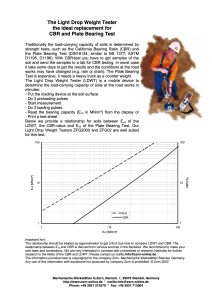
Light Weight Deflectometer (LWD) replaces CBR Indicative Graph of Ev2 vs Evd vs CBR
Categories: Technical Standards
Published: 01/01/2002
Light Weight Deflectometer (LWD) replaces CBR Indicative Graph of Ev2 vs Evd vs CBR
Keywords: Light Weight Deflectometer, Plate Load Test
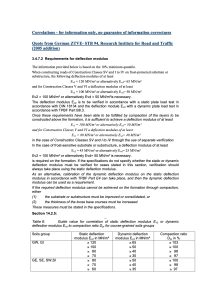
Recommended Values for Road, Rail and Backfill (Static deflection modulus Ev2 (MN/m2), Dynamic deflection modulus Evd (MN/m2) and Compaction ratio Dpr (%)
Categories: Technical Standards
Published: 01/01/1999
Recommended Values for Road, Rail and Backfill (Static deflection modulus Ev2 (MN/m2), Dynamic deflection modulus Evd (MN/m2) and Compaction ratio Dpr (%) including Deutsche Bahn AG (German Rail) – Quote from Directive 836: “Earthworks Design, Construction and Maintenance” (Ril 836)”, (20.12.1999 a)
Keywords: Light Weight Deflectometer
Collation of German Road & Rail Standards for the Light Weight Deflectometer (LWD)
Categories: Technical Standards
Published: 01/01/1997
Supplementary Technical Terms and Conditions of Contract and Guidelines for Earthworks in Road Construction ZTVE-StB 94
Supplementary Technical Terms and Conditions of Contract and Guidelines for Excavations and Digging-up in Traffic Areas ZTVA-StB 97
Deutsche Bahn – Guideline to Using the Lightweight Drop-Weight Tester in Railway Construction NGT 39
Keywords: Light Weight Deflectometer
Civil Construction
Alternatives to Traditional Compaction Control Assessment – Standards and Specifications
Current earthworks specifications often rely on the assumption that there is a direct correlation between density and modulus (i.e. the greater the density achieved, the higher the modulus of the...
Civil Construction
How to Assess Compaction in Pipeline Trenches and around Culverts
It’s a common occurrence to see pavements settle and create a traffic hazard where trench works have been completed across a road, particularly when these trenches are installed after the...
Compaction Control
Bridge Approaches – Managing the High Risk Transition Zone between Flexible and Rigid Structures
A bridge approach transition zone is the area where a road or railway track transitions from the rigid structure of a bridge to the flexible embankment or road pavement, aiming...
Bearing Capacity
Three Ways To Measure Bearing Capacity For Mobile Crane And Piling Rigs Working Platforms
One of the key concerns of project managers is safety, including the risk of people getting injured or killed at site. Hence, for temporary working platforms, the need to measure...
Civil Construction
How innovative testing methods can save your clients significant time and money – Case Studies
In an industry set with challenges of staff and skills shortages, and unrealistically low pricing for some traditional test methods, our approach as an industry needs to change. What we...
Bearing Capacity
Workshop – Light Weight Deflectometers (LWDs) within Bulk Earthworks Projects – Demonstrated Uses and Project Specifications
Don't miss our upcoming workshop where you'll learn everything you need to know about using this technology in bulk earthworks projects.This practical hands-on workshop aims to help geomechanics practitioners become confident in using the Light Weight...
Bearing Capacity
Light Weight Deflectomer Local Calibration and Repairs – Announcing Insitutek Trilab Partnership
As well as selling and renting Light Weight Deflectometer to clients, we are delighted to announce a partnership between Insitutek and Trilab for Zorn Instruments Light Weight Deflectometer (LWD) calibrations and repairs.
Compaction Control
Assessment of Compaction Quality Control Methods – NACOE P60 Best Practice Research
The acceptance of earthwork and unbound pavement construction in Australia currently relies mostly on density testing and CBRs for Quality Assurance (QA). Though its National Asset Centre of Excellence (NACoE)...
Bearing Capacity
Relationship between Density and Modulus – Practical Guidance On Use Of Light Weight Falling Deflectometers (LWDs) – June 2021
National Asset Centre of Excellence (NACOE), a collaboration of Queensland Department of Transport and Main Roads and the Australian Road Research Board (ARRB), has released their final report for the Best practice in compaction...
Civil Construction
How To Eliminate Service Trench Remediation, Post Construction In Trafficable Zones – Case Study
It’s a common occurrence to see service trench works completed across road pavements settle and create a traffic hazard particularly when these trenches are installed after the original road pavement...
Bearing Capacity
Australia’s first Light Weight Deflectometer (LWD) standard released
We are very happy to let you know that Australia now has it’s own Light Weight Deflectometer (LWD) standard. Test Method Q258A Dynamic Modulus of Deformation Light Falling Weight Device...
Site Investigation
Proximal Estimation of Soil Density using Sensing and Modelling
Reflecting on the better parts of 2020, Insitu Test was proud to take part in a research project as part of Smart Pavements Australia Research Collaboration (SPARC). SPARC provides an...
Civil Construction
How to Measure Compaction on Contaminated Construction Sites – Australian Case Study
Contaminated sites present opportunities but can also pose significant risks. Asbestos and Per- and polyfluoroalkyl substances (PFAS) are often encountered by our clients. They can be found on open development sites with...
Civil Construction
How to Double the Lift Thickness (and Halve the Number of Lifts) without Compromising Compaction Quality – An Australian Case Study
It sounds so straight forward ..... halve the number of lifts by doubling the lift thickness. So why hasn't it been done more commonly before? Here is the logic. Lifts are typically...
Bearing Capacity
Measuring Bearing Capacity with the Light Weight Deflectometer
Clients are always looking for ways to get a better understanding of the ground conditions at a specific point in time, and how the bearing capacity of a site has...
Compaction Control
Light Weight Deflectometer helps build Australia’s first Surf Park – Civiltest
Insitu Test is proud to have been involved in an innovative project breaking new ground; building Australia’s recently opened first surf park in Melbourne. Civiltest provided Geotechnical advice and testing...
Compaction Control
Light Weight Deflectometer – ZORN ZFG Number 10,000 Auctioned
The base plate of ZFG Nr. 10,000 has been hallmarked today at Zorn Instruments. Otmar Mewes, a ZORN team member for more than 30 years, carefully hit the hammer on...
Civil Construction
Why is there a shift from density to modulus based testing?
Have you noticed an increase in the number of questions relating to modulus based testing for soils? We certainly have. We are now wondering how soon this trend will gather...
Asphalt Pavement Investigation
Top 10 trends in Site Investigation and Geotechnical Testing
We find our clients are increasingly demanding more accurate and more representative results that provide better insight on what’s going on below the surface when they are designing or constructing...
Compaction Control
Alternative Testing Methods for Quality Assurance – ARRB Research
The acceptance of earthwork and unbound pavement construction in Australia currently relies on density testing and CBRs for Quality Assurance (QA). Though its National Asset Centre of Excellence (NACoE) research...
Compaction Control
Light Weight Deflectometer (LWD) research at National Asset Centre of Excellence (NACoE)
Insitu Test, Global Synthetics and Foundation Specialist Group (FSG) are all industry partners in the National Asset Centre of Excellence (NACoE) research program using the Light Weight Deflectometer (LWD) and Geogrid. The...
Asphalt Pavement Investigation
How To Test For Compaction Of Gravel Bases Before Laying Asphalt On Top
One of the challenges our asphalting contractor clients and their consultants have been struggling with is how to test the gravel base before laying asphalt on top to make sure...
Civil Construction
How to measure in-situ modulus in confined spaces and get immediate repeatable results
One of the methods for measuring dynamic modulus on site and getting repeatable results immediately is using the Light Weight Deflectometer (LWD). By measuring the modulus value, the Light Weight...
Compaction Control
Changing Face of Compaction & Compaction Control for Road Building
Changing Face of Compaction & Compaction Control for Road Building - A Global Review Compaction is one of the most important processes in roadway construction. A uniform base and subgrade is...
Bearing Capacity
Reliability in the Testing & Assessing of Piling Work Platforms
Reliability in the Testing & Assessing of Piling Work Platforms Cranes & Piling Rigs Technical Paper by Balfour Beatty - Ground Engineering Magazine - November 2012 Use of the Plate Load...
Compaction Control
Compaction – The Building Block Of Quality Infrastructure
Compaction – The Building Block Of Quality Infrastructure Earth Mover & Civil Contractor Magazine – Compaction Feature – Jun 2015 Article on getting compaction right first time, with tools like Intelligent...
Credentials for ZFG 3000 from Zorn Instruments
The Zorn Instruments ZFG-series production started in 1990 and more than 10,000 units have been sold around the world. To find out more, Contact Us.
The ZFG series of Light Weight Deflectometers (LWD) has become widely used and accepted across Europe and internationally in the United States, China, Russia, New Zealand and Australia to name a few.
Zorn Light Weight Deflectometers (LWD) are designed and manufactured in Germany.
The manufacturer is: Zorn Instruments, Benzstrasse 1, D-39576 Stendal Germany www.zorn-instruments.de
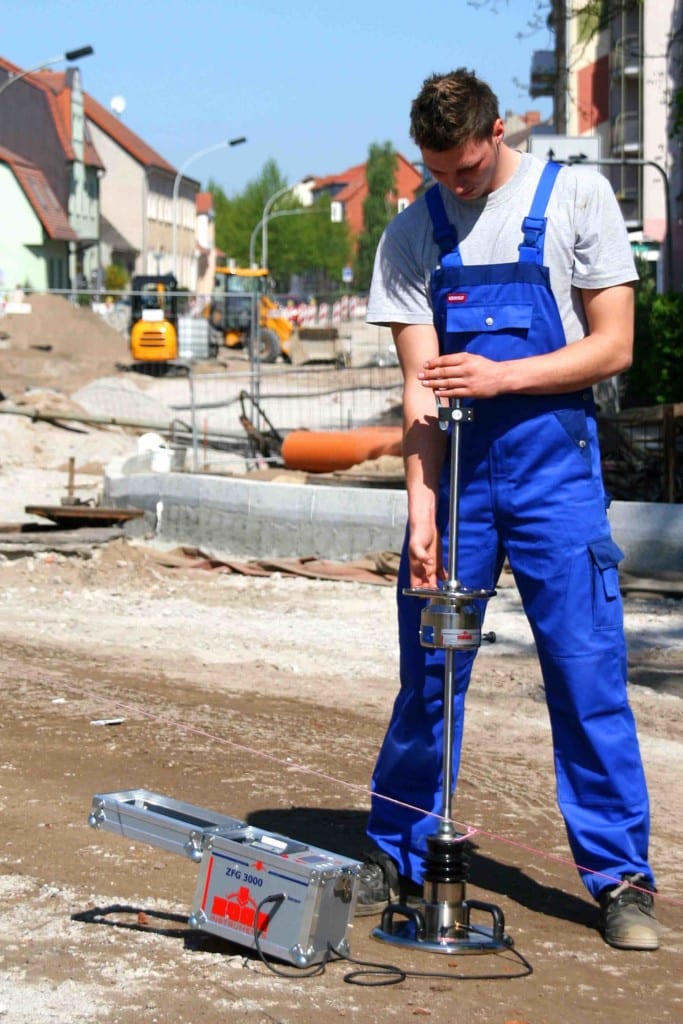
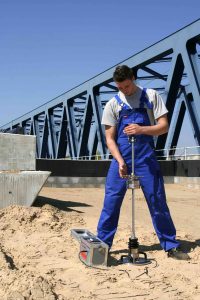
A “wiggling” sign was observed in the tip of the curves. What does this mean?
The wiggling shows that the material is VERY stiff and the wiggling is like a vibration of the plate because of the stiffness of the material (like a hammer hitting a piece of steel when you can feel the vibration).
How do stiffness values correlate with density?
Typically, stiffness values measured with the Light Weight Deflectometer (LWD) correlate poorly with density. Fundamentally, soil density and stiffness are two very different physical properties.
Density is a static behavior depending on grain density, grain size distribution etc. Density is of a measure of volume.
Stiffness is similar to bearing capacity or dynamic deformation modulus and is a measure over a given area.
Further, to meaningfully compare measurement methods, one must ensure the compacted area is homogeneous. This means that at every measuring point, the conditions must be the same material properties, moisture, grain size, thickness of layers, materials etc.
Learn more about the relationship between stiffness or modulus and density and research on the topic.
In the “Statistic Dyn” spreadsheet, what does the value Q represents?
This is based on the required minimum you set (Required minimum quantile:) and is a calculated value Q(Evd) = (Arithmetic average of spot-check Xm(Evd) – Required minimum quantile) / Standard deviation s (Evd)
The test (Q>0,88) has failed. This comment identifies whether the test is within acceptable parameters compared with what you have specified (e.g. 25 MN/m²) or not. Again, it’s a calculated value.
What is Evd?
Evd is the dynamic deformation modulus (also known as the dynamic deformation module, dynamic modulus of deformation, dynamic stiffness modulus, composite stiffness, effective stiffness or surface modulus). Modulus is the most accurate and independent means for judging deformation and, thus, a material’s level of compaction. Evd is used to measure bearing capacity and compaction quality for subsoil’s and subgrade materials, unbound base layers, granular layers, backfilling materials, soil stabilisation with lime, cold recycling materials and pavements, cycle tracks and footpaths.
The soil receives an impact of maximum force Fs transmitted through the fall of the drop weight onto a circular plate of radius r, which is assumed to be rigid. When the device is calibrated, the force is selected such that the maximum normal stress σ under the load plate is 0.1MN/m2.
To calculate Evd, the deformability of the soil under a vertical load, as described above, with a settlement amplitude s (in mm) and the duration of impact ts:
Evd (MN/m2) = 1.5 x r x σ /s
For the 10kg drop weight and 300mm diameter plate Evd = 22.5/s
For the 15kg drop weight and 300mm diameter plate Evd = 33.75/s
What is s/v and why is it important?
s/v is a measure of the degree of compaction of soil. The ZFG 3000 has an acceleration sensor attached to the base plate. The first integration of acceleration shows the velocity of the plate. And the second integration gives the deflection.
If the value of s/v is lower than 3.5 ms means: soil is compacted and it is possible to compact to higher compaction.
If the value s/v is higher than 3.5 ms: incompact like in-situ soil or if after compaction, it is not possible to compact to higher values.
The value of 3.5 ms is an empirical value, resulting from practical experience.
In contrast to the static load plate, you get more information on the properties of the soil from dynamic load plate test.
What is the maximum grain size that can be tested?
The test procedure is suited, in particular, for coarse-grained and mixed-grained soils wth a maximum grain size of 63mm. For aggregate, bedding sand is used to ensure complete contact between the base plate and the surface being measured.
What is the relationship between Evd and Ev2?
The relationship between the static deflection modulus Ev2, measured by the static plate bearing test, and the dynamic deflection modulus Evd depends on the kind of soil and the degree of compaction.
Experience shows that the ratio Ev2/Evd lies in the range 1.0 to 4.
For densely compacted soils Ev2/Evd ~ 2.3
On average the following relation between the dynamic deflection modulus Evd, and the static deflection modulus Ev2, can be used:
This relation does not hold for limiting values.
What is the relationship between stiffness and field moisture content?
Typically, there is close relationship between the stiffness values measured with the Light Weight Deflectometer (LWD) and the field moisture content. The influence of moisture is much higher because of the capillary effect of water so the results are sensitive to insitu field moisture.
The optimum moisture from the Proctor Test will yield the best results, as one would expect. Every sand and gravel mixture has an optimum water content depending on grain size distribution.
What other names is the Light Weight Deflectometer also known by?
- Deflection survey
- Deflection testing
- Deflection test method
- Drop weight tester
- Dynamic Light Drop Weight Tester
- dynamic plate test
- dynamic load plate test
- dynamic plate load test
- Falling Weight Deflectometer
- FWD
- FWD-Light
- German dynamic plate
- Impulse deflection testing
- Light Falling Weight Deflectometer
- Light FWD
- Light Weight Deflectometer
- Light Drop Weight
- Light Drop Tester
- Light Drop Weight Tester
- LDWT
- Light Weight Hammer Drop Tester
- Light Weight Deflectometer
- LWD
- Load deflection test
- Load plate test
- Portable Falling Weight Deflectometer
- Portable FWD
- PFWD
- Portable Light Weight Deflectometer
- Portable LWD
- PLWD
- ZFG2000
- ZFG 2000
- ZFG02
- ZFG 02
- ZFG3000
- ZFG 3000
- ZFG 3000 GPS
- ZFG 3000 ECO
- ZFG3000 GPS
- ZFG 3.0
- ZFG 3.1
- ZFG D plus
- 4DynamiQ
- Zorn
Trusted by our clients




















































































































































Trusted by our partners