- Automated highly repeatable and accurate Marchetti flat blade DMT in situ test
- Pressure control on the membrane is directly at the blade head at depth
- Suited for onshore and offshore applications to over 1000m water depth
- High resolution dissipation tests
- Continuous horizontal pressure measurements during penetration (DMT-WP)
- Optional S wave velocity Vs measurement for localised seismic response

Measuring the lateral stress / pressure when testing in the soil is a real challenge. This is where the Medusa Dilatometer (Medusa DMT) comes into its own.
The Medusa Dilatometer (Medusa DMT) is a fully automated dilatometer probe able to autonomously perform the dilatometer test onshore and offshore by generating and measuring the pressure directly at depth. The obtained DMT readings are extremely repeatable, because the fluid is liquid (incompressible) and the pressure regulation is electronically controlled and, therefore, independent of the operator.
Learn more about how it works, the obtainable geotechnical parameters and their applications.
There is a niche of silts and mine tailings where partial drainage occurs during the ~30 sec duration of the test, with appreciable decrease of the excess pore pressure. Interpretation in silts with partial drainage (niche silts) is more difficult than completely undrained soils. With the Medusa DMT, new test procedures are possible, such as high resolution dissipation tests and continuous horizontal pressure measurements during penetration (DMT-WP).
The electronics, powered with rechargeable batteries, activates a motorised syringe for expanding hydraulically the DMT membrane. The device may operate without any cable (MEMO mode) or with an electric cable for real time results.
The Medusa probe may operate offshore up to over 1000m water depth.
The Medusa Seismic DMT (Medusa SDMT) includes sensors for measuring the Shear wave (S wave) velocity Vs and calculating the small-strain shear modulus of a soil, Go. This is used to assess localised seismic response.
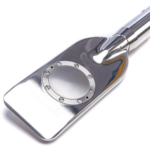
The blade has the same dimensions of the original standard flat plate dilatometer, meaning all the established correlations and standard test procedures (ISO, ASTM, Eurocode) are applicable.
Compared to the traditional pneumatic DMT, fully automating the Medusa DMT process has increased accuracy and repeatability in two ways:
- Removing the human pressure control factor
- Pressure control is directly at the blade head.
Traditional components such as the gas cylinder, control unit and pneumatic hoses are no longer necessary. Both pressure generation and measurement are carried out directly at the test depth, rather than on the surface. This feature eliminates the common issue of pressure loss and lag that can occur at the down hole end of a pneumatic cable.
Removing the need for gas cylinders means air freighting is easy.
The Medusa DMT adheres to:
- Eurocode 7 (1997) “Standard Test Method”, European Committee for Standardization, Geotechnical design – Part 3: Design assisted by field testing, Section 9: Flat dilatometer test (DMT)
- CEN ISO TS 22476-11 (2017) “Geotechnical Investigation and Testing – Field Testing – Flat Dilatometer Test”, Part 11
To find out more, Contact Us.

Products
Related Solutions
-
Effects of variable penetration rate using Medusa DMT in the Australian tests site of Ballina K Das, D Marchetti & N Schofield 21st ICSMGE Vienna 2026
Categories: Research Papers
Published: 23/06/2026
In December 2024, a set of dilatometer tests was performed in the Australian test site of Ballina using the recently developed in situ testing equipment named Medusa DMT. This enhanced version of the dilatometer enables inflation of the membrane at different programmable rates and not only at the standard rate recommended for the traditional DMT test procedure. The tests were carried out with different combinations of penetration rate, in addition to the standard DMT test procedure. Piezocone penetration test (CPTu) was performed as well in the study area and laboratory data of previous test campaigns is available for comparisons. The aim of the paper is to present results obtained with all the different test procedures and to look into the effects caused by the different conditions of drainage between the faster and slower penetration-inflation rate procedures.
Keywords: DMT, dilatometer, Medusa DMT, penetration rate, partial drainage
Keywords: Dilatometer Marchetti Test - DMT
Application of Advanced In Situ Testing - Mark Chapman & Allan McConnell AGS Sydney Symposium 2024
Categories: Research Papers
Published: 29/11/2024
In situ testing equipment and methodologies have evolved rapidly over the last 5 years. This paper looks at three devices that demonstrate this evolution: (1) a Special Purpose 3MPa CPTu Cone; (2) the automated Medusa flat plate dilatometer; and (3) the automated down-the-hole Vane Shear device.
CPTu cones are now commercially available with special internal design and with capacities as low as 3MPa. These “special” cones, when carefully calibrated, are capable of reliably measuring CPTu parameters in soils right to the bottom end of the very soft range. The cones come with a temperature sensor to enable the management of potential inaccuracies associated with transient temperature effects during the penetration.
The Medusa DMT, was developed by Marchetti to provide technicians and engineers with complete control and repeatability of the DMT diaphragm inflation and measurement process, eliminating many of the operator-dependant variables often encountered with the traditional gas-operated DMT.
The Vane Shear Test is perhaps the most relied-upon geotechnical strength test; however traditionally it has had in-built potential errors, particularly in very soft soils, mainly due to ambiguity in friction corrections; it has been traditionally restricted to use in pure clay or clay-like soils. Equipment design has evolved (in some equipment) to eliminate the friction-correction problem. High quality calibration is required.
These advanced in situ testing tools and improved methodologies were utilised in combination to characterise a low strength soil deposit in Sydney Harbour for a major infrastructure project. The results from the use of the advanced equipment and methods are discussed and reviewed in this paper.
Keywords: Dilatometer Marchetti Test - DMT, Vane Shear Test VST
Medusa DMT for geotechnical and geophysical offshore testing D Marchetti & M Sacchetto OSIG 2023
Categories: Research Papers
Published: 15/09/2023
The Medusa DMT is a recently developed fully automated version of the Marchetti Flat Plate Dilatometer (DMT), which was first introduced in the late 70s and is commonly employed today in onshore and nearshore site investigation projects. The new enhanced device is a self-contained hydraulic probe able to autonomously perform standard DMT tests, without requiring a gas tank, a pneumatic cable, a control unit and a skilled operator for inflating and deflating the dilatometer membrane. The tool may operate as cableless or employing an electric cable for consulting real time results during test execution. The traditional pneumatic equipment was limited to only onshore and nearshore projects, up to about 30 m water depth. The Medusa DMT may be deployed also in deep offshore surveys, currently down to 1500 m.
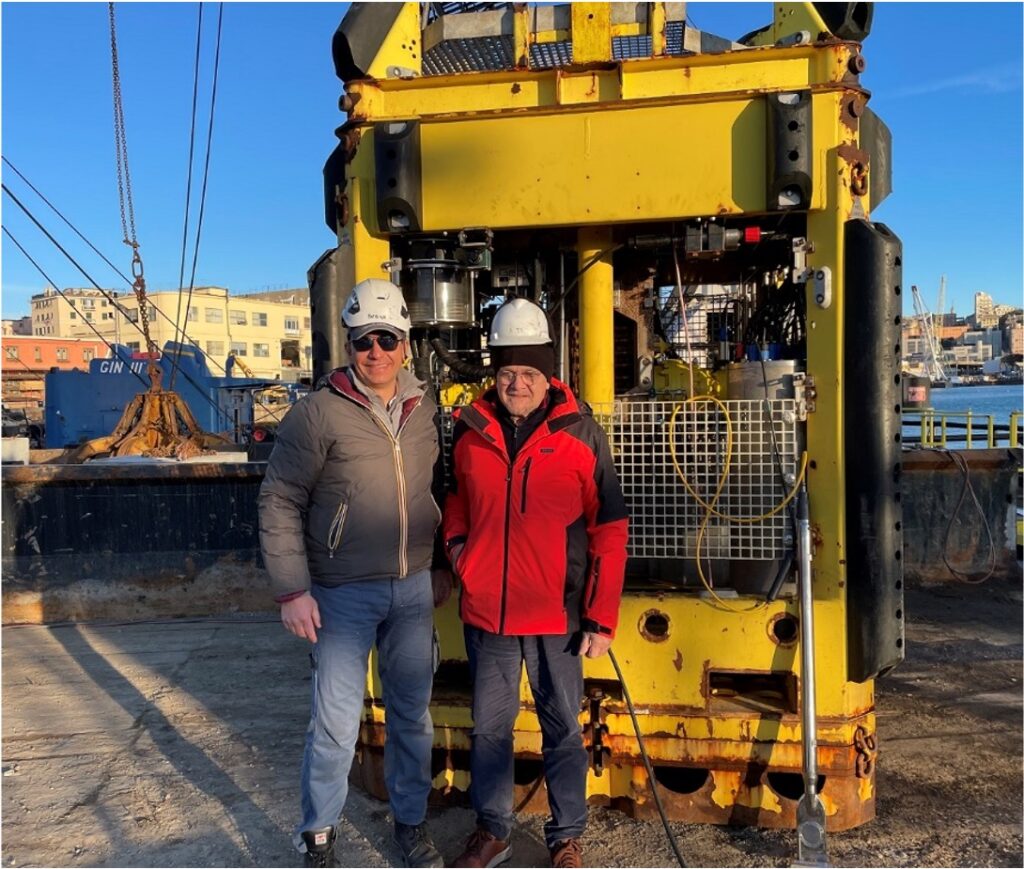
Within a project for the design of the new breakwater dam of Genova, in northwest Italy, CPT and DMT were selected for the geotechnical characterization of the upper soil deposits in terms of stratigraphy, compressibility, strength, permeability and possibly providing estimations of stress state and stress history parameters. The water depth ranged between 16 m and 49 m, while the deepest test was a DMT down to 26.4 m below the seabed. The paper describes the equipment, setup and test procedure adopted for this project, employing a seabed penetrometer (Manta), CPTU and Medusa DMT testing equipment.
Keywords: Dilatometer Marchetti Test - DMT
Medusa DMT for automated Dilatometer testing – a major advance in geotechnical in situ testing D Marchetti A McConnell ANZGEO 2023
Categories: Research Papers
Published: 07/07/2023
The Medusa DMT is a fully automated flat dilatometer of recent development (2018). A DMT blade of standard dimensions is combined with a motorized hydraulic syringe for generating the required source pressure within the probe. An electronic board, powered by rechargeable batteries, activates the motorized syringe and records the DMT field readings using a pressure transducer. The generation and measurement of the pressure at depth significantly improves the accuracy and repeatability of the test results compared to the standard DMT equipment employing a pneumatic cable. Although the probe could operate as cableless, an electric cable is generally employed for control on all the available parameters and for accessing real time test results.
The paper describes in detail the new instrumentation and the corresponding test procedures. Comparisons of results are shown with measurements obtained from the traditional flat dilatometer and also with the CPT results in Australian territory.
Keywords: Medusa DMT, automated dilatometer, flat dilatometer, in situ testing.
Keywords: Dilatometer Marchetti Test - DMT
Validation of Medusa DMT test procedures in Fucino clay P Monaco, D Marchetti, G Totani, F Tonani & S Amoroso ICSMGE Sydney 2021
Categories: Research Papers
Published: 12/05/2022
The Medusa DMT is a self-contained, fully automated cableless probe able to autonomously perform dilatometer tests using a blade of standard dimensions. The pressurization is applied using a hydraulic motorized syringe which actuates a volume controlled expansion of the membrane. This procedure is highly repeatable, operator-independent and capable to impose a programmable pressurization rate for achieving the DMT pressure readings. The motorized syringe, controlled by the electronic board, is also able to maintain the membrane in equilibrium with negligible displacement, allowing to implement alternative test procedures. This paper illustrates the results of a field testing campaign specifically planned to validate/compare different Medusa DMT test procedures at Fucino-Telespazio (Italy), a well-documented benchmark test site constituted by a geologically NC, cemented, quite homogeneous soft lacustrine clay of high plasticity. The comparison of results obtained by Medusa DMT adopting three different test procedures (Standard, Repeated A-readings, A-reading while penetrating) and by traditional pneumatic DMT indicates substantial accuracy and consistency of measurements provided by all test procedures.
Keywords: Medusa dilatometer test, flat dilatometer test, in situ testing, benchmark test sites, soft clay
Keywords: Dilatometer Marchetti Test - DMT
Comparison of DMT results using traditional pneumatic equipment and the Medusa DMT in the Sarapuí II soft clay deposit in Brazil D Marchetti, F Danziger & F Jannuzzi ISC'6 Budapest 2021
Categories: Research Papers
Published: 01/10/2021
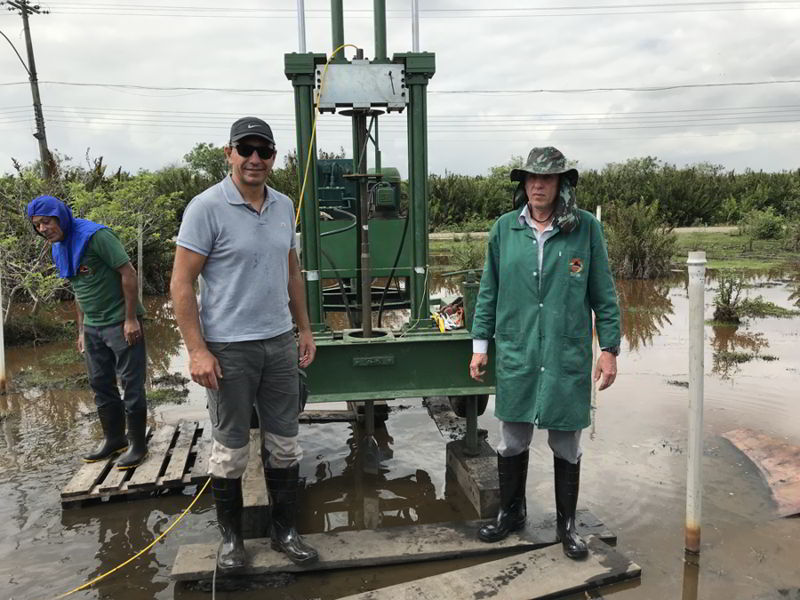
The Sarapui II research test site is a soft clay deposit located in a swampy area on the left bank of the Sarapui river, near the city of Rio de Janeiro in Brazil. The test site is very well documented with both in situ and laboratory test data. DMT measurements were performed with traditional pneumatic equipment, providing acceptable single pressure readings p0 and p1, but unacceptable scatter for Δp = p1 - p0 and for all the geotechnical parameters deriving from this difference. In September 2018 the tests were repeated using the Medusa DMT equipment, a new device able to hydraulically operate the standard dilatometer blade at depth. The pressure is generated and measured in the probe at depth, eliminating any pressure equalization problem at the opposite ends of the pneumatic cable. The automated membrane inflation and the incompressibility of the pressurizing fluid enables the Medusa to enforce the standard rate of membrane inflation with high precision and repeatability. The results obtained using the Medusa DMT showed improved consistency for p0 and p1, and very low scatter for the difference Δp.
Keywords: dilatometer, automated dilatometer, Medusa, soft clay deposit
Keywords: Dilatometer Marchetti Test - DMT
Applications and Recent Developments of the Flat Dilatometer (DMT) and Seismic Dilatometer (SDMT) D. Marchetti ECSMGE Reykjavik 2019
Categories: Research Papers
Published: 10/09/2019
The Flat Dilatometer (DMT) is a direct push soil testing device developed in Italy in the late seventies. The in situ measurement of a modulus and the capability of estimating stress history have made it a widely used tool for several geotechnical applications, in particular for settlement prediction, compaction control and liquefaction resistance. Potentiated with the release of its seismic version, the Seismic Dilatometer (SDMT) provides, in addition to the standard DMT parameters, also the shear and compression wave velocities Vs and Vp. The instrument is coded in the international standards (ASTM, ISO), building codes (Eurocode7) and guideline documents (TC16 2001) and is currently used in over 70 countries.
Recent developments of a seabed system (Seafloor DMT) and of a self-contained automated dilatometer probe (Medusa DMT) are presented.
Keywords: DMT, Dilatometer; SDMT; Automated Dilatometer; Medusa
Keywords: Dilatometer Marchetti Test - DMT

EN 1997-2 2007 Eurocode 7 Geotechnical Design Part 2 - Ground Investigation and Testing
Categories: Technical Standards
Published: 02/04/2007
- The objectives of the flat dilatometer test are the determination of the in-situ strength and deformation properties of soil by expanding a thin circular steel membrane mounted flush on one face of a blade-shaped steel probe inserted vertically into the ground.
- The test consists of measuring the pressures when the membrane is flush with the blade and just begins to move and when the displacement in the centre of the membrane reaches 1.1 mm into the soil. The test shall be perfonned at selected depths or in a semi-continuous manner.
- The results of DMT tests may be used to obtain information on soil stratigraphy, in-situ state of stress, deformation properties and shear strength.
- The DMT test should primarily be used in clays, silts and sands where particles are small compared to the size of the membrane.
NOTE Further information on a procedure, presentation and evaluation of the DMT can be found in CENISO/TS 22476-11, (see X.3.7).
Keywords: Dilatometer Marchetti Test - DMT
Geotechnical
Get Flat Dilatometer Marchetti Test (DMT) equipment and support from Insitutek
We are delighted to welcome Studio Prof. Marchetti to our small portfolio of innovative organisations we are a distribution partner for.
Trusted by our clients























































































































































Trusted by our partners