- Flat blade measuring horizontal pressures against in situ soil
- Determine soil parameters used for geotechnical design
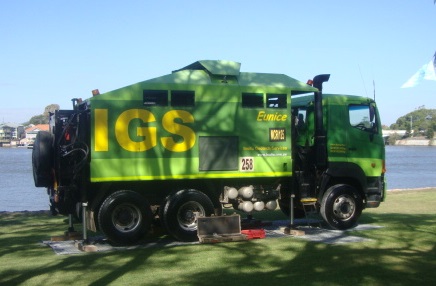
- Pushed using cone penetrometer rig or drill rig
- Suited for onshore and offshore applications
- Quick, simple, cost-effective in situ test with real time results
The Dilatometer Marchetti Test (DMT) or Flat Plate Dilatometer is an in situ test for the determination of various key soil parameters used for geotechnical design. The test is rapid, accurate, simple and cost-effective.
Measuring the lateral stress / pressure when testing in the soil is a real challenge. This is where the Flat Plate Dilatometer (DMT) comes into its own.
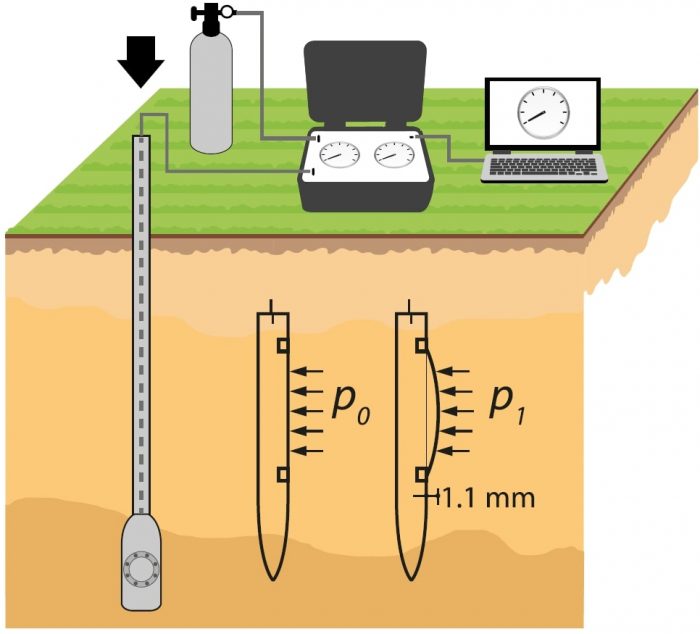
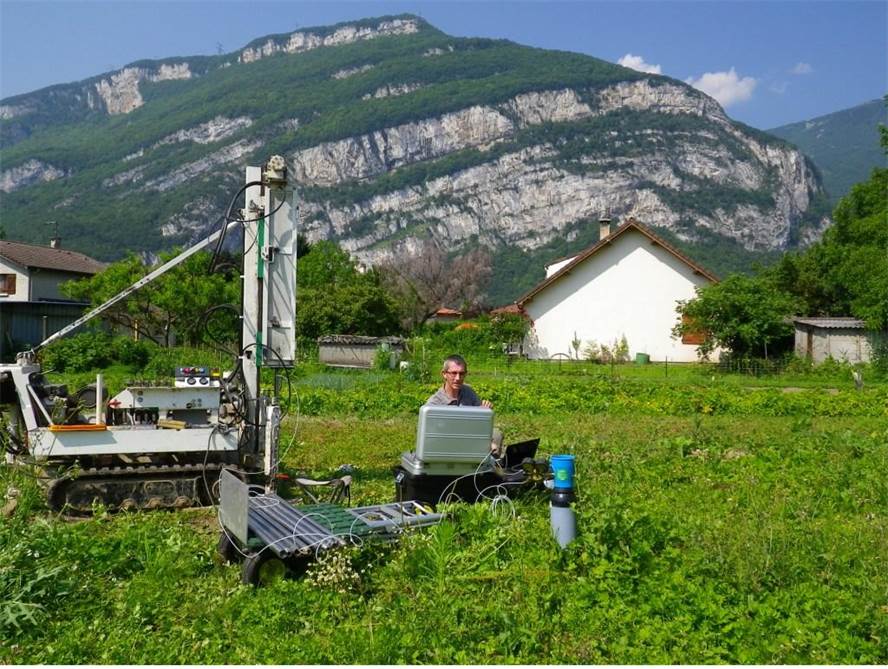
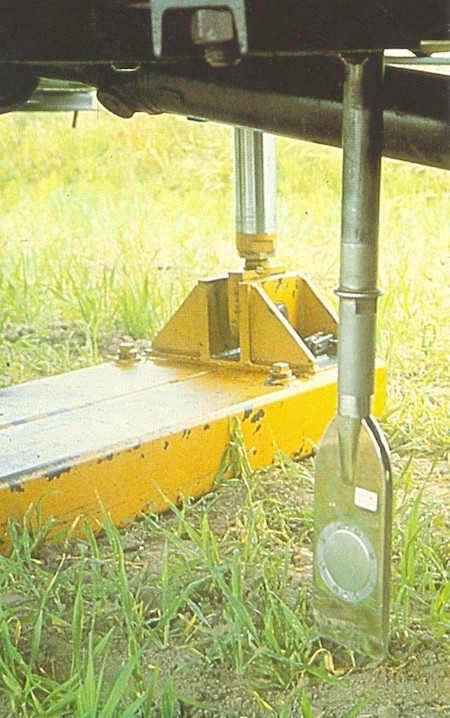
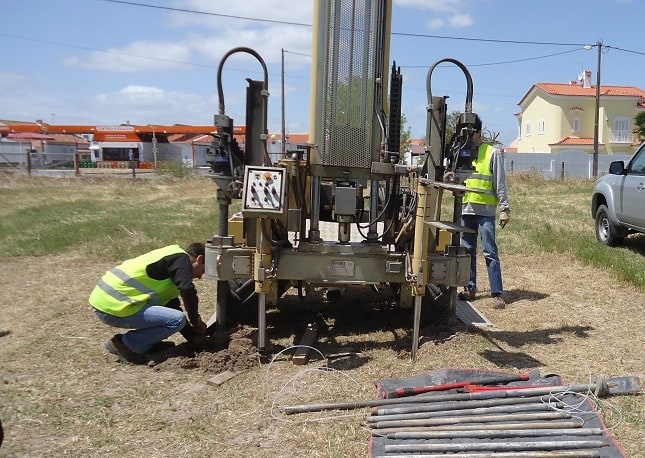
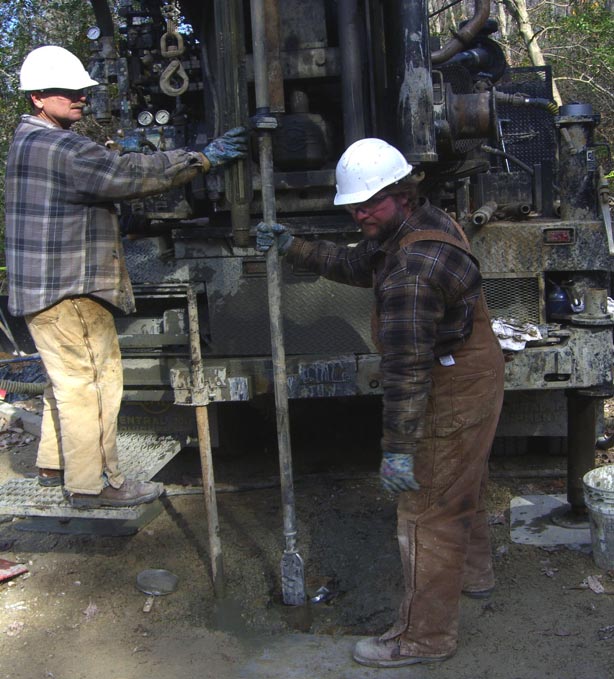
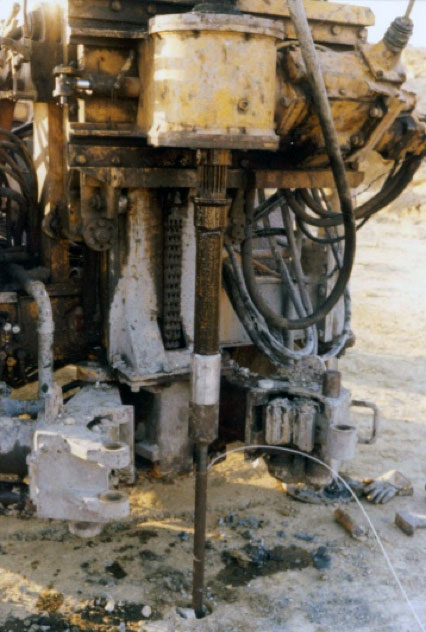
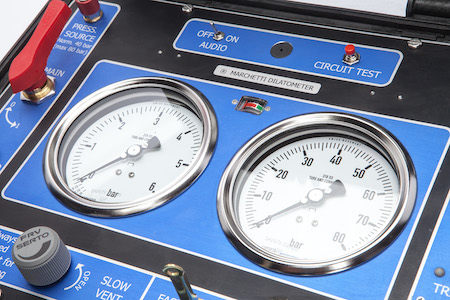
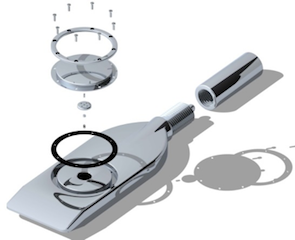
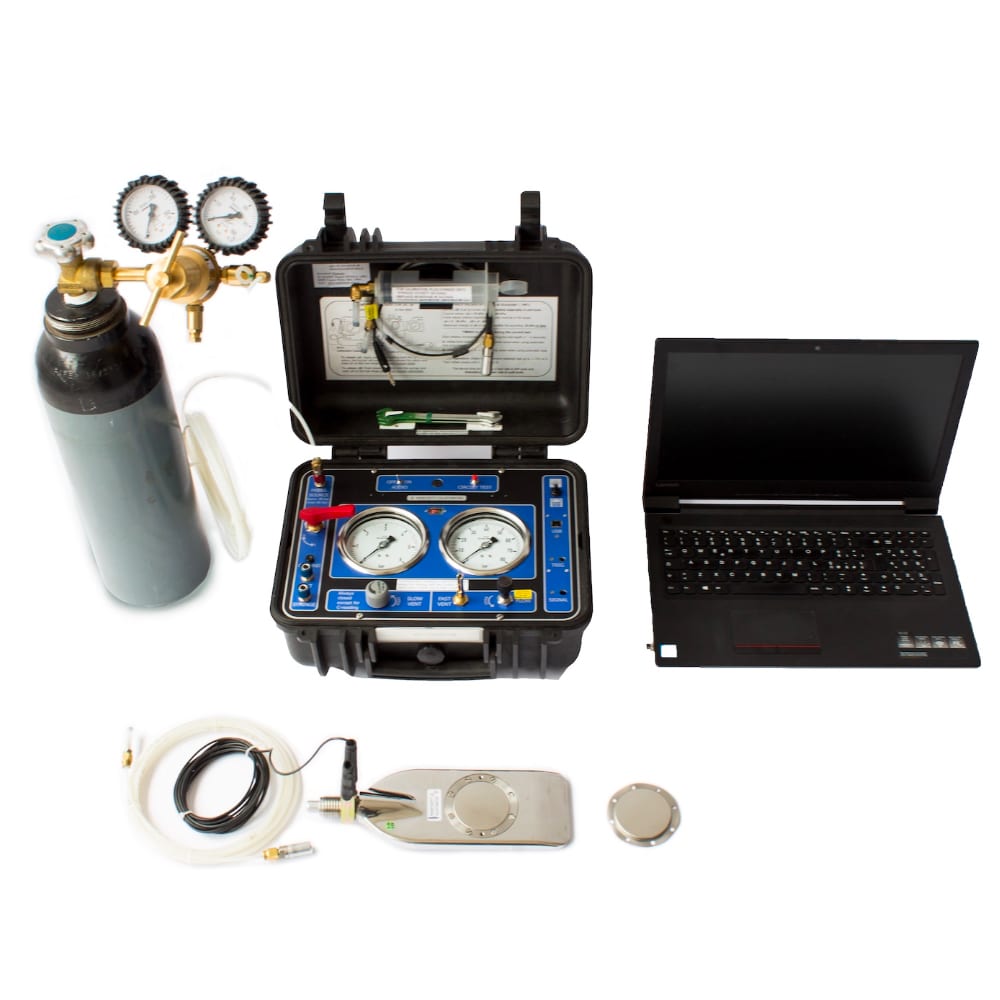
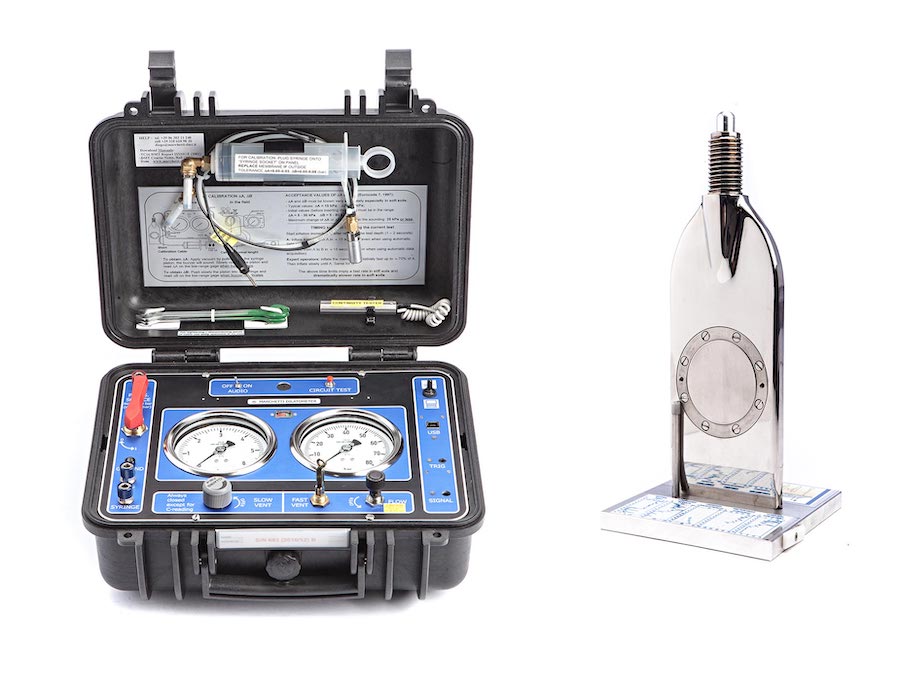
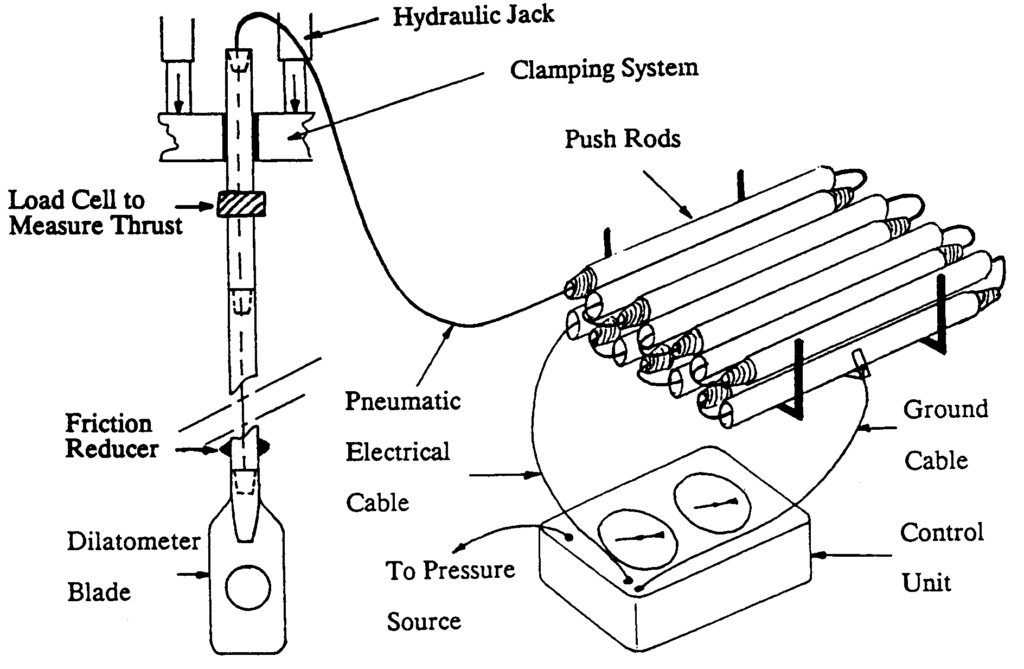
The Marchetti Flat Dilatometer Test (DMT) consists of advancing a flat blade located at the end of a series of rods into the ground typically with a cone penetrometer rig (CPT) or with a drill rig. Once at the test depth, a circular steel membrane located on one side of the blade is expanded horizontally, using pneumatics, into the soil. The pressure is recorded at specific time intervals during the membrane expansion. The blade is then advanced to the next test depth, typically with a 0.2 m depth interval, and the process is repeated.
Alternatively, a DMT dissipation test can be carried out by halting the blade’s penetration at a desired depth and tracking how the lateral soil pressure decreases over time as excess pore water pressure dissipates.
DMT measurements are performed in situ, directly on the soil in its original position and state. This eliminates the disturbance caused by drilling, sampling and transport to the laboratory.
The profiles of the results are available real time during test execution.
Learn more about how it works, the obtainable geotechnical parameters and their applications.
The DMT adheres to:
- Eurocode 7 (1997) “Standard Test Method”, European Committee for Standardization, Geotechnical design – Part 3: Design assisted by field testing, Section 9: Flat dilatometer test (DMT)
- CEN ISO TS 22476-11 (2017) “Geotechnical Investigation and Testing – Field Testing – Flat Dilatometer Test”, Part 11
To find out more, Contact Us.
Products
Related Solutions
-
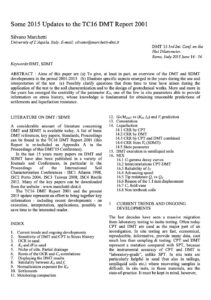
Some 2015 Updates to the TC16 DMT Report 2001 S Marchetti 2015
Categories: Research Papers
Published: 26/06/2015
Aims of this paper are:
- To give, at least in part, an overview of the DMT and SDMT developments in the period 2001-2015
- Illustrate specific aspects emerged in the years during the use and interpretation of the test
- Possibly clarify questions that from time to time have arisen during the application of the test to the soil characterization and to the design of geotechnical works.
More and more in the years has emerged the centrality of the parameter KD, one of the few in situ parameters able to provide information on stress history, whose knowledge is fundamental for obtaining reasonable predictions of settlements and liquefaction resistance.
Keywords: Dilatometer Marchetti Test - DMT

EN 1997-2 2007 Eurocode 7 Geotechnical Design Part 2 - Ground Investigation and Testing
Categories: Technical Standards
Published: 02/04/2007
- The objectives of the flat dilatometer test are the determination of the in-situ strength and deformation properties of soil by expanding a thin circular steel membrane mounted flush on one face of a blade-shaped steel probe inserted vertically into the ground.
- The test consists of measuring the pressures when the membrane is flush with the blade and just begins to move and when the displacement in the centre of the membrane reaches 1.1 mm into the soil. The test shall be perfonned at selected depths or in a semi-continuous manner.
- The results of DMT tests may be used to obtain information on soil stratigraphy, in-situ state of stress, deformation properties and shear strength.
- The DMT test should primarily be used in clays, silts and sands where particles are small compared to the size of the membrane.
NOTE Further information on a procedure, presentation and evaluation of the DMT can be found in CENISO/TS 22476-11, (see X.3.7).
Keywords: Dilatometer Marchetti Test - DMT
The Flat Dilatometer Test (DMT) in Soil Investigations ISSMGE TC16 2001
Categories: Research Papers
Published: 22/11/2001
This report presents an overview of the DMT equipment, testing procedure, interpretation and design applications. It is a statement on the general practice of dilatometer testing and is not intended to be a standard.
This report describes the use of the flat dilatometer test (DMT) in soil investigations. The main aims of the report are:
- To give a general overview of the DMT and of its design applications
- To provide "state of good practice" guidelines for the proper execution of the DMT
- To highlight a number of significant recent findings and practical developments.
Keywords: Dilatometer Marchetti Test - DMT
Geotechnical
Get Flat Dilatometer Marchetti Test (DMT) equipment and support from Insitutek
We are delighted to welcome Studio Prof. Marchetti to our small portfolio of innovative organisations we are a distribution partner for.
Trusted by our clients























































































































































Trusted by our partners