Dilatometer DMT - Whilst Penetrating and High Resolution Dissipation Tests in Niche Silts and Mine Tailings Applications
Measuring the horizontal stress when testing in the soil is a real challenge. The Dilatometer Marchetti Test (DMT) is a well established in situ testing method built to address this challenge.
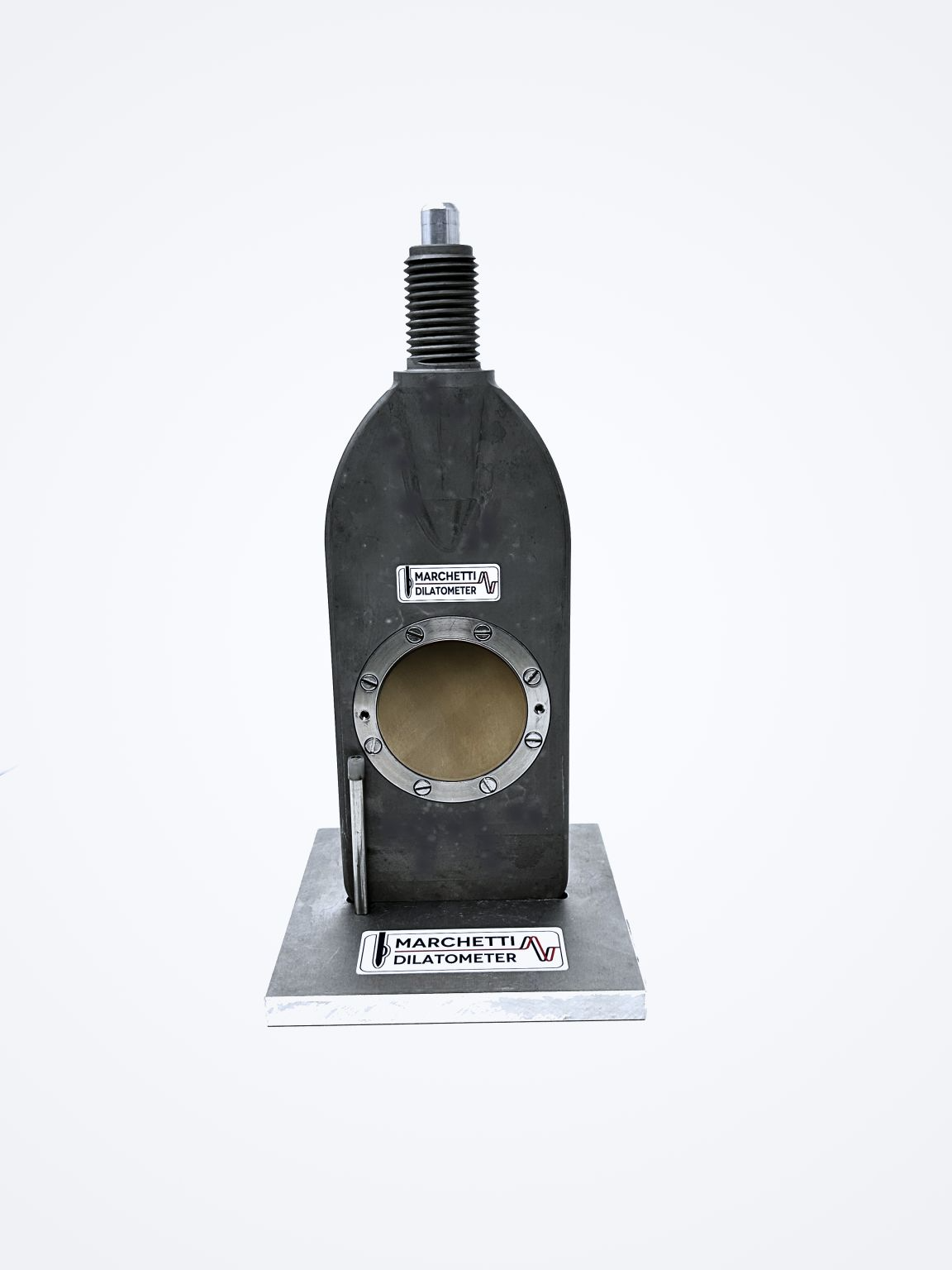
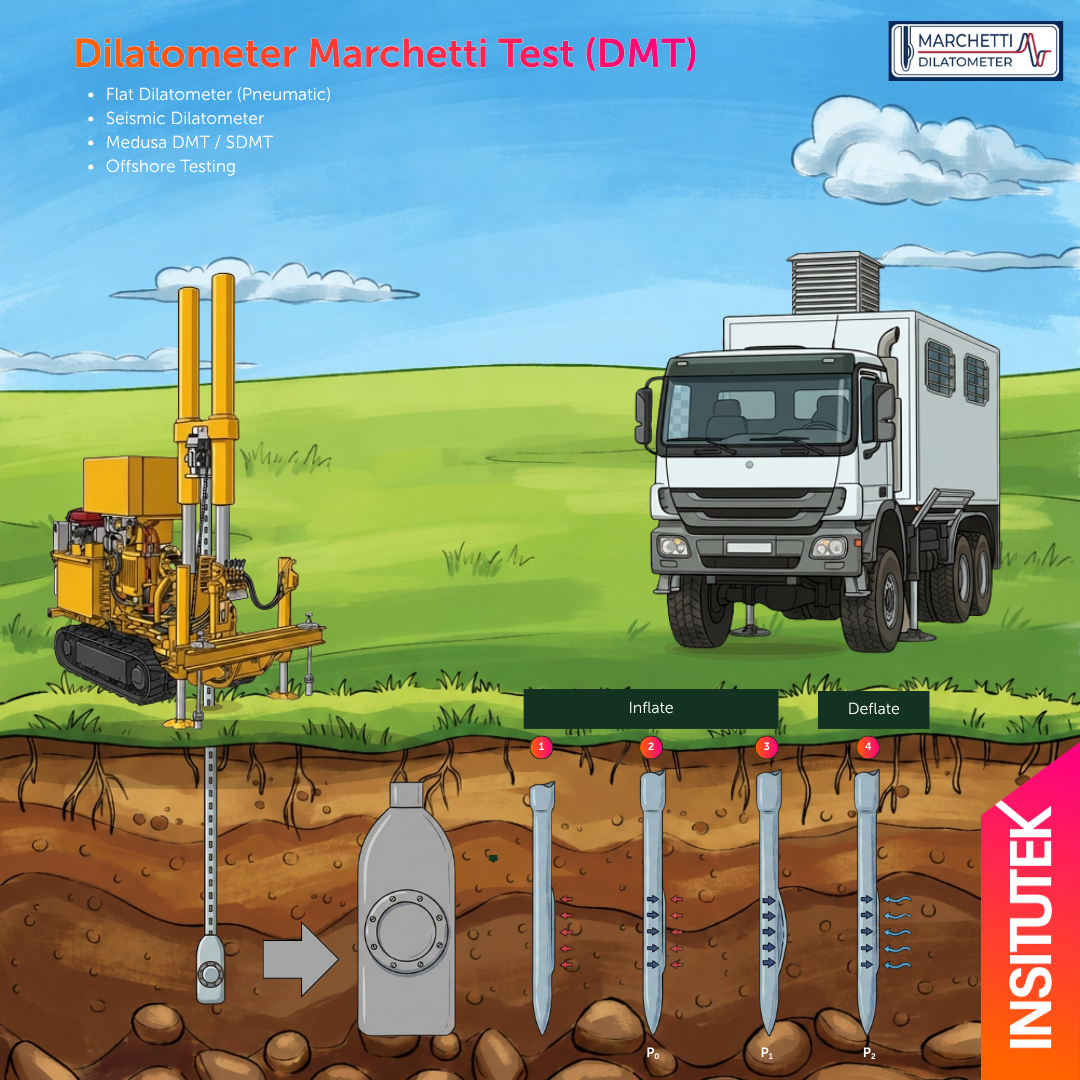
The DMT consists of a robust, flat steel blade with a sharp cutting edge and a thin, circular steel membrane mounted flush on one side. The blade is pushed vertically into the ground, and at predefined depth intervals, the membrane is expanded against the surrounding soil under controlled pressure. The measured parameters are simple, making it a very reliable field test. DMT measurements are performed in situ, directly on the soil in its original position and state. This eliminates the disturbance caused by drilling, sampling, transport and laboratory preparation.
With the Medusa DMT, pressure control on the membrane is directly at the blade head at depth, enabling an automated highly repeatable and accurate in situ test. Using the Medusa DMT, two cutting edge processes are possible:
- DMT-Whilst Penetrating (DMT-WP) which allows engineers to measure continuous horizontal stress and take continuous automated readings while the blade is actively penetrating the ground (typically the standard 20 mm/s used for a CPT push), rather than stopping at fixed intervals.
- DMT-Repeated A (DMT-RA) which enables engineers to maintain the membrane in pressure equilibrium with the surrounding soil using the motorised syringe, allowing repeated A-pressure measurements without membrane expansion or soil disturbance in the initial stage of the DMT test. This produces a dissipation curve over a predefined duration (e.g. Tdiss = 15 s)

The DMT-WP and DMT-RA methods are becoming highly valued for characterising materials with intermediate behaviour, such as mine tailings and niche silts, where partial drainage effects and resulting changes in pore pressure can significantly impact test outcomes and the estimation of in situ horizontal stress.
It becomes possible to investigate drainage effects and distinguish between drained, partially drained and undrained responses. Right at the cutting edge, the latest work is looking to demonstrate how these DMT-WP and DMT-RA measurements contribute to a more reliable assessment of the coefficient of earth pressure at rest (K₀), undrained shear strength (Su) and deformation characteristics (M).
Check out the latest research – Characterisation of Intermediate Mine Tailings using the Medusa Flat Plate Dilatometer and Effects of variable penetration rate using Medusa DMT in the Australian tests site of Ballina.
If you’d like to know more, Contact Us.
New Medusa DMT Saturation Kit - Removing air bubbles from the hydraulic system
Complete saturation of the Medusa DMT hydraulic system is essential for accurate, repeatable pressure measurements and controlled membrane displacement.
The Medusa uses hydraulic oil to expand the membrane. Trapped air introduces compressibility, potentially compromising:
- Pressure accuracy: Air compression delays pressure transmission and membrane expansion.
- Membrane displacement: Trapped air disrupts the relationship between syringe movement and membrane displacement, affecting A and B readings.
- Repeatability: Variable pressure responses reduce test consistency.
- Dissipation testing: Air compressibility can distort pressure changes and measurement timing.
The Medusa Saturation Kit is designed to simplify the saturation procedure for Medusa (S)DMT systems. It benefits from:
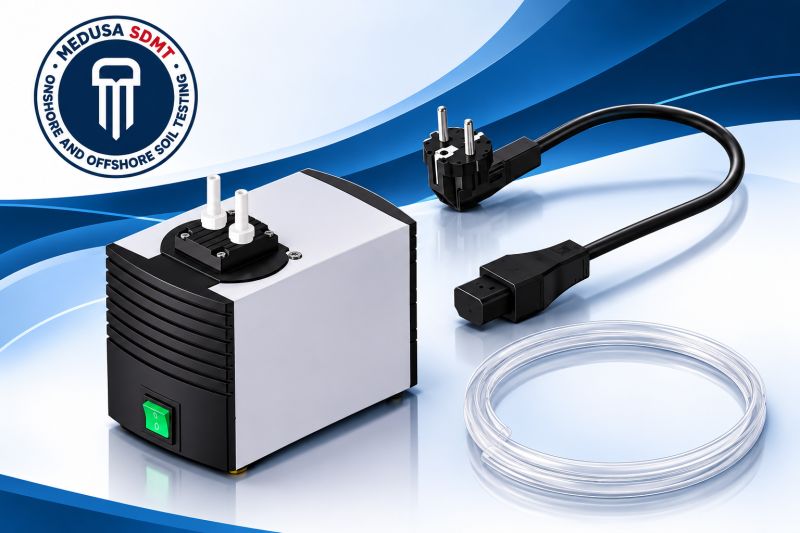
- Two-stage saturation process – A dedicated two-step procedure designed to facilitate air removal
- Effective air bubble removal – A suction pump is used in both stages to help remove residual air bubbles from the oil
- Simplified setup – Dedicated connections and silicon tubing make the procedure more practical and easier to follow
- Clear operating instructions – Step-by-step guidance supports users throughout the saturation process
Complete hydraulic saturation ensures precise membrane movement, reliable pressure measurements and consistent automated testing – key advantages of the Medusa DMT.
If you’d like to know more, Contact Us.
New SDMT Watertight Pneumatic 42 mm diameter probe
This new unit replaces all previous pneumatic SDMT versions.
The key features of this new SDMT probe are:
- Fully Watertight – no more water and dirt inside the tube causing corrosion and frequent maintenance and repair
- Rapid Tip Interchangeability – blade may be replaced or interchanged with a dummy cone in a matter of seconds on site
- Minimum tube diameter of 42 mm to maximise soil penetrability
From now on, only fully Watertight SDMT probes will be supplied.
If you’d like to know more, Contact Us.
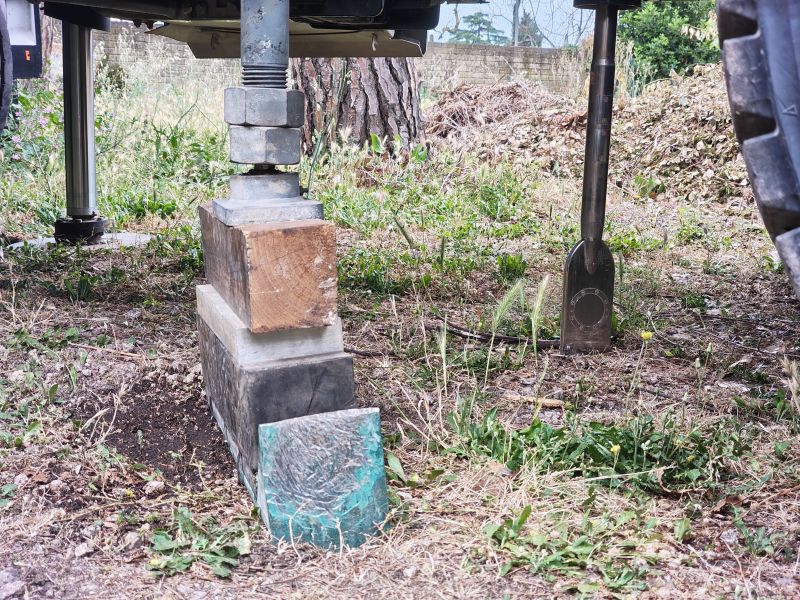
DMT Blade Options: Stainless Steel vs Hardened Steel
The hardened non-stainless steel DMT blade was developed for improved abrasion resistance, particularly in dense sandy soils where conventional stainless steel blades can progressively wear below acceptable thickness tolerances.
Client feedback confirms significantly improved wear resistance, reduced scratching and increased membrane durability. The hardened blade features a heat-treated 0.30 mm membrane and a protective anti-corrosion surface treatment.
Key differences:
- Standard stainless steel: Greater resistance to brittle fracture but more susceptible to abrasive wear and thinning.
- Hardened steel: Superior abrasion resistance and durability, but increased brittleness and risk of fracture at the threaded connection if the probe deviates from a vertical push.
Recommended applications:
Hardened steel is particularly suited to very dense, abrasive sands, including land reclamation projects, and offers improved resistance to gravel inclusions. Standard stainless steel remains the preferred option for general soil conditions.
If you’d like to know more, Contact Us.